Beethoven's Ninth, two hundred years later
How a choral symphony premiered in Vienna in 1824 became the anthem of almost everything — and what is still worth hearing in it.
Cover image: IMSLP, domínio público

Contents2 sections
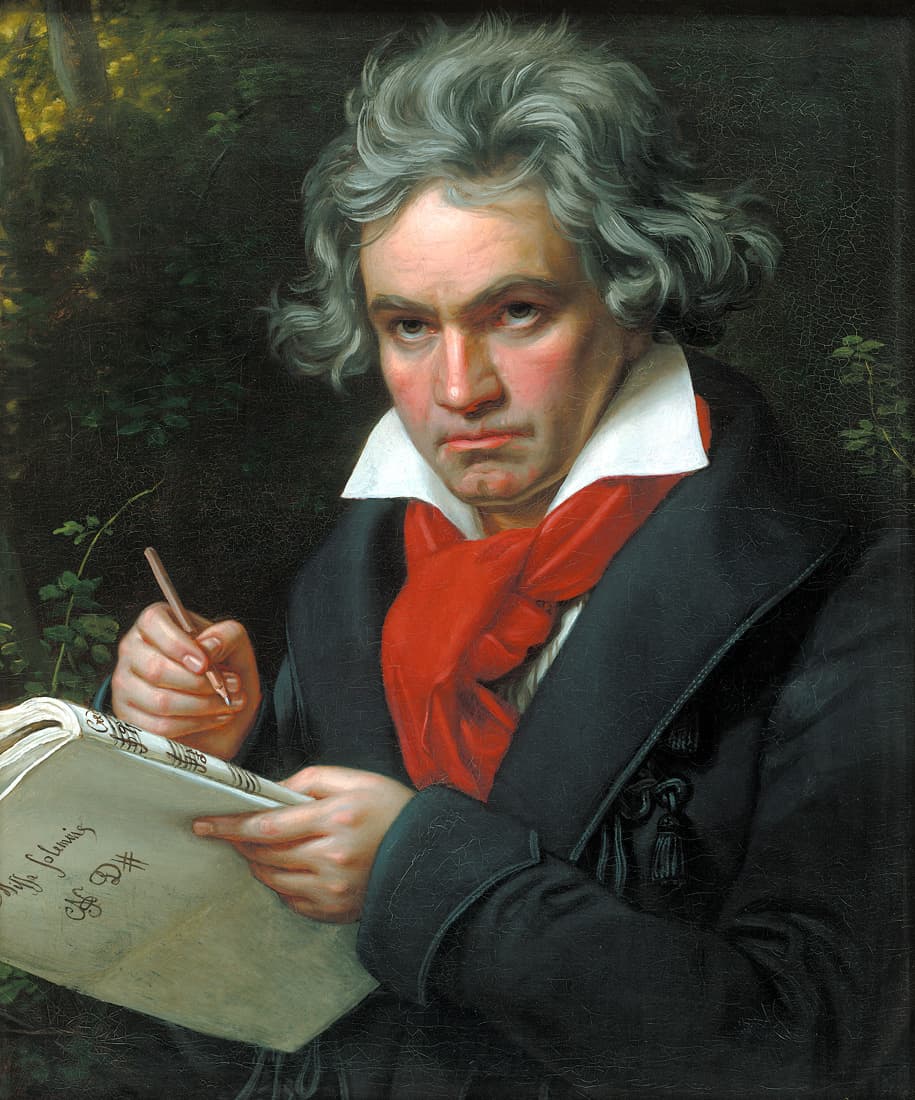
On 7 May 1824, at the Theater am Kärntnertor in Vienna, Beethoven took the stage for the premiere of his Ninth Symphony. He was by then almost completely deaf. It is said that, at the end, one of the soloists turned him towards the audience so he could see the applause he could not hear.
A symphony that sings
The novelty was the choir. For the first time a large-scale symphony ended with voices, singing Friedrich Schiller's Ode to Joy. Beethoven had kept that poem with him for decades.
The last movement opens almost in disorder: the orchestra quotes the themes of the previous movements and rejects them one by one, until the double basses, alone, present the melody everyone knows.
What to listen for the first time
The opening of the first movement, which seems to grow out of silence: bare fifths, not yet knowing the key.
The scherzo, with the timpani treated almost as soloists.
The adagio, the calmest page of the whole symphony.
The baritone entry: "O friends, not these sounds!"
Alle Menschen werden Brüder — all men become brothers.
Two hundred years later, the melody is the anthem of the European Union and the soundtrack of almost every New Year. It is worth hearing the whole work, in one sitting, at least once.

Get the next articles
One email when a new article comes out.
Comments0
Sign in to comment.
Updated on November 20, 2026