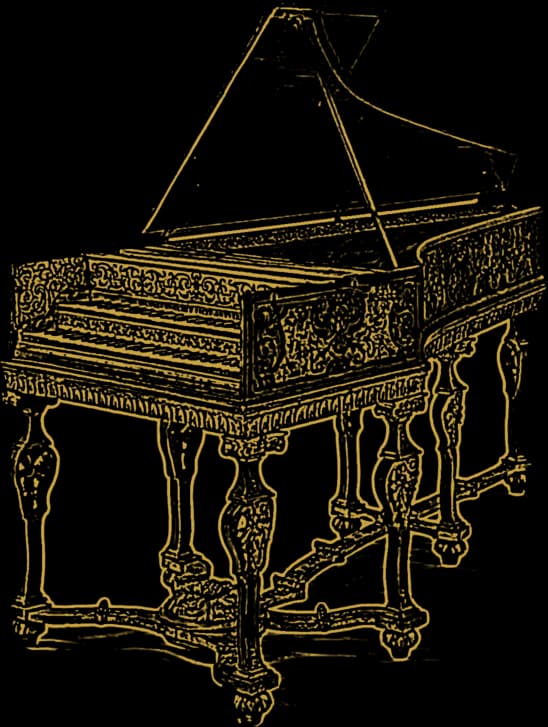
Harpsichord
Europe, 14th and 15th centuries
The harpsichord was the keyboard of the Renaissance and the Baroque. Its bright, precise sound held up the basso continuo of almost all the music of the time, and it returned to the stage in the twentieth century.
Works for harpsichordHow it works
When a key goes down, a wooden piece called a jack rises and a small plectrum, once made from a bird’s quill, plucks the string. The force of the finger barely changes the volume. To vary the sound, the player switches stops, bringing in another row of strings, or moves to a second keyboard. Expression comes from articulation, timing and ornaments.
The story
The first written mention of a clavicembalum dates from 1397, in Padua. Over the following centuries each region developed its own way of building. In Antwerp, the Ruckers family made harpsichords so admired that, a hundred years later, they were rebuilt rather than replaced.
In the Baroque the harpsichord was everywhere: it played chords in the continuo of operas, cantatas and sonatas and had a vast solo repertoire. In France, François Couperin and Jean-Philippe Rameau wrote pieces with poetic titles. Domenico Scarlatti composed hundreds of short sonatas for the courts of Lisbon and Madrid, and Bach published the Goldberg Variations for a two-manual harpsichord.
With the rise of the piano, the harpsichord nearly vanished in the nineteenth century. It was brought back by the Polish player Wanda Landowska, who performed on an instrument built by Pleyel and commissioned new works, such as the concertos of Manuel de Falla and Francis Poulenc. Today early-music ensembles play copies of historical harpsichords.
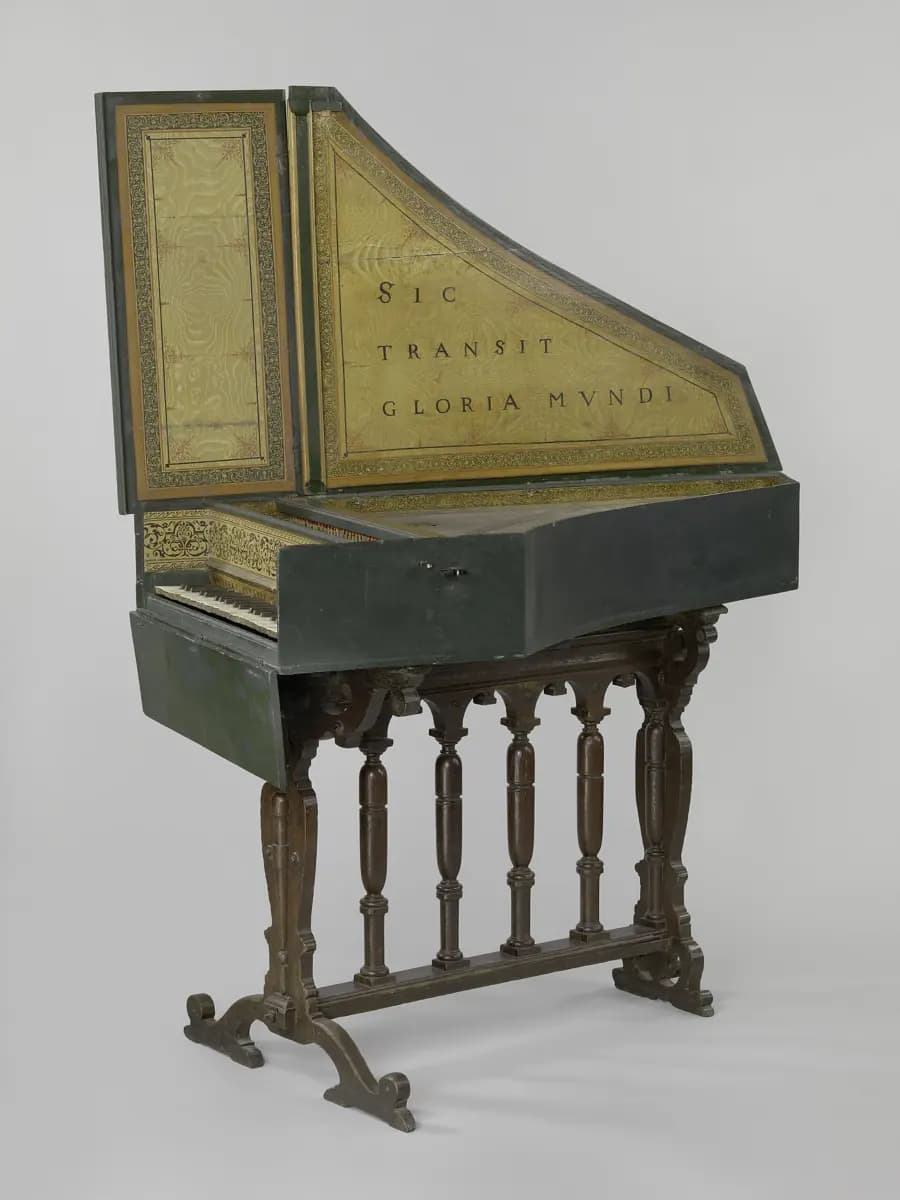
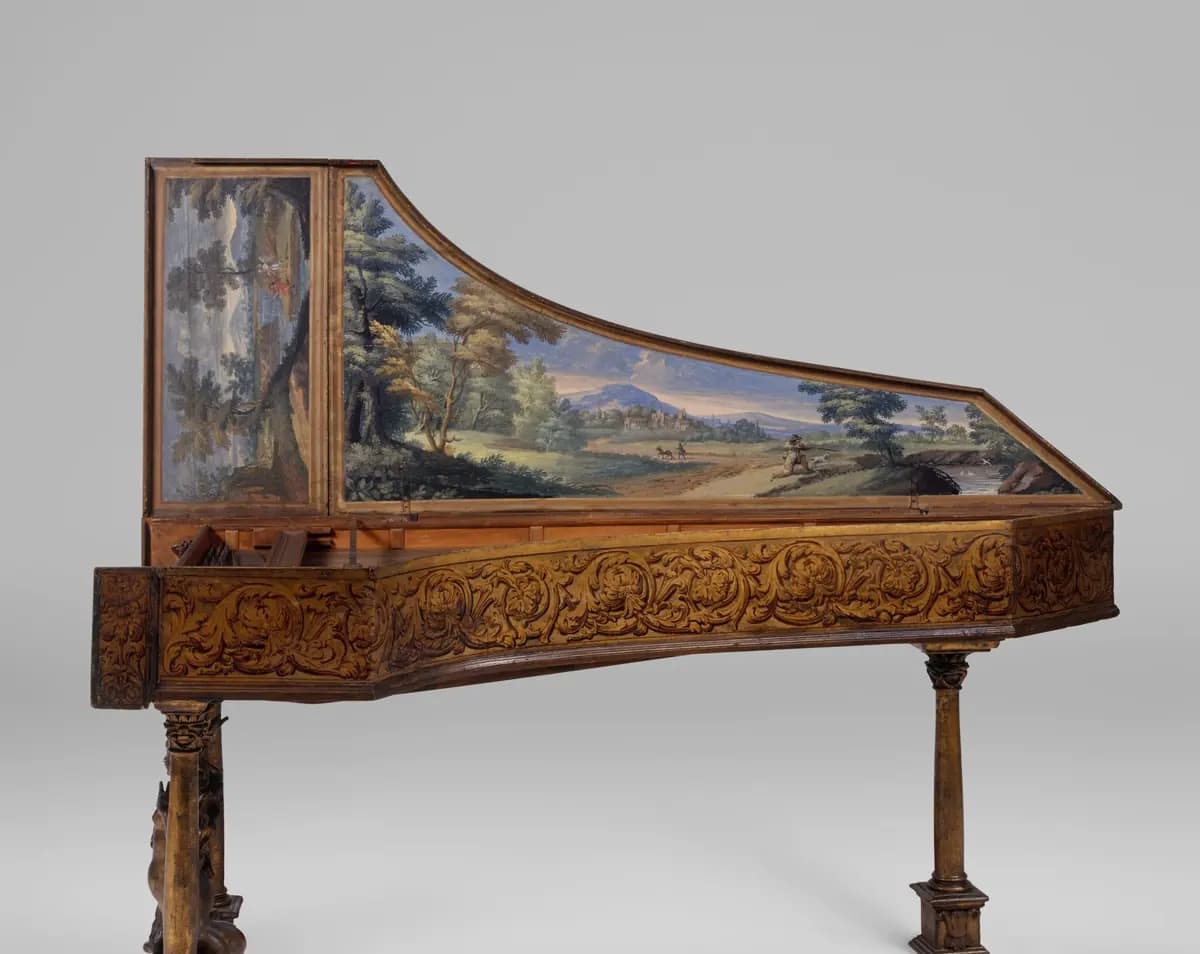
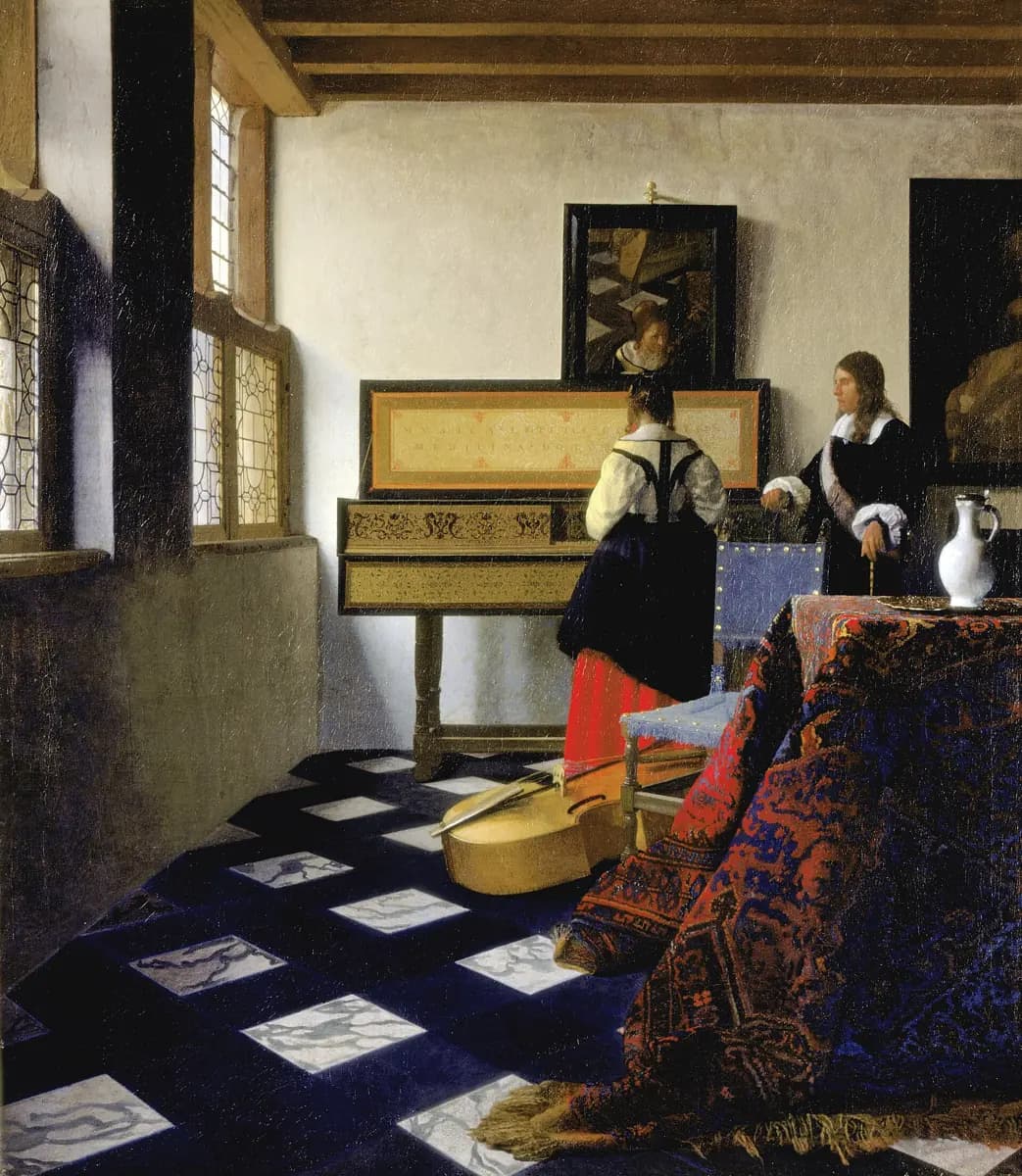
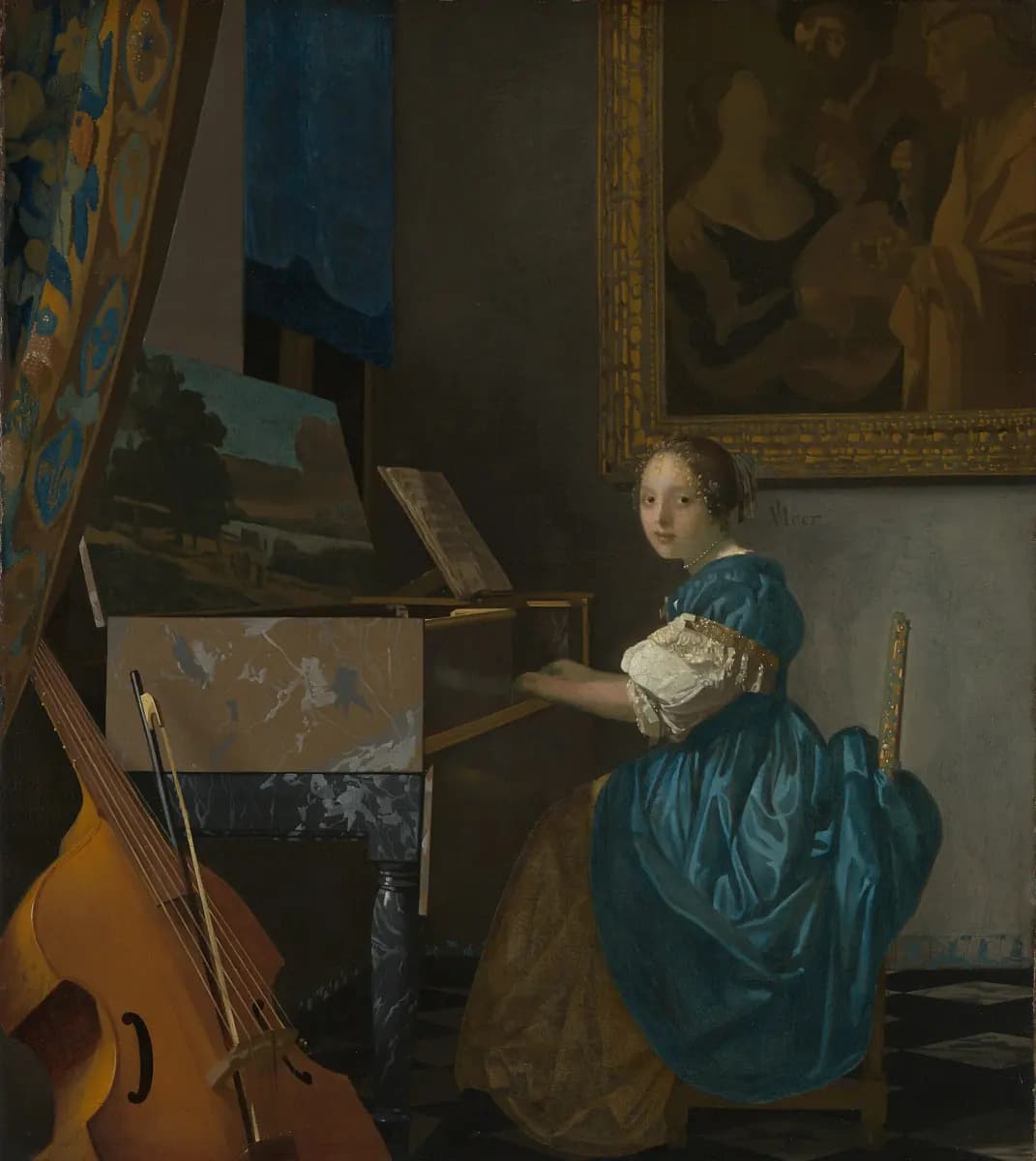
The harpsichord was also a piece of furniture to show off. Lids were painted with landscapes and Latin mottoes, and many Flemish instruments carried the line Musica laetitiae comes, medicina dolorum: music, companion of joy and medicine for sorrow. It even appears on the lid of the virginal Vermeer painted in The Music Lesson.
In the second half of the twentieth century the early-music movement went back to period instruments. Builders such as Frank Hubbard and William Dowd in the United States studied old harpsichords and made faithful copies, lighter than the heavy instruments of the early 1900s, and harpsichordists such as Gustav Leonhardt recorded the Baroque repertoire with that clearer sound.
What was written for it
Bach, Couperin, Rameau, Scarlatti and Handel form the core. In the continuo, the harpsichord is in almost all Baroque music. In the twentieth century, Falla, Poulenc and György Ligeti wrote for it.
In pictures
Where to start listening
- 1Goldberg Variations: AriaJohann Sebastian BachA calm sarabande that gives rise to thirty variations. Open the work
- 2Sonata in D minor, K. 141Domenico ScarlattiRapid repeated notes with the flavour of a Spanish guitar. Open the work
- 3La PouleJean-Philippe RameauA hen’s clucking turned into music. Open the work
- 4Les Barricades mystérieusesFrançois CouperinOverlapping notes that weave a hypnotic texture. Open the work
Did you know?
- A French harpsichord could have landscapes painted on its lid by artists of the day. Some are worth more for the painting than for the instrument.
- Ligeti wrote Continuum, in 1968, for harpsichord played so fast that the notes merge into a single continuous sound.