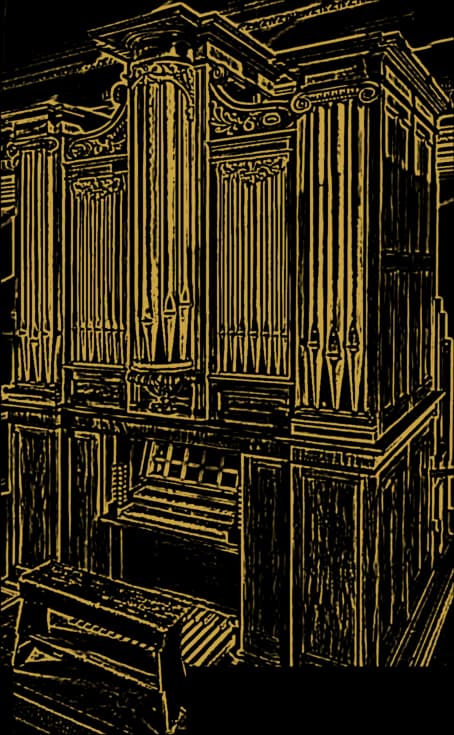
Organ
Alexandria, 3rd century BC
The organ is the oldest keyboard instrument and the largest of all. With air flowing through pipes, it can whisper or make a whole cathedral tremble.
Works for organHow it works
A bellows, now electric, keeps air under pressure. Each key opens the way for air into metal or wooden pipes, and each pipe plays a single note with a single tone colour. Stops, drawn by knobs beside the keyboards, choose which ranks of pipes sound: flutes, reeds, loud or delicate voices. The organist plays with the hands on two or more keyboards, the manuals, and with the feet on a pedalboard.
The story
In the third century BC, the Greek engineer Ctesibius of Alexandria invented the hydraulis, an organ in which water regulated the air pressure. It sounded in Roman arenas and feasts. In 757 the Byzantine emperor sent an organ as a gift to the Frankish king Pepin, and from then on it gradually entered the churches of Western Europe.
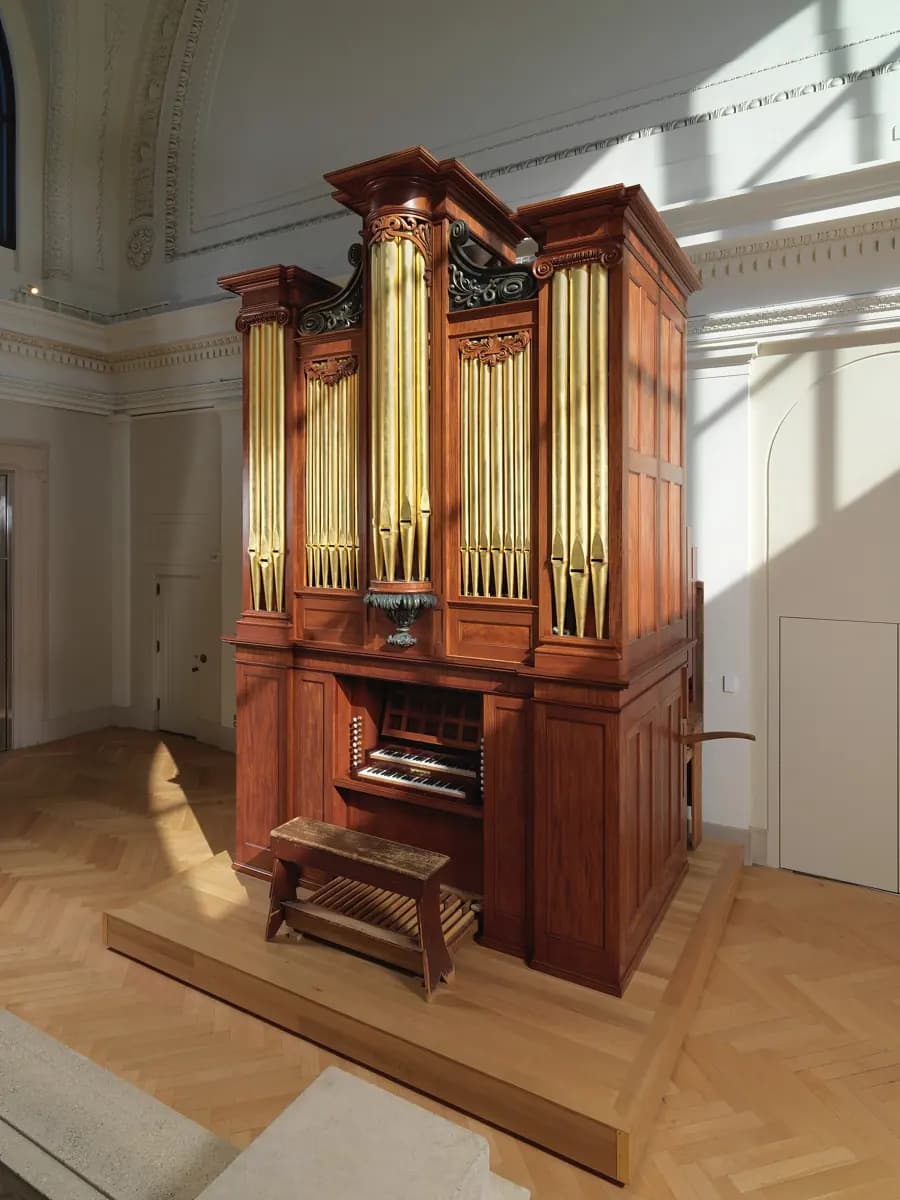
In the Middle Ages and the Renaissance, organs grew along with the cathedrals. In the Baroque, northern Germany had the most famous builders, such as Arp Schnitger, and organists such as Dieterich Buxtehude and Johann Sebastian Bach wrote preludes, fugues and chorales that are still at the heart of the repertoire.
In the nineteenth century, the French builder Aristide Cavaillé-Coll made organs able to imitate an orchestra, and Charles-Marie Widor and César Franck wrote symphonies for solo organ. In the twentieth century, Olivier Messiaen used the instrument to paint colours and birdsong.
For centuries the organ was the most complex machine a town owned. Building one took years, and the organist of the main church held a post of real standing. In 1705 the young Bach walked about 400 kilometers, from Arnstadt to Lübeck, to hear Buxtehude play, and stayed months beyond the leave he had been given.
The wind, once supplied by bellows worked by hand, came from electric blowers by the early twentieth century. In Brazil, the Cathedral of Mariana in Minas Gerais keeps an organ built by Arp Schnitger in Hamburg in the early eighteenth century and brought from Lisbon in 1753. Restored, it is still played in concerts.
What was written for it
Bach is the centre, with preludes and fugues, toccatas and chorales. Before him, Frescobaldi and Buxtehude; after him, Mendelssohn, Franck, Widor, Vierne and Messiaen. Saint-Saëns joined organ and orchestra in his Third Symphony.
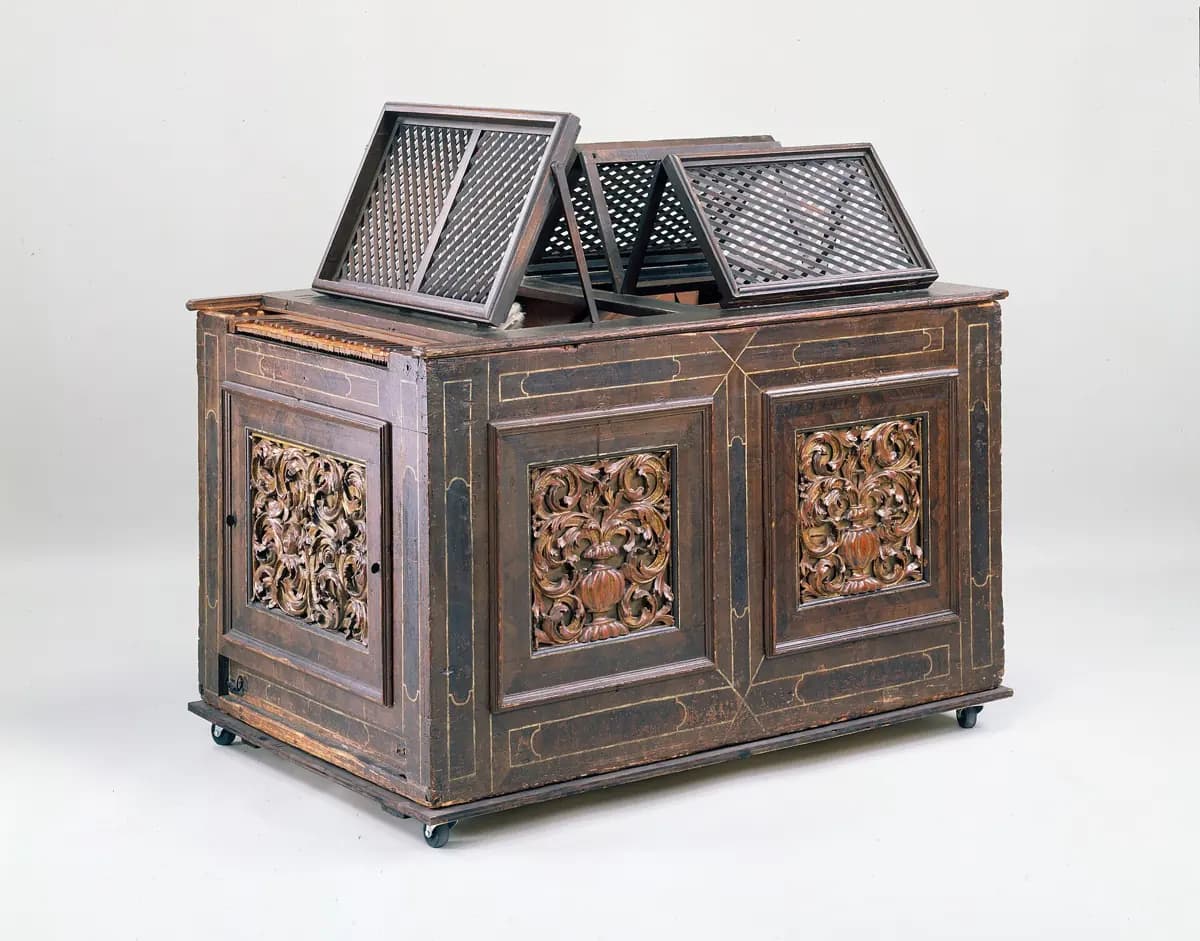
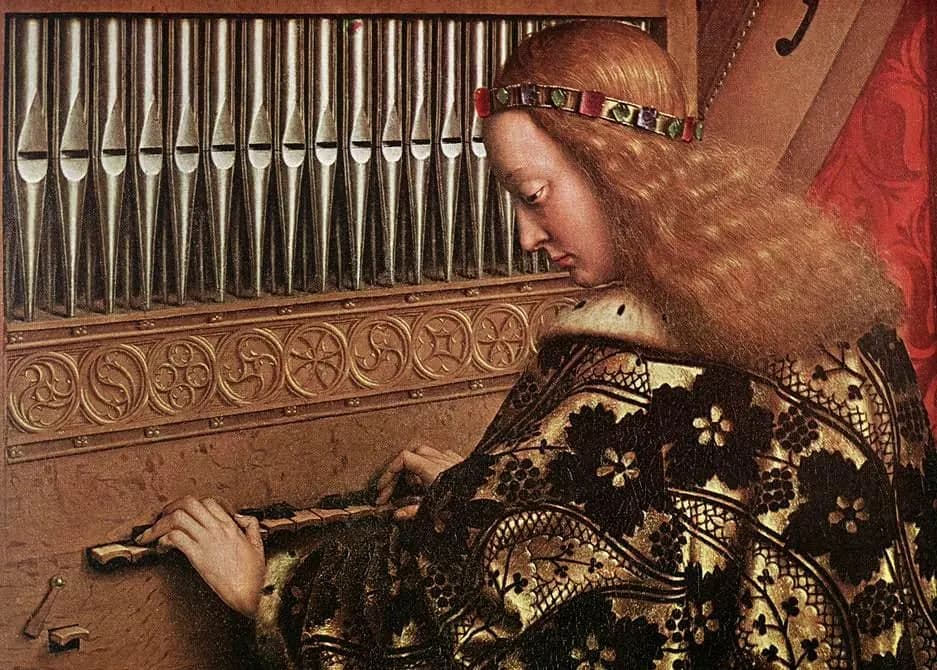
In pictures
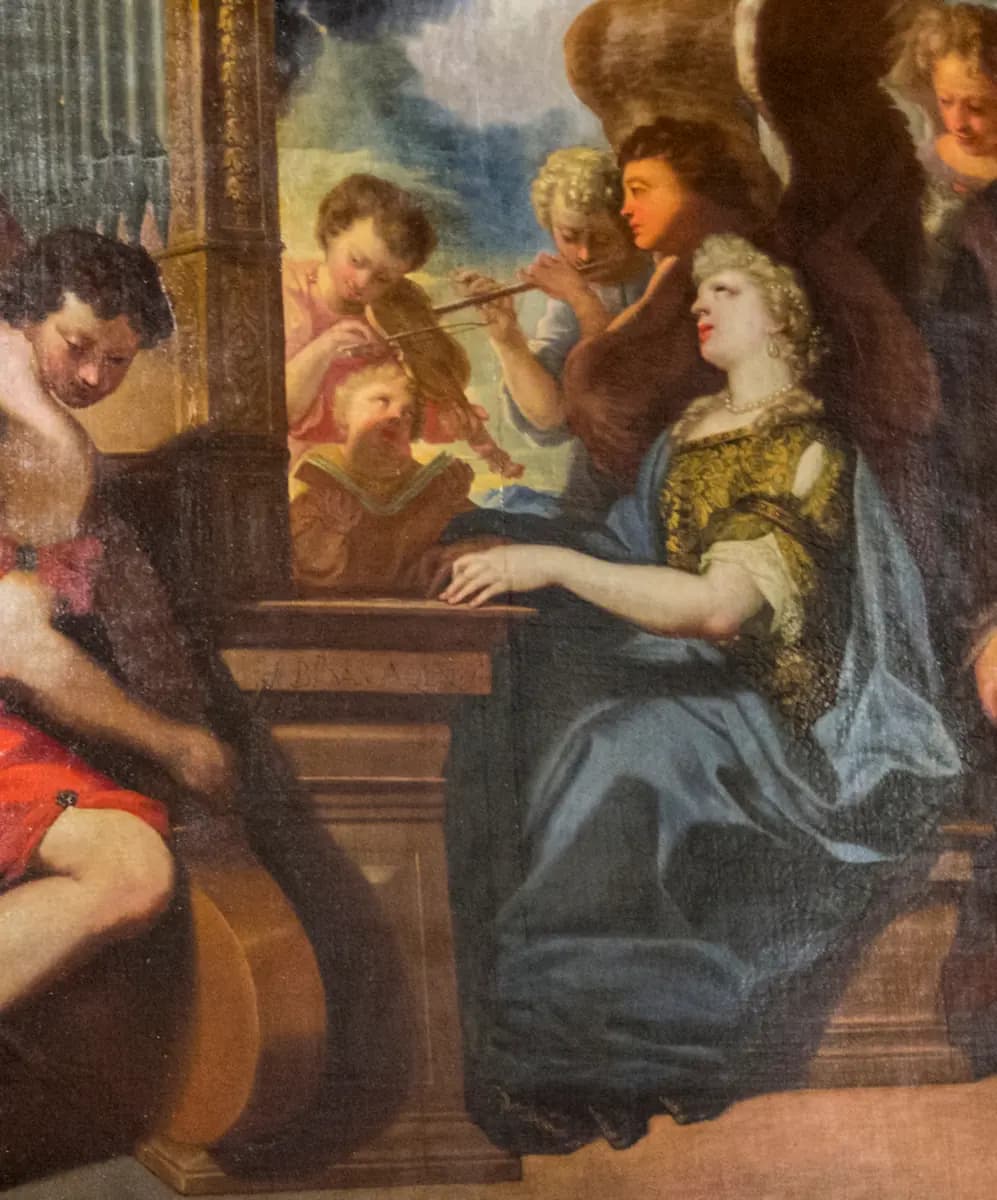
Where to start listening
- 1Toccata and Fugue in D minor, BWV 565Johann Sebastian BachThe most famous opening for organ. Whether it is really by Bach is still debated. Open the work
- 2Symphony No. 5: ToccataCharles-Marie WidorRacing hands over a deep melody in the feet. A wedding favourite. Open the work
- 3Symphony No. 3, “Organ”: finaleCamille Saint-SaënsThe organ enters with a huge chord that fills the hall. Open the work
- 4La Nativité du Seigneur: Dieu parmi nousOlivier MessiaenColours and chords only an organ can sustain. See the composer
Where to start playing
Pieces chosen by the house, at the level rated by the musicians of IMSLP.
Beginner
Intermediate
Did you know?
- Mozart called the organ “the king of instruments” in a letter of 1777, and the name stuck.
- The organ with the most pipes in the world is in Boardwalk Hall in Atlantic City, in the United States, with more than thirty thousand pipes.