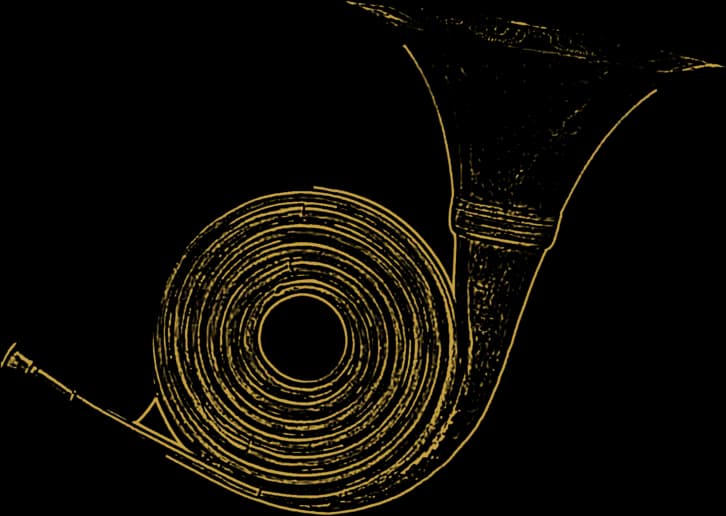
Horn
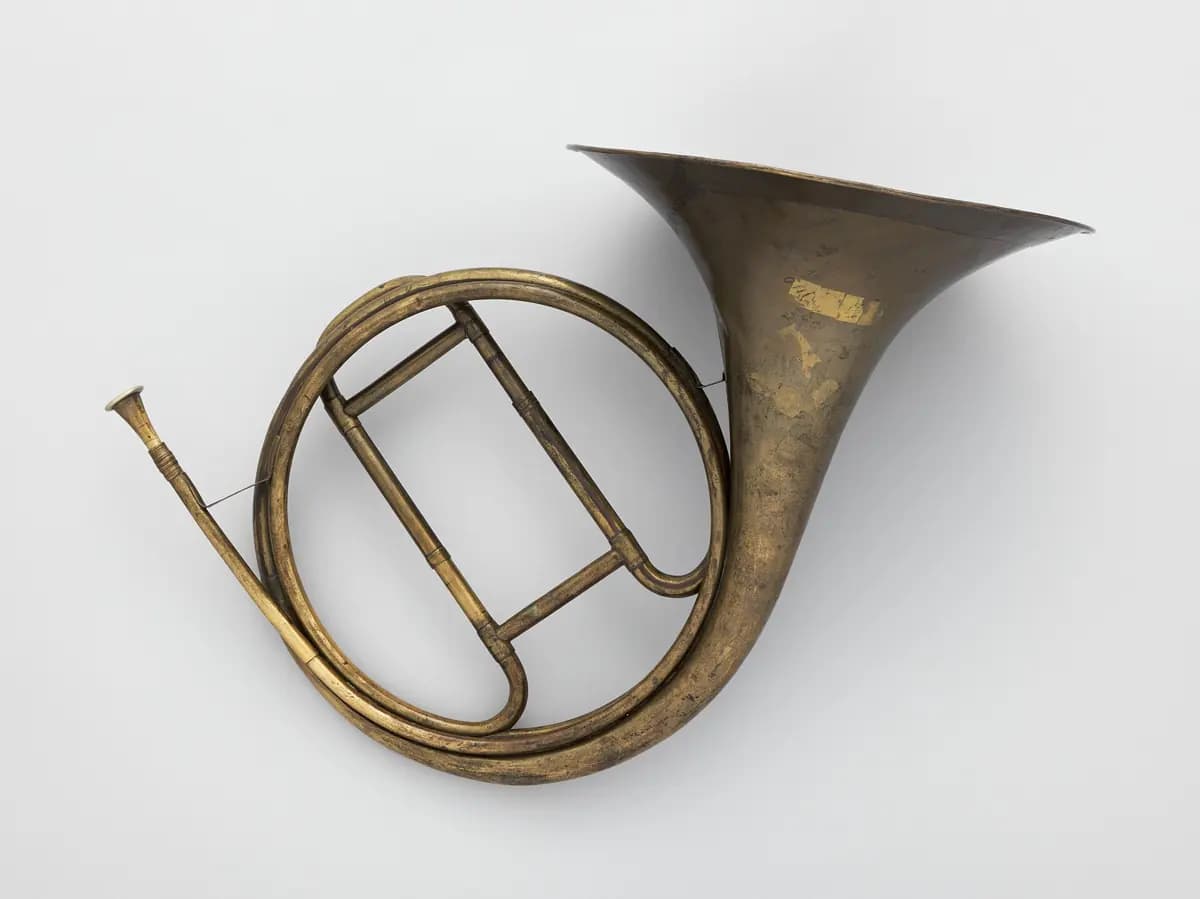
French court, around 1650
The horn was born on the hunt and became the most versatile brass instrument in the orchestra. Its round sound can be heroic, distant or nostalgic, and it blends with brass and woodwinds alike.
Works for hornHow it works
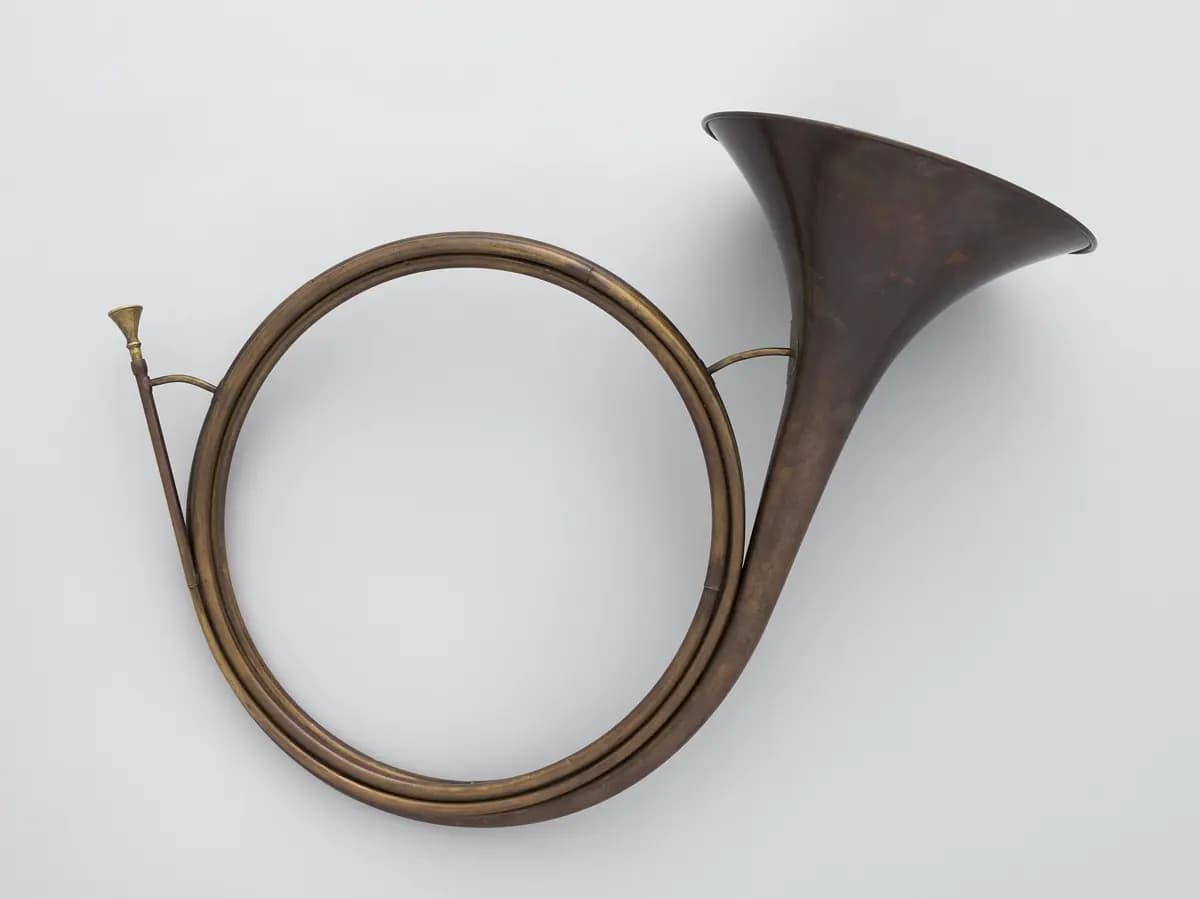
The sound starts at the player’s lips, buzzing into the mouthpiece, as with all brass. The tube, coiled in circles, is about four metres long, and the bell faces backwards. Valves route the air through extra lengths of tubing and change the note. The right hand, inside the bell, adjusts tuning and tone and can even muffle the sound.
The story
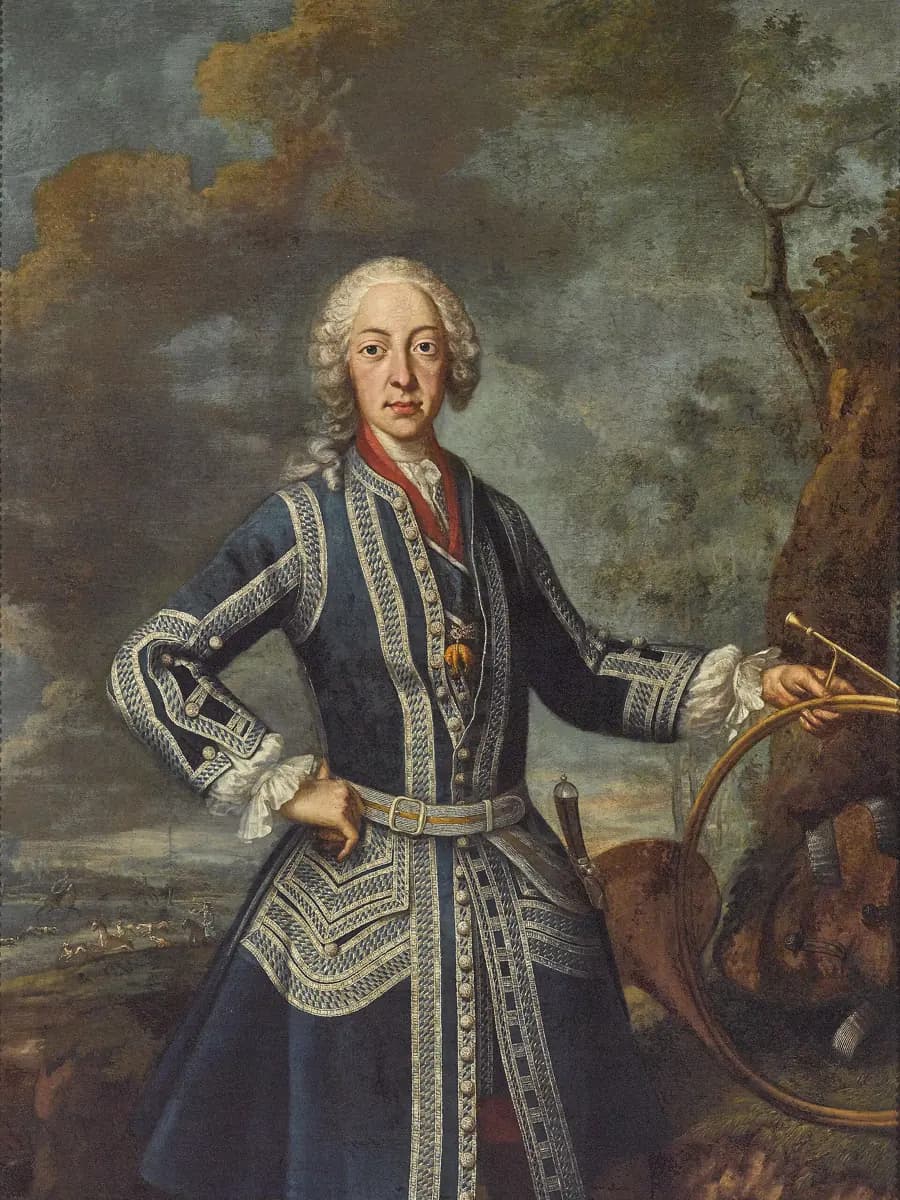
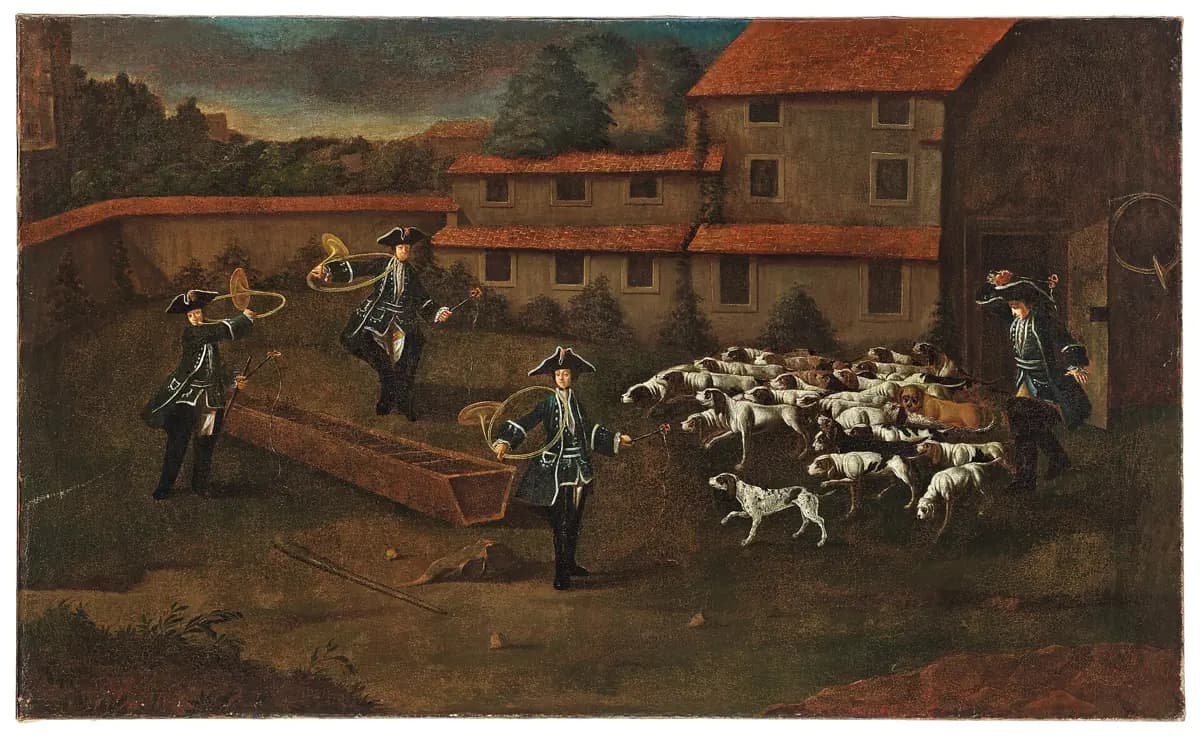
The hunting horn, a coiled tube with no valves, entered concert music in the late seventeenth century. This natural horn could play only the notes of one harmonic series, and to change key the player swapped lengths of tube, called crooks.
In the eighteenth century, horn players found that placing the hand inside the bell in different positions let them play notes in between. With this technique Mozart wrote four concertos for his friend Joseph Leutgeb, and Beethoven and Brahms wrote demanding solos for the natural horn.
Valves, patented in Germany in 1818, made every note easy to play. The Romantic orchestra came to use four horns or more, and Wagner, Richard Strauss, Mahler and Tchaikovsky gave them some of the repertoire’s most famous solos.
The horn is played with the bell facing backwards, to the player’s right, a legacy of the hunting horn coiled over a rider’s shoulder. Its sound reaches the audience reflected, rounder and more distant, which is why Romantic music made it the voice of forests, hunts and nature.
For The Ring of the Nibelung Wagner asked for a new instrument, the Wagner tuba, played by the horn section. In the twentieth century the Englishman Dennis Brain made the horn a popular solo instrument, with recordings of the Mozart concertos that remain a benchmark.
What was written for it
The concertos of Mozart and Richard Strauss, Brahms’s Trio Op. 40, orchestral solos in Beethoven, Brahms, Tchaikovsky, Wagner and Mahler. Many film scores give the horn their heroic tunes.
In pictures
Where to start listening
- 1Horn Concerto No. 4, K. 495: rondoWolfgang Amadeus MozartA finale that imitates a hunt on horseback. Open the work
- 2Symphony No. 5: second movementPyotr TchaikovskyA long, tender horn solo over the strings. Open the work
- 3Till EulenspiegelRichard StraussThe horn introduces the rascal Till right at the start. Open the work
- 4Horn Trio, Op. 40Johannes BrahmsWritten for the natural horn, which Brahms preferred. Open the work
Where to start playing
Pieces chosen by the house, at the level rated by the musicians of IMSLP.
Intermediate
Did you know?
- In the manuscripts of the Leutgeb concertos, Mozart left jokes: insults scrawled over the solo line and inks of different colours to tease his friend.
- The horn is the only brass instrument played with the bell facing backwards, so its sound reaches the audience bounced off the wall behind the stage.