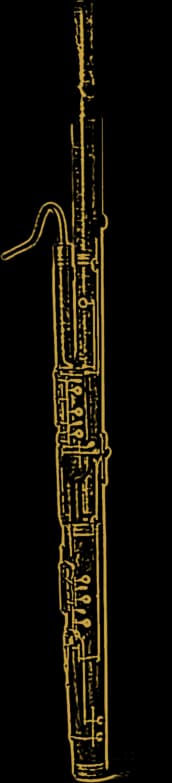
Bassoon
Europe, 16th century
The bassoon is the bass of the woodwinds. With more than two metres of tube folded in half, it can be comic, melancholy or eerie, and it has one of the most famous solos of the twentieth century.
Works for bassoonHow it works
Like the oboe, it uses a double reed, fitted to a curved metal tube, the bocal. The wooden tube is about two and a half metres long, folded into a U so it fits the hands. The player covers holes with the fingers and works many keys, including with the thumbs. Its bigger cousin, the contrabassoon, goes an octave lower and is the lowest instrument in the orchestra.
The story
The bassoon descends from the dulcian, a Renaissance double-reed instrument carved from a single block of wood. In the seventeenth century it gained separate joints and the shape we know.
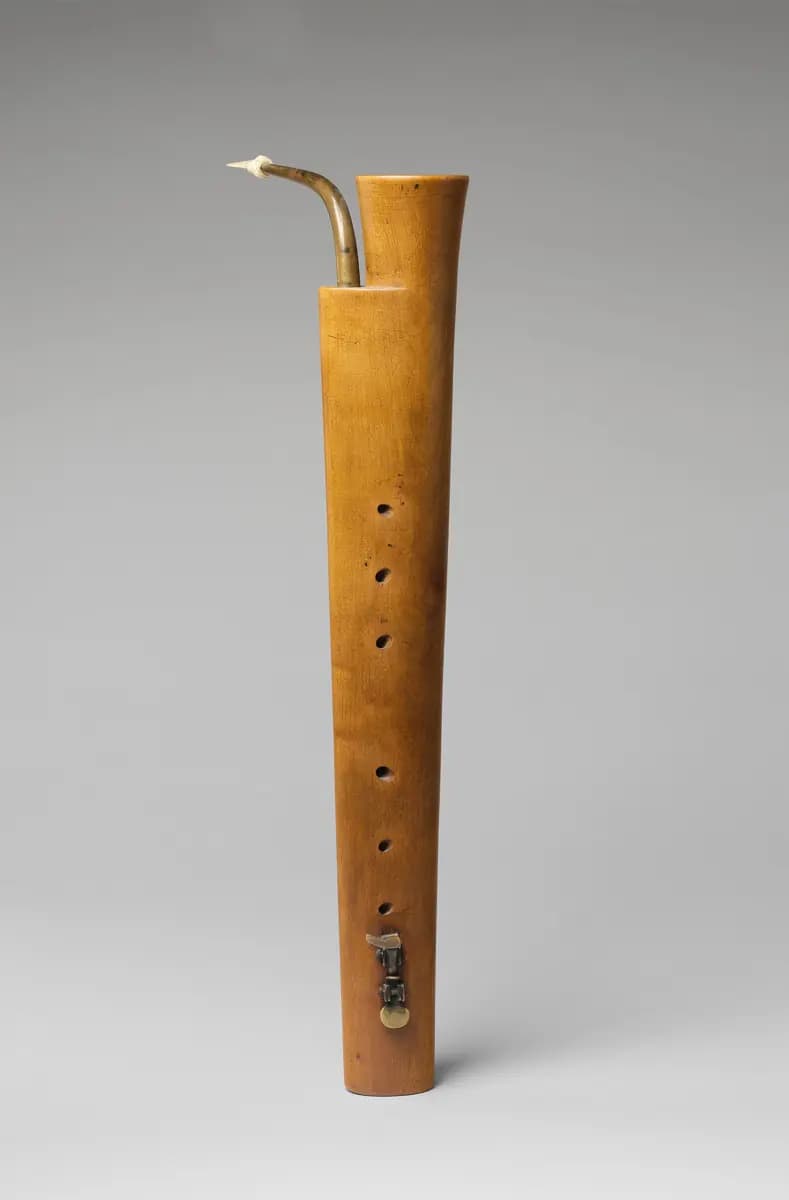
In the Baroque it doubled the continuo bass with the cello, and Vivaldi wrote dozens of concertos for it, more than for any other wind instrument. Mozart composed his Bassoon Concerto at eighteen. In the nineteenth century German makers, such as Heckel, and French makers developed different key systems, both still in use.
Composers made use of its many personalities: Dukas gave it the enchanted brooms in The Sorcerer’s Apprentice, Prokofiev the grandfather in Peter and the Wolf, and Stravinsky opened The Rite of Spring with the bassoon at the top of its range, a strange sound few recognised.
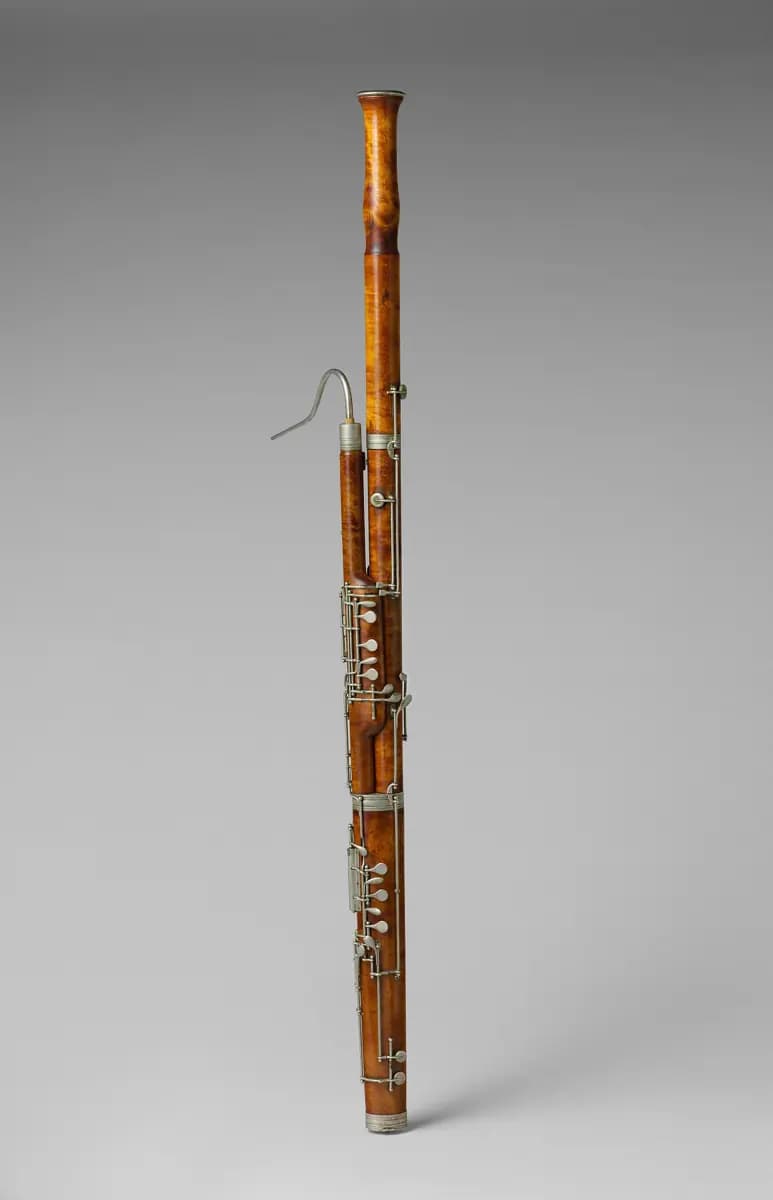
The bassoon has about two and a half meters of tubing, folded in two to fit the hands. In the nineteenth century Carl Almenräder and the Heckel firm in Germany redesigned its keywork, and the Heckel model is now the most widely used in the world; France kept its own basson, with a lighter tone.
Below it sits the contrabassoon, an octave lower. Beethoven used it in his Fifth and Ninth Symphonies, and Ravel lets it open the Concerto for the Left Hand alone, from the depths.
What was written for it
Vivaldi’s concertos, Mozart’s and Weber’s; Saint-Saëns’s Sonata; famous orchestral solos in Dukas, Stravinsky, Tchaikovsky (Symphony No. 4) and Ravel (Boléro).
In pictures
Where to start listening
- 1The Rite of Spring: introductionIgor StravinskyThe bassoon alone, so high it sounds like another instrument. Open the work
- 2The Sorcerer’s ApprenticePaul DukasThe brooms march to the sound of the bassoons. Find it in the archive
- 3Bassoon Concerto, K. 191Wolfgang Amadeus MozartMozart at eighteen, playing with leaps and low notes. Open the work
- 4Sonata for Bassoon and PianoCamille Saint-SaënsOne of the composer’s last works, lyrical and light. Open the work
Did you know?
- At the premiere of The Rite, the story goes, Saint-Saëns heard the opening, asked what instrument that was, and walked out.
- Vivaldi wrote about forty bassoon concertos, probably for players and pupils at the Ospedale della Pietà in Venice.