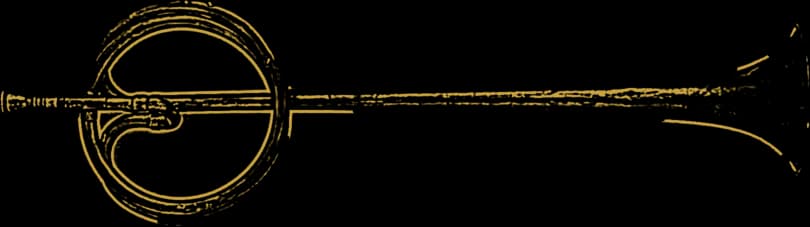
Trumpet
Ancient Egypt, more than 3,000 years ago
Trumpets have announced kings, battles and feasts for millennia. In the orchestra they bring brilliance and force to moments of triumph, and in the twentieth century they found a second life in jazz.
Works for trumpetHow it works
The player buzzes the lips into the mouthpiece, and the metal tube, about one and a half metres coiled up, amplifies the sound. Three valves open extra lengths of tube so every note can be played. By changing lip tension and air pressure, the trumpeter picks the notes of each series. Mutes fitted into the bell change the tone, from muffled to metallic.
The story
Two trumpets, one silver and one bronze, more than three thousand years old, were found in Tutankhamun’s tomb in Egypt. Through the Middle Ages and the Renaissance the trumpet was an instrument of ceremony and war, played by court musicians together with timpani.
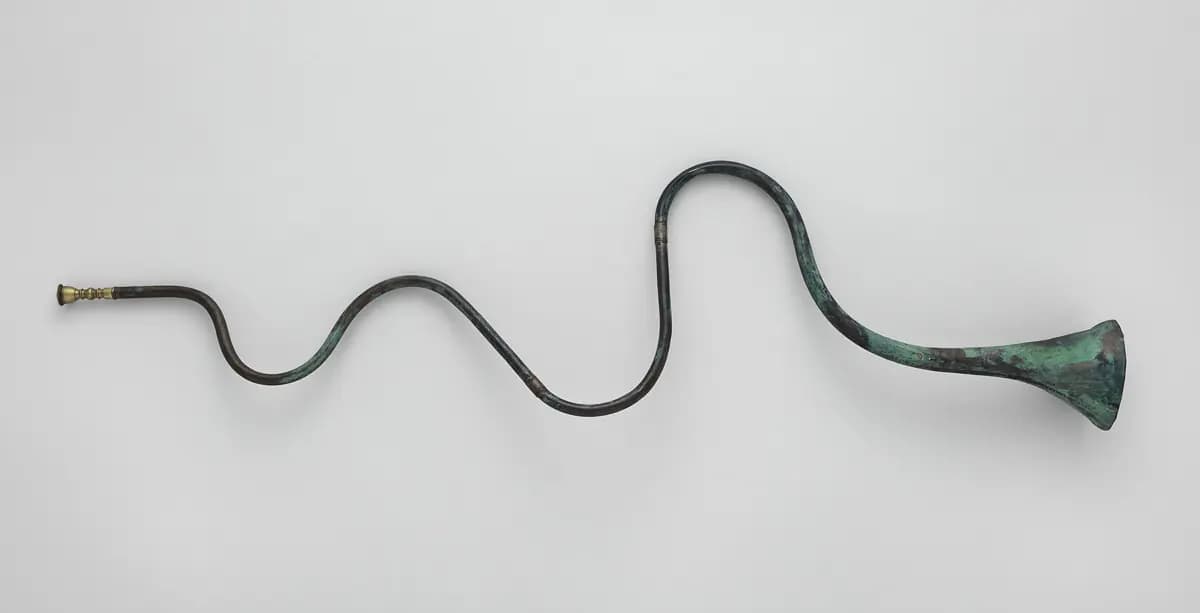
In the Baroque, the natural trumpet, without valves, reached the high notes where the harmonic series lies closest together, the clarino register. Bach and Handel wrote brilliant, fiendishly hard parts for it, as in the Brandenburg Concerto No. 2.
In 1796 Haydn composed a concerto for Anton Weidinger’s keyed trumpet, which could already play every note. Valves arrived in the nineteenth century, and the modern trumpet gained celebrated solos in Mahler, Mussorgsky and Ravel. In jazz, Louis Armstrong, Miles Davis and Wynton Marsalis, who also records classical repertoire, made the trumpet a voice of its own.
In the Holy Roman Empire, court trumpeters and kettledrummers formed an imperial guild, its charter confirmed by the emperor in 1623, which decided who could play and teach the instrument. Playing the trumpet was a privilege of court and ceremony, protected by law.
Mutes of many shapes, in metal, cork or fiber, change the trumpet’s sound. Twentieth-century composers such as Stravinsky and Copland called for them for precise effects, and in jazz Miles Davis made the sound of the harmon mute famous.
What was written for it
Bach (Brandenburg No. 2, Christmas Oratorio), Handel (Messiah), the concertos of Haydn and Hummel, and orchestral solos in Mahler (Symphony No. 5), Mussorgsky/Ravel (Pictures at an Exhibition) and Stravinsky.
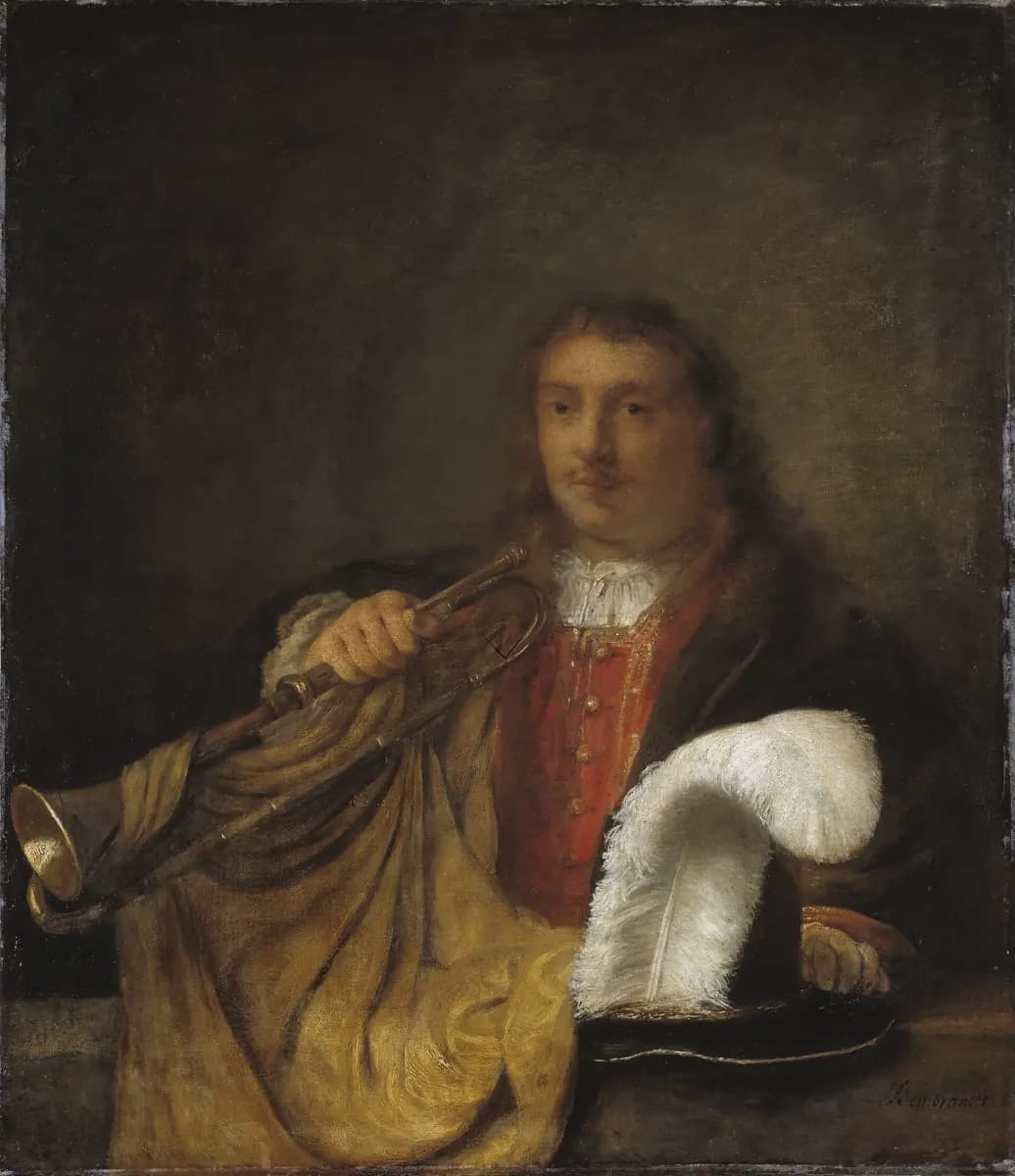
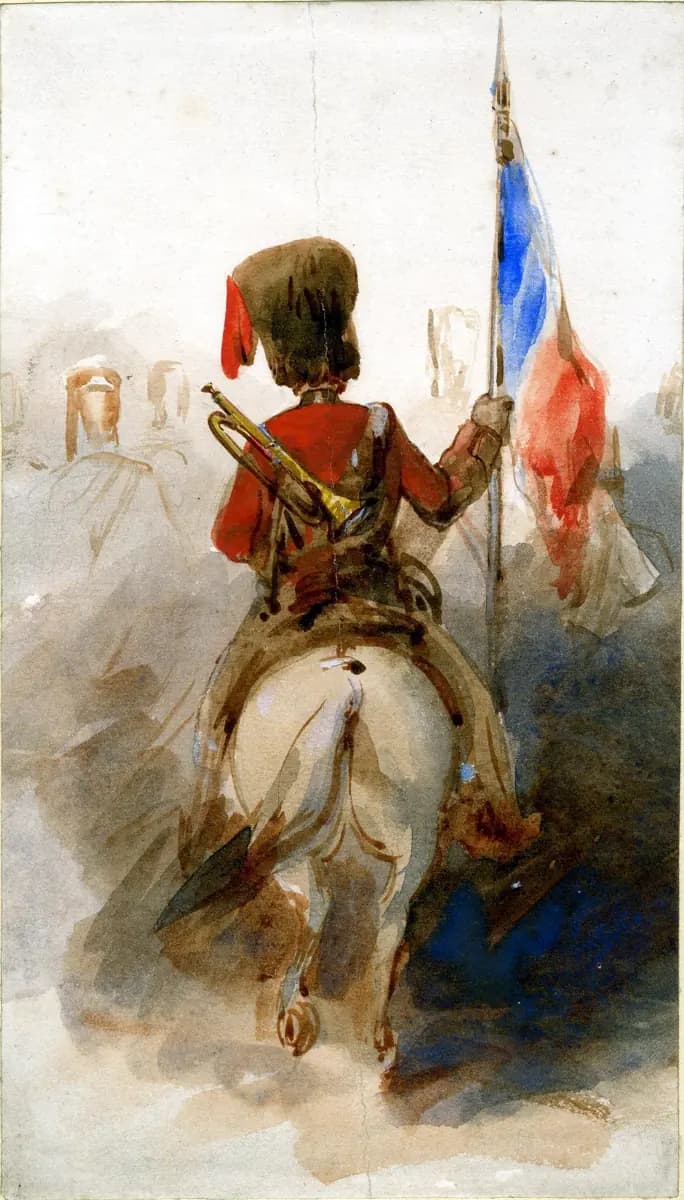
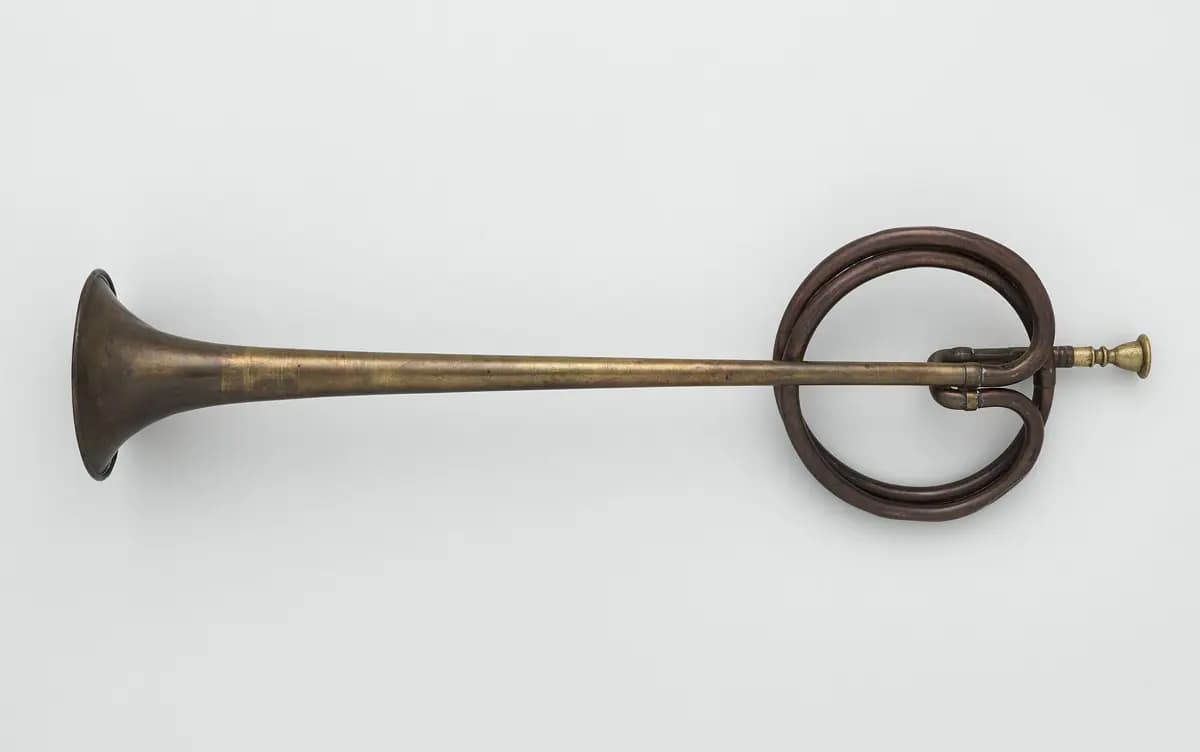
In pictures
Where to start listening
- 1Trumpet Concerto: finaleJoseph HaydnBright and virtuosic, for the first trumpet that could play every note. Open the work
- 2Prince of Denmark’s MarchJeremiah ClarkeThe well-known “Trumpet Voluntary,” long attributed to Purcell. Open the work
- 3Pictures at an Exhibition: PromenadeModest Mussorgsky / Maurice RavelThe trumpet alone opens the work. Open the work
- 4Symphony No. 5: Funeral MarchGustav MahlerIt begins with a lonely trumpet call. Open the work
Did you know?
- Tutankhamun’s trumpets were played in a BBC broadcast in 1939. In rehearsal the silver one cracked when the player fitted it with a modern mouthpiece.
- For centuries court trumpeters formed a closed guild, and teaching the craft to outsiders was forbidden.