Timpani
Europe, 15th century
Timpani are the orchestra’s tuned drums. Besides keeping rhythm, they play definite notes and can carry the drama of a whole symphony.
Works for timpaniHow it works
Each timpano is a large copper bowl covered with a head, of calfskin or plastic. The tighter the head, the higher the note. On modern timpani a pedal tightens or loosens the head, so the player can retune in the middle of the music. Sticks with heads of felt, wood or other materials change the sound, from soft to dry.
The story
Timpani came from the Middle East, where bowl-shaped drums, the naqqara, accompanied mounted armies. In the fifteenth century they reached European courts, always paired with trumpets, as a symbol of power.
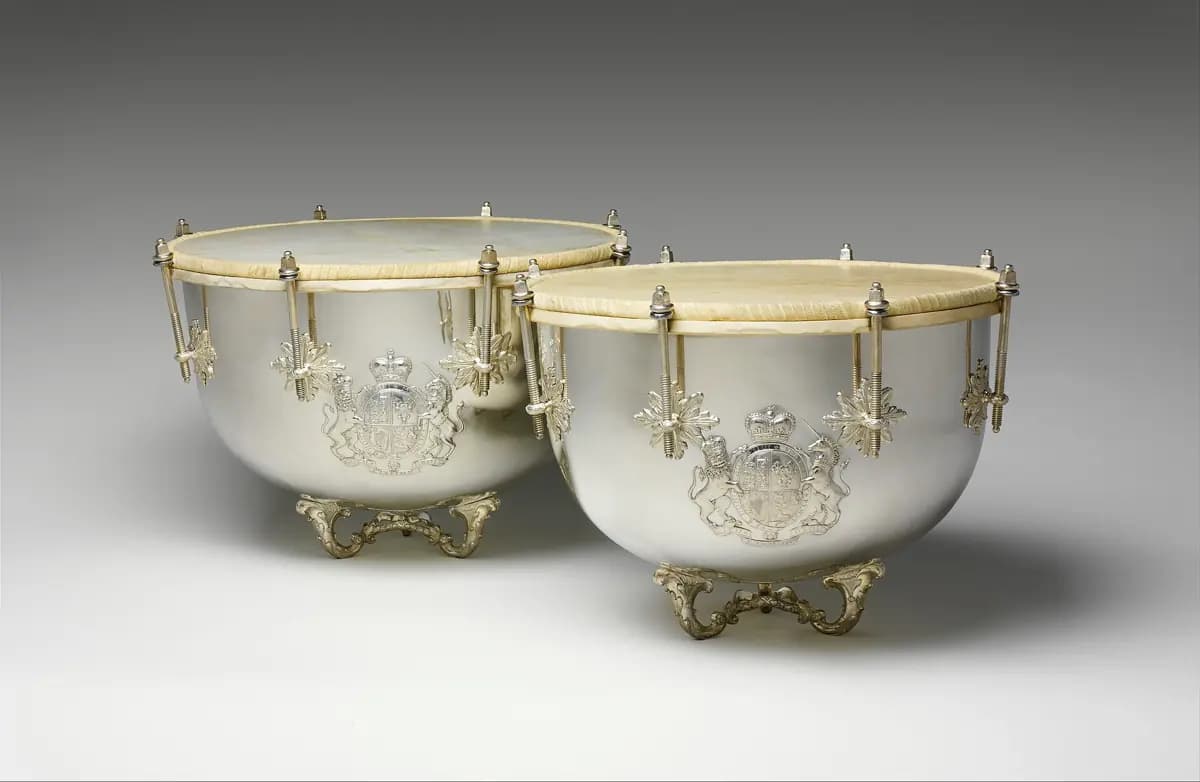
In the Baroque they entered the orchestra with the trumpets, usually playing two notes, the tonic and the dominant, to mark festive moments. Haydn, Mozart and Beethoven also began to use them to create tension and surprise.
In the nineteenth century Berlioz asked for several timpanists at once, and late in the century pedal timpani appeared, able to change notes quickly. Composers such as Bartók began writing glissandos and melodies for them.
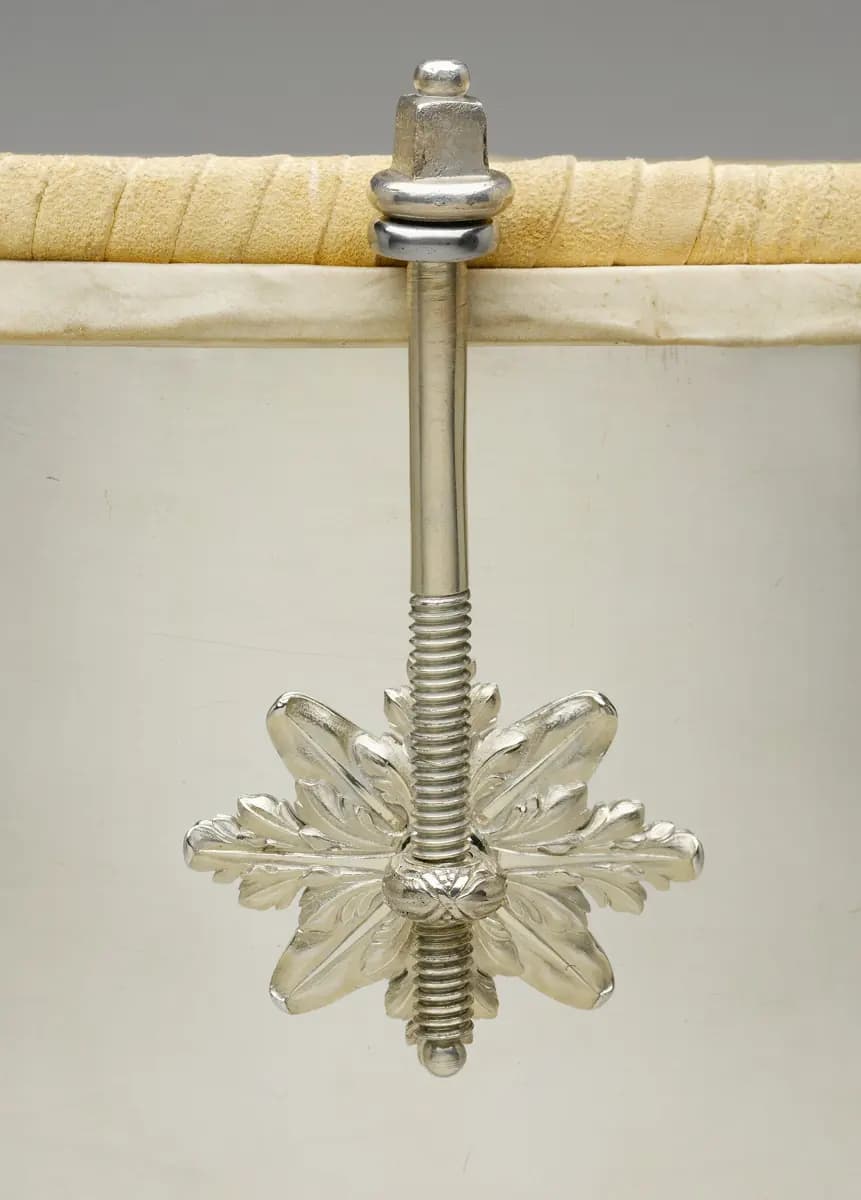
Until the nineteenth century the timpanist tuned each drum by turning the screws around the head, which took time, so composers avoided changing pitch in the middle of a movement. Mechanical systems and then the pedal solved the problem and let the timpani play melodies.
Heads were made of calfskin or goatskin. From the 1950s most orchestras moved to plastic heads, steadier in humid weather, though many timpanists still prefer natural skin for the Classical repertoire.
What was written for it
Timpani are in almost the whole symphonic repertoire. High points: Haydn (Symphony No. 103), Beethoven (Violin Concerto and Symphony No. 9), Berlioz (Symphonie fantastique), Richard Strauss (Also sprach Zarathustra) and Bartók (Music for Strings, Percussion and Celesta).
In pictures
Where to start listening
- 1Symphony No. 103, “Drumroll”Joseph HaydnThe symphony opens with a timpani roll on its own. Open the work
- 2Violin Concerto: openingLudwig van BeethovenFive soft timpani strokes open the concerto. Open the work
- 3Also sprach Zarathustra: introductionRichard StraussThe timpani answer the brass in music’s most famous sunrise. Open the work
- 4Symphonie fantastique: Scene in the CountryHector BerliozAt the end, four timpanists imitate distant thunder. Open the work
Did you know?
- In the scherzo of the Ninth Symphony, Beethoven tuned the timpani an octave apart, a rarity at the time, and the timpani even interrupt the orchestra.
- Timpanists often lean an ear close to the head, silently tapping, to check the tuning while the orchestra plays.