Elias Nikolaus Ammerbach
- Born
- 1530
- Died
- 1597
- aged 67
- Country
- Germany
- Era
- Renaissance
Elias Nicolaus Ammorbach · Elias Nicolaus genannt Ammerbach
Biography
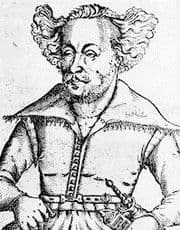
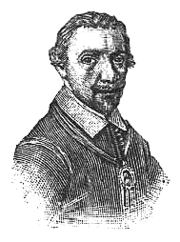
Elias Nikolaus Ammerbach (c.1530–29 January 1597) was a German organist and arranger of the Renaissance period. Born in Naumburg, he spent most of his working life in Leipzig, where he worked as an organist at the Thomaskirche, probably until his death.
He graduated from the University of Leipzig between 1548 and 1549 and, according to the preface to his 1571 publication, he traveled to foreign lands to further his studies, although he did not detail his destinations. Ammerbach was associated with the so-called Colorists, a group of composers who explored the harmonic colors of the music of the time, and their collections contain transcriptions of works by Ludwig Senfl, Heinrich Isaac, Josquin des Prez, Clemens non Papa, Orlande de Lassus and others, with Lassus being particularly represented.
He developed his own keyboard notation method, the so-called “German organistic tablature”, which used letters to indicate pitches and rhythmic symbols above them. This notation was adopted in his 1571 book, considered the first printed organ music in Germany. Although it is not known whether he composed original works – none of them are signed – he published arrangements of both sacred repertoire, kept in Latin, and secular, with titles in German, and, in his last edition of 1583, he included numerous Italian madrigals adapted for the keyboard.
In the context of German Renaissance music, Ammerbach stands out for his notational innovation and the dissemination of international repertoire, contributing to the organistic practice of his time. A notable aspect of his personal life was the fact that he was married three times, with his first two wives dying during their marriage.
Written by artificial intelligence and not yet reviewed by a person.
Where to start
Curiosities
Nobody has shared a curiosity about Ammerbach yet. The first one earns XP.
Works
14 works- Allmechtiger gütiger GottÓrgão
- Ich weiß mir ein festes gebautes HausÓrgão
- Tröstlicher Lieb stets ich mich übÓrgão
- Ach edler HortÓrgão
- Anchor che col partierTeclado
- Chi passa per questa stradaPiano
- Die mich erfrewet ist lobens werthÓrgão
- Ein new künstlich TabulaturbuchÓrgão
- Herzliebstes BildPiano
- Orgel oder Instrument TabulaturÓrgão
- Orgel oder Instrument TabulaturbuchÓrgão
- Passametzo ItaliÓrgão
- Passamezzo and Saltarello nuovoÓrgão
- Passamezzo anticoÓrgão





Something wrong on this page? or send a missing work.