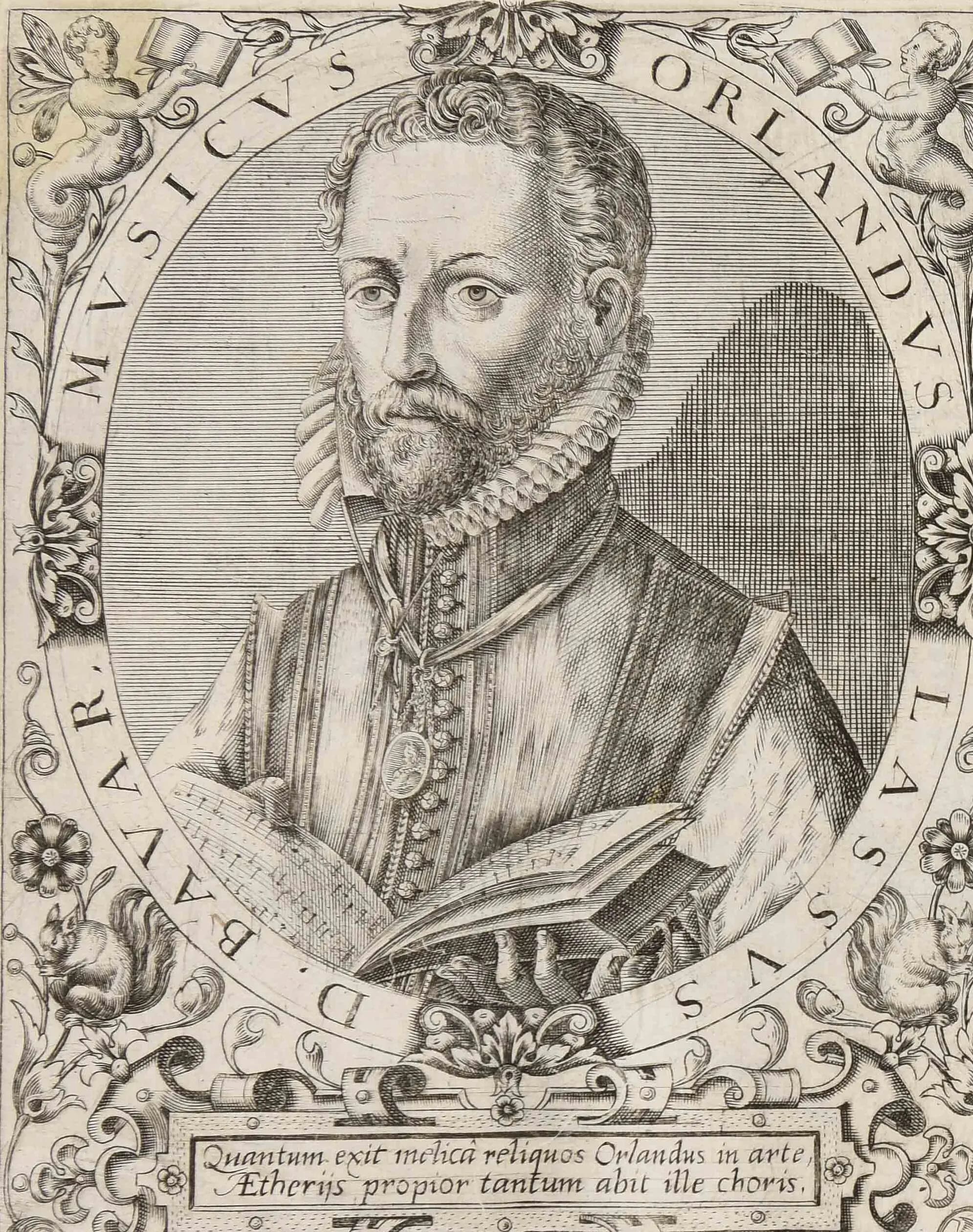
 1400–1600
Renaissance
In the Renaissance, the voices became equals and started to converse, imitating one another. Printing carried music to people who had never set foot in a cathedral.
In the early fifteenth century, composers from northern Europe, from what is now Belgium, northern France and the Netherlands, ran the richest chapels on the continent. Guillaume Du Fay and later Johannes Ockeghem wrote Masses in which every voice has its own melody, instead of one main voice with accompaniment.
Josquin des Prez, who worked in Milan, Rome and Ferrara, brought this writing to a new balance. In imitation, the technique that defined the period, one voice states a phrase and the others repeat it shortly after, each at its own pitch. The result is a web in which no voice is in charge. Josquin also cared about the words: you can follow the text, and the music follows its meaning.
In 1501, in Venice, Ottaviano Petrucci published the Harmonice Musices Odhecaton, the first book of polyphonic music printed with movable type. Until then, every copy was made by hand. With printing, the same piece reached many cities, and a composer could become famous far from home.
The Protestant Reformation and the Catholic response changed church music. Luther wanted congregations singing in German, and from that came the Lutheran chorale, with a simple, steady tune. On the Catholic side, the Council of Trent debated whether polyphony made the text impossible to understand. Giovanni Pierluigi da Palestrina wrote Masses of model clarity, and a legend says his Missa Papae Marcelli persuaded the cardinals not to ban polyphony. There is no evidence for it, but Palestrina’s style became the textbook model for centuries.
Outside the church, the Italian madrigal took over the courts: love poems sung in four or five parts, with the music drawing each word. In England, Thomas Tallis wrote Spem in alium for forty voices, and John Dowland composed lute songs of famous melancholy. Instruments, which used to double the voices, started to get music of their own.
What changed
- 1Every voice counts the sameImitation gives each line its own melody. The ear follows a web instead of one leading voice.
- 2Printed musicFrom 1501, music books travel across Europe. Composers become names and repertoire spreads.
- 3The words can be heardComposers want the text understood, and the music paints its meaning.
- 4Instruments find a voiceLute, viol and keyboard stop merely accompanying and get dances, fantasias and variations.
The forms of the era
- Mass
- Now fully in imitative polyphony, often built on a well-known melody.
- Motet
- A sacred piece in Latin, with a single text and voices that imitate one another.
- Madrigal
- A secular poem sung in several parts, with the music drawing the words.
- Lutheran chorale
- A hymn in German with a simple tune, for the congregation to sing together.
- Pavane and galliard
- A pair of dances, one slow and stately, the other quick and leaping.
- Fantasia
- A free instrumental piece that imitates the writing for voices.
Who lived in it
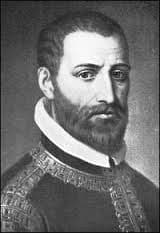
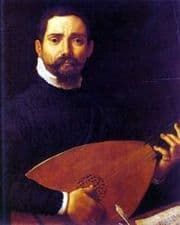
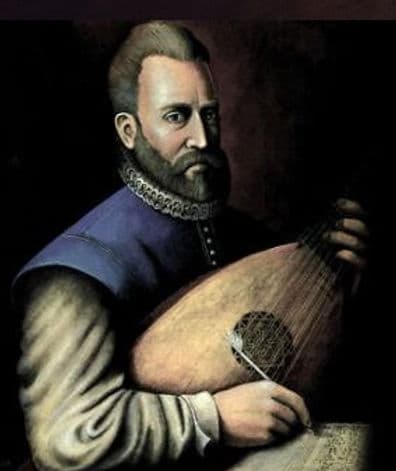
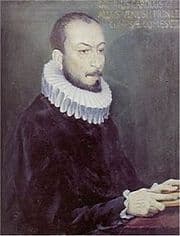
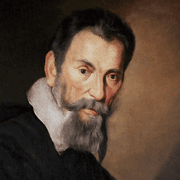
Some composers of the era, on the timeline.


Where to start listening
Works of this era- 01Ave Maria… virgo serenaJosquin des PrezThe voices enter one by one with the same phrase. Great for hearing imitation happen.Open the work
- 02Missa Papae MarcelliGiovanni Pierluigi da PalestrinaPerfect clarity: you can follow every line and understand the text.Open the work
- 03Spem in aliumThomas TallisForty independent voices. On headphones, the sound seems to circle around you.Open the work
- 04Flow, my tearsJohn DowlandOne voice and a lute. The best-known English song of the period.Open the work
- 05Moro, lasso, al mio duoloCarlo GesualdoA madrigal with chords so strange they sound like the twentieth century.Open the work
Did you know?
- Spem in alium was written for eight choirs of five voices. In some passages all forty sing at once; in others the sound travels from choir to choir around the room.
- Before printing, copying a single Mass by hand could take weeks. The Odhecaton of 1501 gathered about a hundred pieces in one volume.
- Madrigalists called the habit of illustrating the text with music “word painting.” The effect was so well known that composers joked about it themselves.