Anton Averkamp
- Born
- 18 February 1861
- Died
- 1 June 1934
- aged 73
- Country
- Netherlands
- Era
- Romantic
- Wrote for
- Fagote · trombone · cordas · corne inglês · oboé
Antonius Josephus Averkamp
Biography
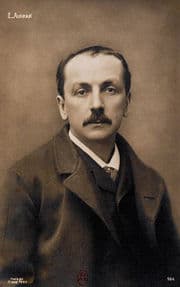
Anton Averkamp (full name Antonius Josephus Averkamp) was born on 18 February 1861 in Cabauw, province of Utrecht, and died on 1 June 1934 in Bussum, having become a naturalized Dutch citizen. Raised in Amsterdam, he initially pursued commercial training before devoting himself to music.
His musical instruction began in 1879, when he started studying piano and theory with Daniël de Lange. In 1883 he entered the Hochschule in Berlin, where he received composition lessons from Friedrich Kiel; the following year he transferred to Munich to continue his studies under the guidance of Josef Gabriel Rheinberger. Back in Amsterdam in 1886, he worked as a solo and choral singing teacher at the local music school and, simultaneously, took vocal lessons with Johan Messchaert, developing a particular interest in the revitalization of Renaissance polyphony.
Averkamp distinguished himself as conductor of an a‑cappella choir founded in 1890, which quickly acquired an international reputation by presenting polyphonic repertoire from the 15th and 16th centuries. Between 1898 and 1910 he worked as a music critic for the weekly *De Amsterdammer* (now *De Groene Amsterdammer*) and, in 1903, established his own singing school. From 1919 to 1933 he directed the Utrechter Musikschule Mattschappij tot Bevordering der Toonkunst, succeeding Johan Wagenaar, and influenced generations of Dutch singers and musicians.
His compositional output, situated in the Romantic period, mainly comprises vocal and choral works: songs for voice and piano (op. 1, 5, 10, 12), a sonata for violin and piano (op. 2), the cantata “Betlehem” (op. 6), the symphonic poem “Elaine und Lancelot” (op. 7) and various hymns and choral pieces (op. 8‑11). He also wrote arrangements of Renaissance music, such as choral versions of works by Adrian Willaert, and produced didactic texts on modern music, vocal technique and the history of choral singing. The combination of activity as composer, conductor, critic and pedagogue made Averkamp a central figure in the revitalization of historic choral repertoire and in the development of music education in the Netherlands at the end of the 19th and beginning of the 20th century.
Written by artificial intelligence and not yet reviewed by a person.
Where to start
Curiosities
Nobody has shared a curiosity about Averkamp yet. The first one earns XP.
Works
1 works



Something wrong on this page? or send a missing work.