 1820–1900
Romantic
In the nineteenth century, music began to speak for the individual: passion, nature, longing, homeland. Orchestras grew, the piano became the heart of the home and the virtuoso became a celebrity.
Beethoven opened the way. Deaf in his last years, he wrote ever more personal and expansive works, and in his Ninth Symphony of 1824 he brought a choir and soloists into the last movement to sing Schiller’s Ode to Joy. For the composers who followed, he was proof that music could say what words could not reach.
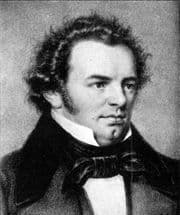
In Vienna, Franz Schubert turned the song for voice and piano, the Lied, into a major art. He wrote more than six hundred, among them Erlkönig, in which one singer plays the narrator, the father, the sick child and the Elf King while the piano gallops without a break. Robert Schumann and Clara Schumann, one of the most admired pianists of her day, followed that path, as did Johannes Brahms, a close friend of the couple.
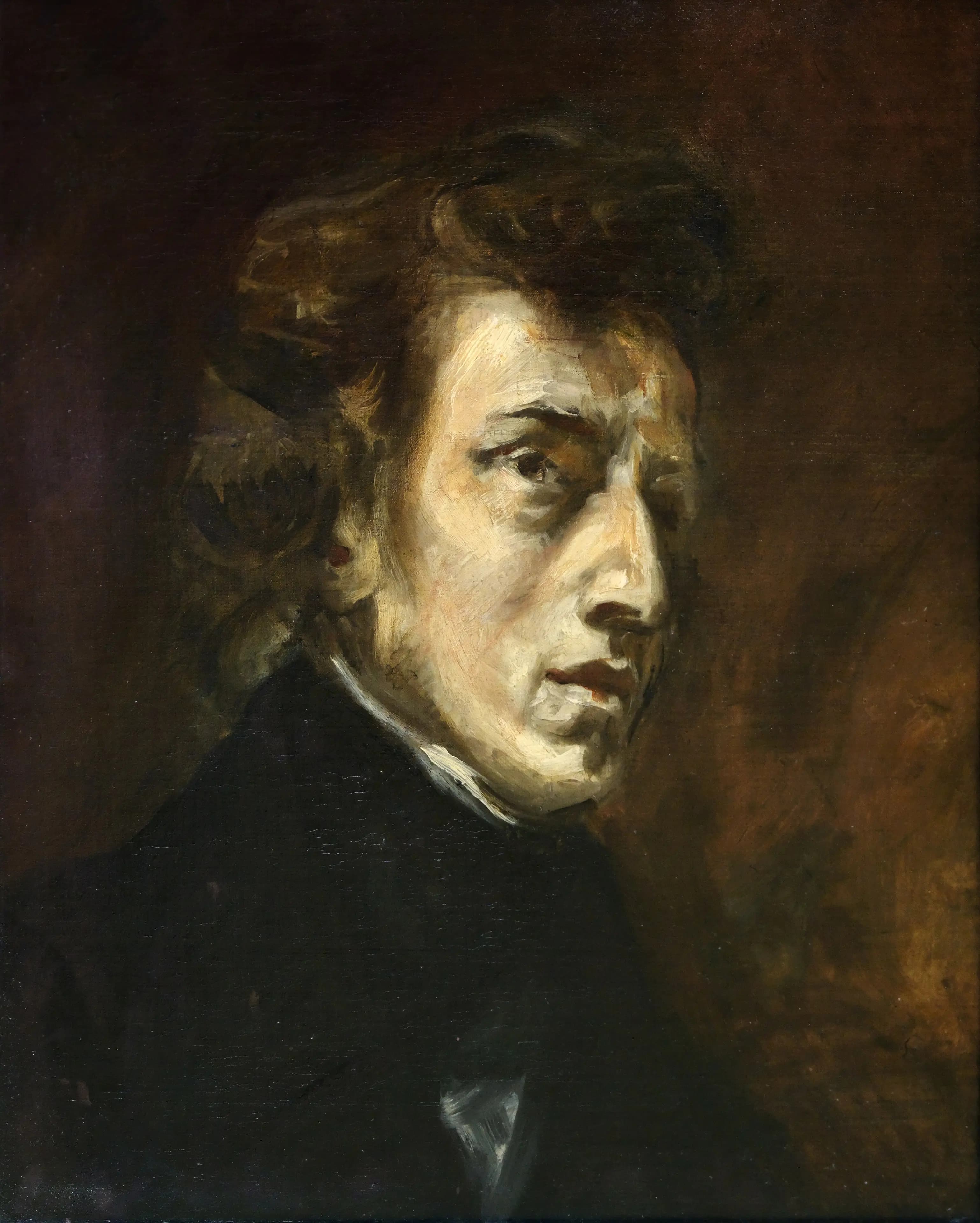
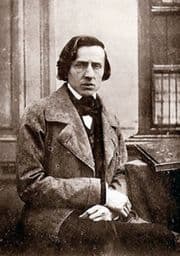
The piano, now with an iron frame and a faster action, became the instrument of the century. Frédéric Chopin wrote almost only for it: nocturnes, ballades, études, and mazurkas and polonaises that carried memories of Poland to Paris. Franz Liszt invented the solo piano recital as we know it and stirred a frenzy that the poet Heinrich Heine called Lisztomania. Niccolò Paganini did the same with the violin.
The orchestra grew in size and colour. In his Symphonie fantastique of 1830, Hector Berlioz told the story of an artist obsessed with a woman, with a theme that returns in every movement. In opera, Giuseppe Verdi gave Italy La traviata and Aida, and Richard Wagner built vast dramas such as The Ring of the Nibelung, in which each character and idea has its own musical motif. The chord that opens his Tristan und Isolde, from 1865, became famous for taking so long to resolve.
Many composers looked to their own people’s music for a national voice: the Mighty Handful in Russia, Bedřich Smetana and Antonín Dvořák in Bohemia, Edvard Grieg in Norway. Pyotr Tchaikovsky wrote ballets that have never left the stage, such as The Nutcracker. In Brazil, Carlos Gomes premiered Il Guarany at La Scala in Milan in 1870, and the opera entered the repertoire of Italian theatres.
What changed
- 1Music tells storiesSymphonic poems and programme symphonies describe landscapes, legends and personal dramas.
- 2The virtuoso becomes a starLiszt and Paganini fill halls on their own. The recital is born, and with it the performer as celebrity.
- 3The orchestra growsMore brass, valves on horns and trumpets, the tuba, the harp and new percussion. Some works call for more than a hundred players.
- 4Each nation finds its voiceLocal dances, songs and legends enter concert music, from Russia to Brazil.
The forms of the era
- Lied
- A song for voice and piano on a poem, often gathered in cycles.
- Character piece
- A short piano work with a clear mood: nocturne, impromptu, intermezzo.
- Symphonic poem
- An orchestral work in one movement that narrates or depicts something outside music.
- Music drama
- Wagner’s opera: continuous music, no separate numbers, motifs for every idea.
- Concert étude
- A technical study that is also music for the stage, like those of Chopin and Liszt.
- Ballet
- Music for narrative dance, with Tchaikovsky as its great name.
Who lived in it
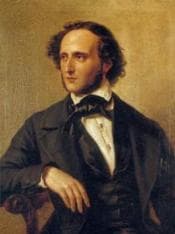
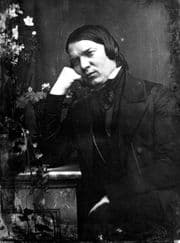
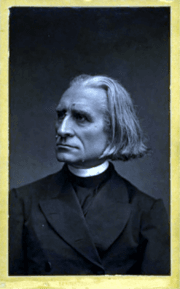
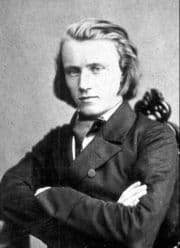
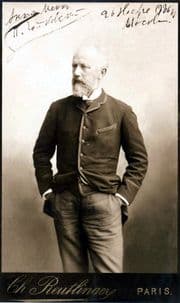
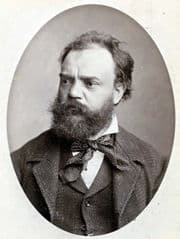
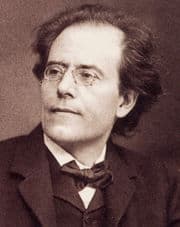
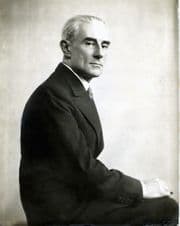
Some composers of the era, on the timeline.
Where to start listening
Works of this era- 01ErlkönigFranz SchubertOne singer, four characters. The piano is the galloping horse from start to finish.Open the work
- 02Nocturne Op. 9 No. 2Frédéric ChopinThe melody sings like an opera voice over a gently rocking accompaniment.Open the work
- 03Symphony No. 9: finaleLudwig van BeethovenThe Ode to Joy tune first appears in the cellos and basses, without words, before the choir.Open the work
- 04Vltava (The Moldau)Bedřich SmetanaThe river rises in two flutes and crosses Bohemia to Prague.Open the work
- 05Symphony No. 9, “From the New World”: LargoAntonín DvořákThe cor anglais sings one of the best-known melodies in the repertoire.Open the work
Where to start playing
Pieces chosen by the house, at the level rated by the musicians of IMSLP.
Beginner
Intermediate
Advanced
- Nocturnes, Op.9Frédéric ChopinChopin's best-known nocturnes: song in the right hand, and rubato.
- 3 Intermezzi, Op.117Johannes BrahmsLate Brahms: it asks for sound and phrasing more than speed.
- Clarinet Sonata No.1, Op.120 No.1Johannes BrahmsBrahms returned to composing because of the clarinettist Richard Mühlfeld.
- Dvořák's Cello ConcertoAntonín DvořákThe great Romantic concerto for the instrument.
- Ballade No.1Frédéric ChopinOne of the great works of the Romantic repertoire, narrative and virtuosic.
Did you know?
- Chopin asked for his heart to return to Poland after his death. His sister smuggled it from Paris to Warsaw, where it rests in a pillar of the Church of the Holy Cross.
- Heine coined Lisztomania in 1844 to describe Liszt’s audiences: fans who kept his cigar stubs and the broken strings of his piano.
- Carlos Gomes based Il Guarany on José de Alencar’s novel O Guarani, and its overture has opened the Brazilian government radio programme A Voz do Brasil for decades.