
Oboe
French court, around 1650
The oboe has a penetrating, expressive sound that carries through the whole orchestra. It gives the note everyone tunes to before the concert.
Works for oboeHow it works
The oboe uses a double reed: two thin blades of cane tied together, which vibrate when the player blows between them. The reed sits at the top of a conical wooden tube, usually grenadilla, with metal keys. Most oboists make their own reeds by hand, and the reeds change the sound a great deal.
The story
The oboe descends from the shawm, a loud double-reed instrument played outdoors in the Middle Ages. Around 1650, musicians at the court of Louis XIV, such as the Hotteterre family, created a gentler instrument in three joints, for playing indoors. The name comes from the French hautbois, high wood.
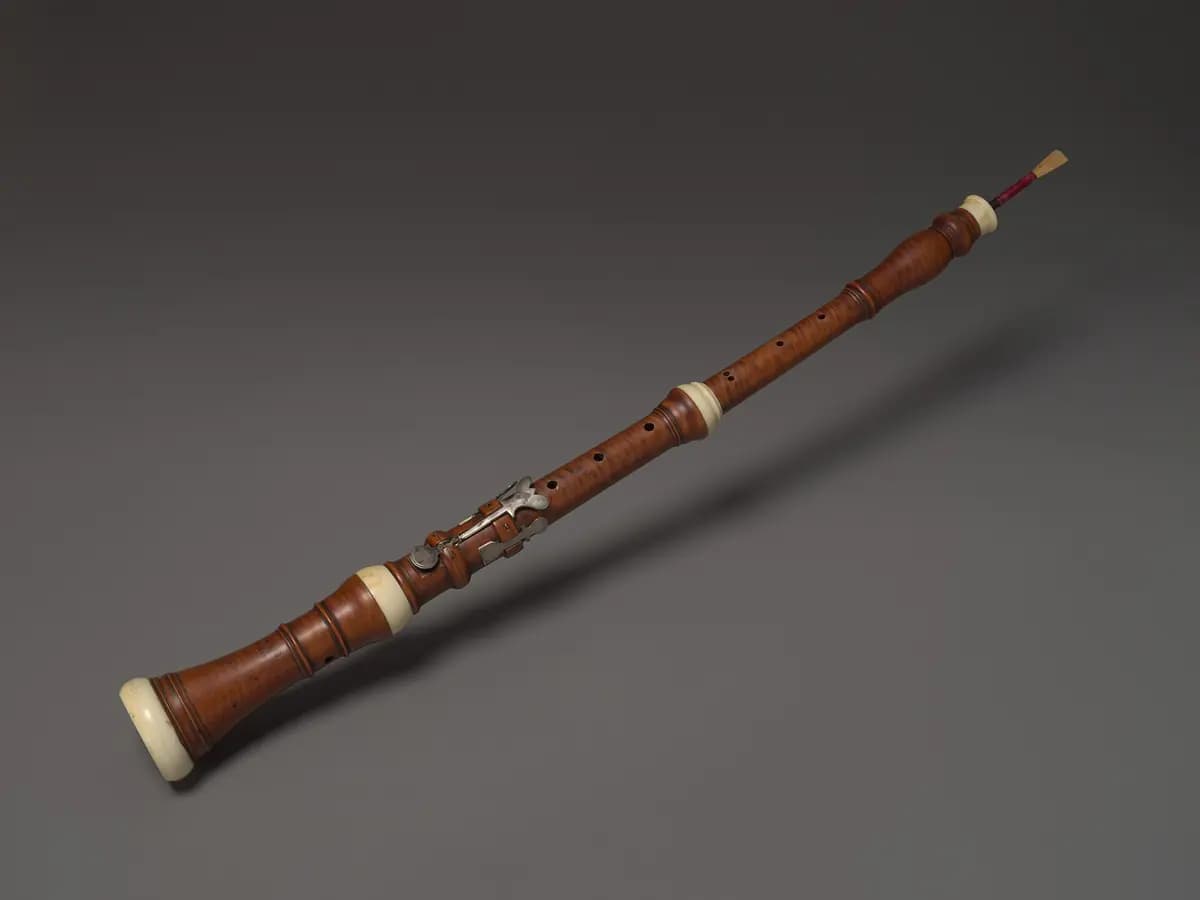
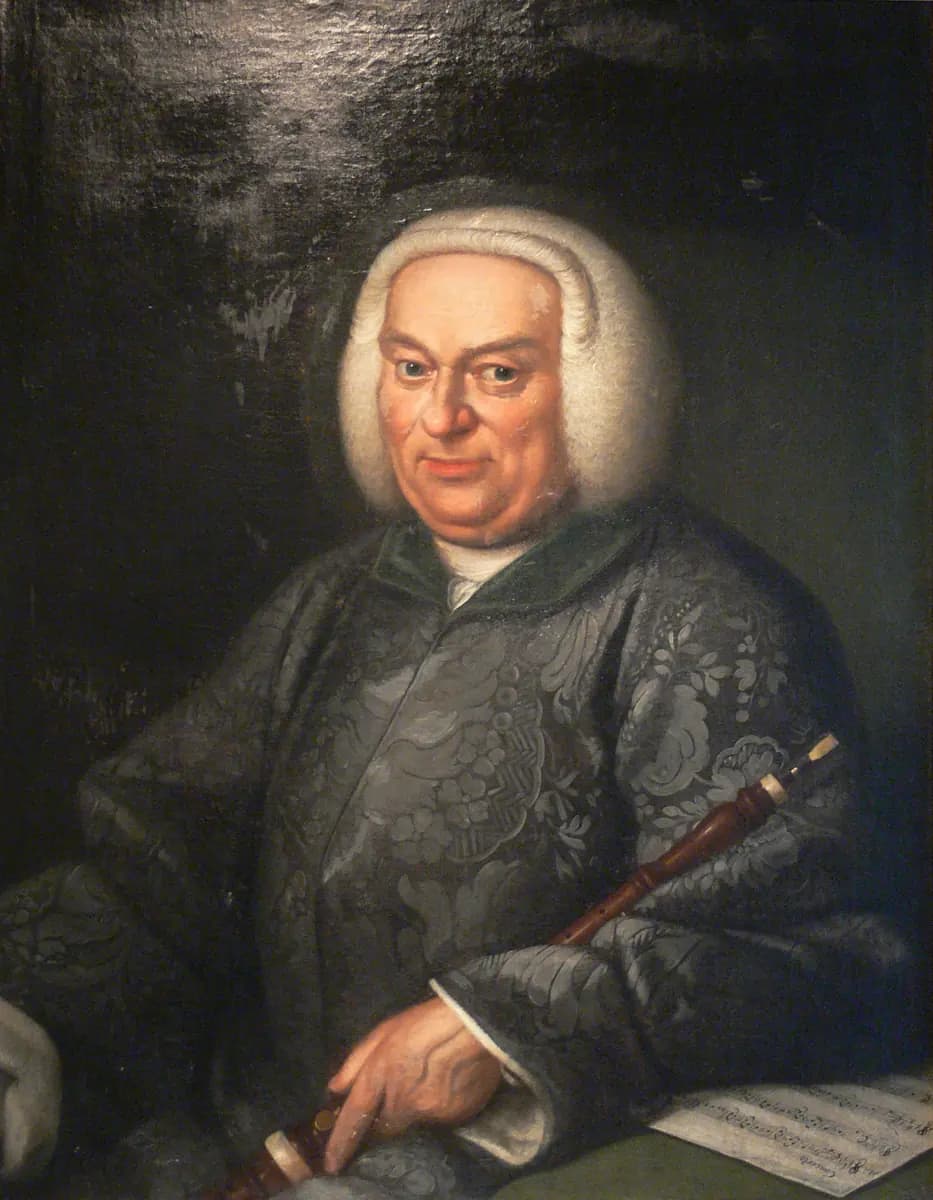
The new oboe spread quickly. In the Baroque, Bach used it in almost every cantata, often alongside the voice, and Vivaldi, Albinoni and Marcello wrote concertos for it. In the Classical period, Mozart composed his Concerto in C major and the Oboe Quartet.
In the nineteenth century it received a fuller key system, and in the twentieth gained works by Richard Strauss, Poulenc and Britten. The family includes the lower oboe d’amore and the cor anglais, which is neither English nor a horn.
The oboe gives the A the orchestra tunes to before a concert. The custom comes from the instrument’s focused, steady tone, which everyone can hear clearly above the rest.
Every oboist makes their own reeds, scraping cane by hand, and spends hours a week at it. A good reed lasts only a few days of heavy playing, and finding the right one before a concert is part of the routine.
What was written for it
Bach’s cantatas and Passions, the concertos of Vivaldi, Marcello and Albinoni, Mozart’s Concerto, Strauss’s, Poulenc’s sonata and Britten’s Six Metamorphoses after Ovid for solo oboe.
In pictures
Where to start listening
- 1Oboe Concerto in D minor: AdagioAlessandro MarcelloA melody so beautiful that Bach arranged it for harpsichord. Open the work
- 2Oboe Concerto in C major, K. 314Wolfgang Amadeus MozartCheerful and virtuosic, full of ornaments. Open the work
- 3Swan Lake: the swan themePyotr TchaikovskyThe oboe sings the ballet’s main theme. Open the work
- 4Oboe ConcertoRichard StraussWritten at the end of the Second World War, with barely a pause to breathe. Open the work
Did you know?
- The oboe gives the orchestra its A because its pitch is stable and its sound stands out from the other instruments.
- Strauss’s Concerto grew out of a question from an American soldier, John de Lancie, an oboist, who visited him in 1945 and asked whether he had ever thought of writing for the instrument.