Modest Mussorgsky
- Born
- 21 March 1839
- Died
- 28 March 1881
- aged 42
- Country
- Russia
- Era
- Romantic
Модест Петрович Мусоргский · Modest Petrovič Musorgskij · Modest Petrovich Musorgskii
Biography
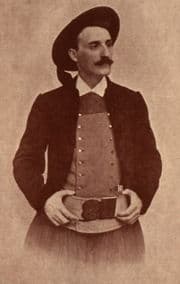
Modest Petrovich Mussorgsky was born on 21 March 1839, in Karevo, in the district of Toropets, province of Pskov, then part of the Russian Empire, and died on 28 March 1881. Of Russian nationality, he belonged to a noble family that claimed descent from Rurik. His mother, Julia Chirikova, gave him his first piano lessons already in childhood; at six years old he already studied with his mother, and three years later he presented a concert of John Field and works of Franz Liszt to relatives and friends.
Mussorgsky’s musical training combined domestic learning with formal instruction. At ten he was sent to Saint Petersburg to study at the Petrischule, where he received piano lessons from Anton Gerke. In 1852, at twelve, he published a piano polka entitled “Porte‑enseigne Polka”. After completing the Guard Cadet School, he entered the Preobrazhensky Regiment, but, from 1856, he began to associate with figures such as Alexander Borodin, the composer Alexander Dargomyzhsky, the critic Vladimir Stasov, César Cui and, above all, Mily Balakirev. Balakirev guided Mussorgsky in form and harmony, introducing him to works by Beethoven, Schumann, Schubert and Glinka, and was decisive for the composer, in 1858, to leave the military career and devote himself entirely to music.
Mussorgsky stood out as an innovator of Russian music in the Romantic period, seeking a national identity distinct from Western conventions. His style privileged musical realism, faithful representation of everyday life and attention to the lower classes, rejecting symmetrical forms that he considered inadequate to unpredictable reality. Among his best‑known works are the opera Boris Godunov, the orchestral poem Night on Bald Mountain and the piano suite Pictures at an Exhibition. Although many compositions were initially disseminated in revised versions by other composers, recent scholarly editions are restoring the original manuscripts, consolidating his importance in the classical repertoire.
A striking aspect of his personal life was the recurring struggle with alcoholism, which intensified after his mother’s death in 1865. The very spelling of his name underwent variations throughout his life; he jokingly signed himself “Musoryanin”, a jocular allusion to the meaning of “musor” (trash) in Russian, reflecting his sense of humor and ambiguous relationship with his family. As a member of the group known as “The Five”, Mussorgsky left a lasting legacy by influencing the definition of Russian national music and inspiring later generations of composers.
Written by artificial intelligence and not yet reviewed by a person.
Where to start
Curiosities
- "Pictures at an Exhibition" was inspired by paintings of his friend Viktor Hartmann.
- Struggled with alcoholism, which contributed to his premature death.
- Was a civil servant and composed music in his spare time.
- Member of "The Five", Russian nationalist composers.
Works
86 works- Pictures at an ExhibitionIncludes The Great Gate of Kiev… · Piano · 1874 (June 2-22)
- Night on Bald MountainOrquestra · 1867
- Boris GodunovOrquestra · 1868-1872
- HopakVoz · 1866
- Intermezzo in modo classicoPiano · 1860-61 (1ª versão)1867-July (2ª versão)
- Mephistopheles' Song of the FleaVoz · 1879
- Memories of ChildhoodPiano · 1865 (incomplete)
- Ein KinderscherzPiano · 1859 (26 September) - 1st version1859 (1 October) - 2ª versão
- In the VillagePiano · 1880 ca.
- NightVoz · 1864
- Cradle SongVoz · 1865
- Eremushka's LullabyVoz · 1868
- Iisus NavinContralto · 1874–77
- JoshuaContralto · 1874–77
- Child's SongVoz · 1868
- King SaulVoz · 1863
- DesireVoz · 1866
- From My TearsVoz · 1866
- Evening SongVoz · 1871
- La CapricieusePiano · 1865 (26 July)
- RayokVoz · 1870
- Ah, You Drunken SotVoz · 1866
- Darling SavishnaVoz · 1866
- ForgottenPiano · 1874
- KalistratVoz · 1864
- Old Man’s SongVoz · 1863
- PrayerVoz · 1865
- Pictures from CrimeaPiano · 1879, 1880
- Gathering MushroomsVoz · 1867
- Dearest, Oh Why are Your Eyes Sometimes So Cold?Voz · 1866

Something wrong on this page? or send a missing work.