Henry Purcell
- Born
- 10 September 1659
- Died
- 21 November 1695
- aged 36
- Country
- England
- Era
- Baroque
Henri Purcell · Henricus Perselas
Biography
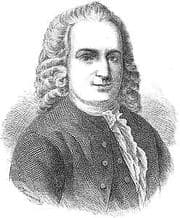
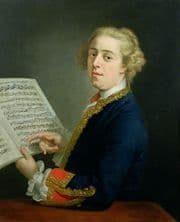
Henry Purcell was born on September 10, 1659, in StAnn's Lane, OldPyeStreet, in Westminster, and died on November 21, 1695, in MarshamStreet, also in Westminster. He was English and, despite having died at the age of 35-36, he left a legacy that places him among the greatest composers of Baroque England.
Son of Henry Purcell, he grew up in a musical environment; His brother-uncle Thomas Purcell, gentleman of the Chapel Royal, took charge of his education after his father's death in 1664. Under Thomas' tutelage, the young man was admitted as a chorister at the Chapel Royal, studying first with the composer Captain Henry Cooke and then with Pelham Humfrey, Cooke's successor. After Humfrey's death, he continued his studies with John Blow. Other musicians who influenced his training were Matthew Locke, a family friend, and John Hingston, for whom he worked as an assistant organ builder.
Purcell's style combines a distinctly English sonic identity with Italian and French elements, reflecting the cosmopolitan practice of the time. His production includes operas, semi-operas, sacred and instrumental music. Among the most representative works are the opera Dido andAeneas (awarded in 1689), the semi-opera TheFairyQueen (1692), and the sacred work TeDeum eJubilateDeo (1694), considered the first English TeDeum with orchestral accompaniment. He also wrote important antiphons such as Iwasglade Myheartisinditing for the coronation of James II (1685), in addition to numerous songs, sonatas and royal hates.
He served as organist at the Chapel Royal from 1679 and, after marrying in 1682, simultaneously assumed the position of organist at Westminster Abbey. During this period he composed music for more than forty theatrical plays, reinforcing the English tradition of “dramatic opera”, in which singing alternates with spoken speech. His music for the theater, especially TheFairyQueen, was rediscovered in the early 20th century and helped to consolidate the revival of English Baroque work.
A striking aspect of his personal life was his marriage to Frances Purcell, with whom he had six children, four of whom died in infancy. After his death, Frances published two volumes of the collection OrpheusBritannicus (1698 and 1702), preserving much of her husband's legacy. Purcell was buried beside the organ in Westminster Abbey, where his epitaph celebrates the excellence of his harmony.
Written by artificial intelligence and not yet reviewed by a person.
Where to start
Curiosities
- Was organist at Westminster Abbey and composer to the English court.
- "Music for the Funeral of Queen Mary" became one of his most famous works.
- Created "Dido and Aeneas", considered the first great English opera.
- Died at 36, possibly from tuberculosis.
Works
478 works- Abdelazer, Z.570Includes Rondeau · Soprano · 1695
- Pavane and Chaconne in G minor, Z.752 (Pavane) and Z.730 (Chaconne)Violino · 1680 ca. in 19 Fantazias, In Nomines and Other Pieces
- 3 Parts upon a Ground, Z.731Violino · 1678 ca.
- 12 Sonatas of Three Parts, Z.790-801Violino · 1680 ca.
- Chaconne in 'Diocletian', Z.627Orquestra
- 15 Fantasias, Z.732-747, 752, 730, 770Piano · 1680 ca. in London. GB-Lbl, Add.Ms.30930, ff.30-72v
- 19 Fantazias, In Nomines and Other Pieces, Z.732-747, 752, 730, 770Quarteto · 1680 ca. in London. GB-Lbl, Add.Ms.30930, ff.30-72v
- Air in D minor, ZT 676Teclado · 1693 · Beginner
- 10 Sonatas in Four Parts, Z.802-811Violino
- 6 Vocal DuetsVoz
- A Choice Collection of Lessons for the Harpsichord or SpinnetHarpa
- 14 Pieces for the ViolinViolino
- A Song Tune, ZT 695Teclado · 1687
- A Fool's Preferment, Z.571Voz
- 5 Sacred ChorusesCoro
- Air in G major, Z.641Teclado
- A Ground in Gamut, Z.645Teclado
- A Song Tune, ZT 694Cravo
- 3 StückeCordas
- Dido and Aeneas, Z.626Dido and Aeneas · Orquestra · 1677-88
- King Arthur, Z.628King Arthur · Orquestra · 1691
- Air in D Minor, ZT 675Cravo
- A Collection of Ayres Compos'd for the TheatreViolino
- 10 Pianoforte PiecesPiano
- Amphitryon, Z.572Cordas
- Album of Trumpet TunesTrompete
- 3 MinuetsPiano
- 2 Airs in C majorPiano
- A New Ground in E minor, ZT 682Teclado
- The Fairy Queen, Z.629The Fairy Queen · Orquestra



Something wrong on this page? or send a missing work.