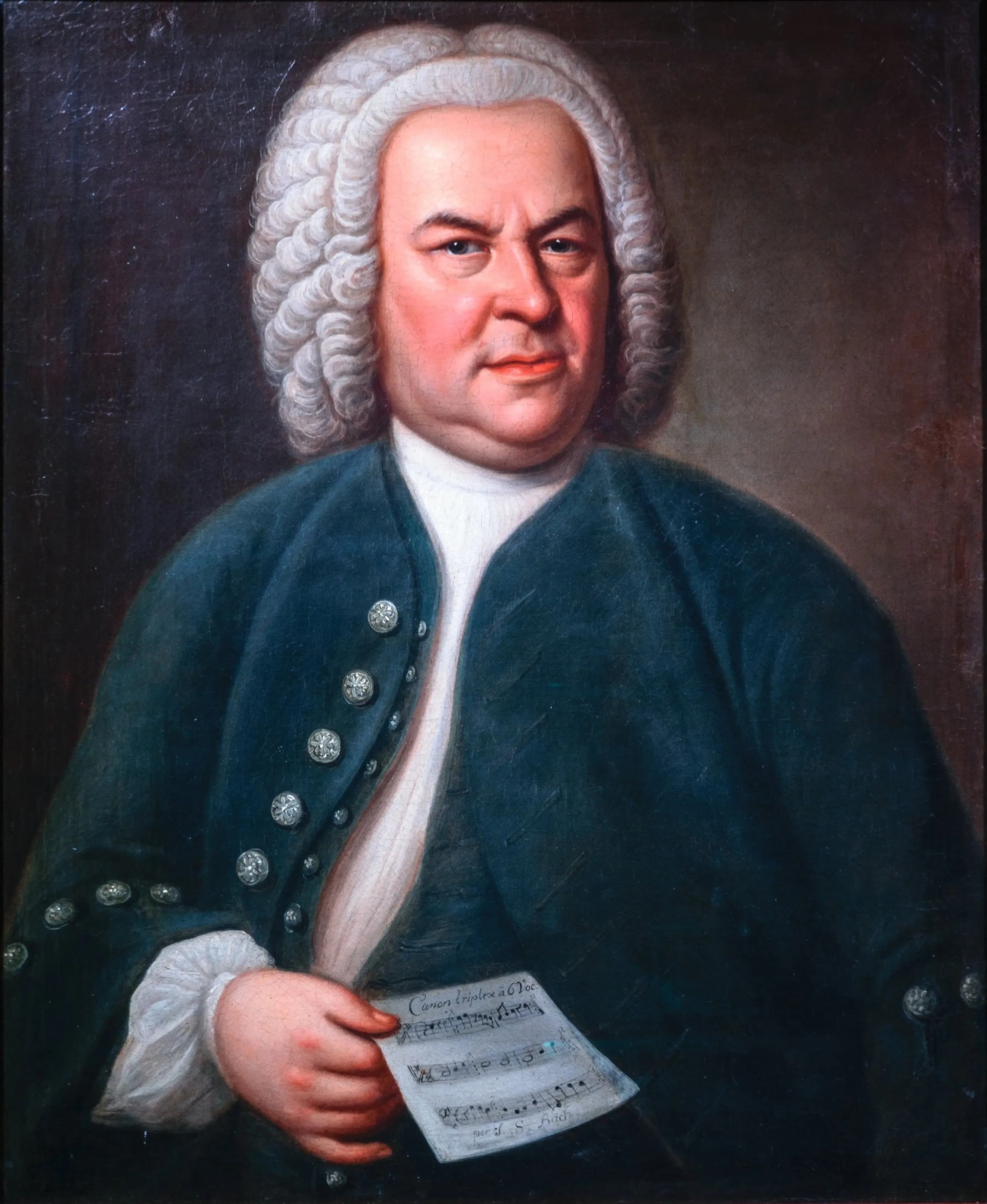
 1600–1750
Baroque
Around 1600, in Florence, a few musicians wanted music to serve drama. Out of that came opera, the basso continuo and a language of contrasts that runs until Bach’s death in 1750.
A group of Florentine thinkers, the Camerata, believed that Greek tragedy had been sung throughout and wanted to revive that ideal. Their answer was a solo voice declaiming the text freely over simple chords. The first operas appeared around 1600, and in 1607, in Mantua, Claudio Monteverdi staged L’Orfeo, the earliest opera still regularly performed.
Beneath the voice lay the basso continuo: a bass line played by cello, bassoon or viol, with chords improvised on harpsichord, organ or lute from figures written in the score. This foundation supported almost all the music of the period, from opera to chamber music. At the same time the old modes gave way to the system of major and minor keys that still organises most Western music.
In Italy, Arcangelo Corelli settled the concerto grosso, in which a small group of soloists answers the orchestra, and Antonio Vivaldi wrote hundreds of concertos for one soloist, many for the young women of the Ospedale della Pietà in Venice. His Four Seasons, published in 1725, set to music the sonnets printed with them: birdsong, a storm, the hunter.
In France, Jean-Baptiste Lully ran the music of Louis XIV’s court and created French opera, closely tied to dance. In England, Henry Purcell wrote Dido and Aeneas. In Germany, Johann Sebastian Bach, organist and music director, drew all of this together. He wrote cantatas for Leipzig’s Sundays, the Passions, the Brandenburg Concertos and The Well-Tempered Clavier, a set of preludes and fugues in all twenty-four keys.
George Frideric Handel, born the same year as Bach, made his career in London with Italian operas and then English oratorios such as Messiah, first performed in Dublin in 1742. Domenico Scarlatti, in Lisbon and Madrid, left hundreds of short harpsichord sonatas. By the time Bach died, his style already sounded old-fashioned to younger musicians, which is why that year conventionally marks the end of the Baroque.
What changed
- 1Opera is bornA solo voice declaims the drama over simple accompaniment. Within decades, opera becomes the costliest and most popular show in Europe.
- 2The basso continuo holds everything upA bass line with improvised chords gives the harmonic foundation of nearly all music of the period.
- 3The key system settles inMajor and minor replace the old modes. Keys gain their own character and music begins to travel between them.
- 4The violin takes the leadThe Cremona makers, Stradivari and Guarneri among them, build violins that remain the standard, and the concerto puts the instrument in front.
The forms of the era
- Opera
- Sung drama, with recitatives that tell the story and arias that stop time for one emotion.
- Oratorio and Passion
- Sacred drama without staging, for choir, soloists and orchestra.
- Cantata
- A vocal piece in several movements. Bach wrote one for nearly every Sunday of the year in Leipzig.
- Concerto
- Soloist or small group against the orchestra, usually in three movements: fast, slow, fast.
- Suite
- A sequence of stylised dances: allemande, courante, sarabande and gigue.
- Fugue
- A short theme enters in each voice in turn and is worked out to the end of the piece.
Who lived in it
Some composers of the era, on the timeline.
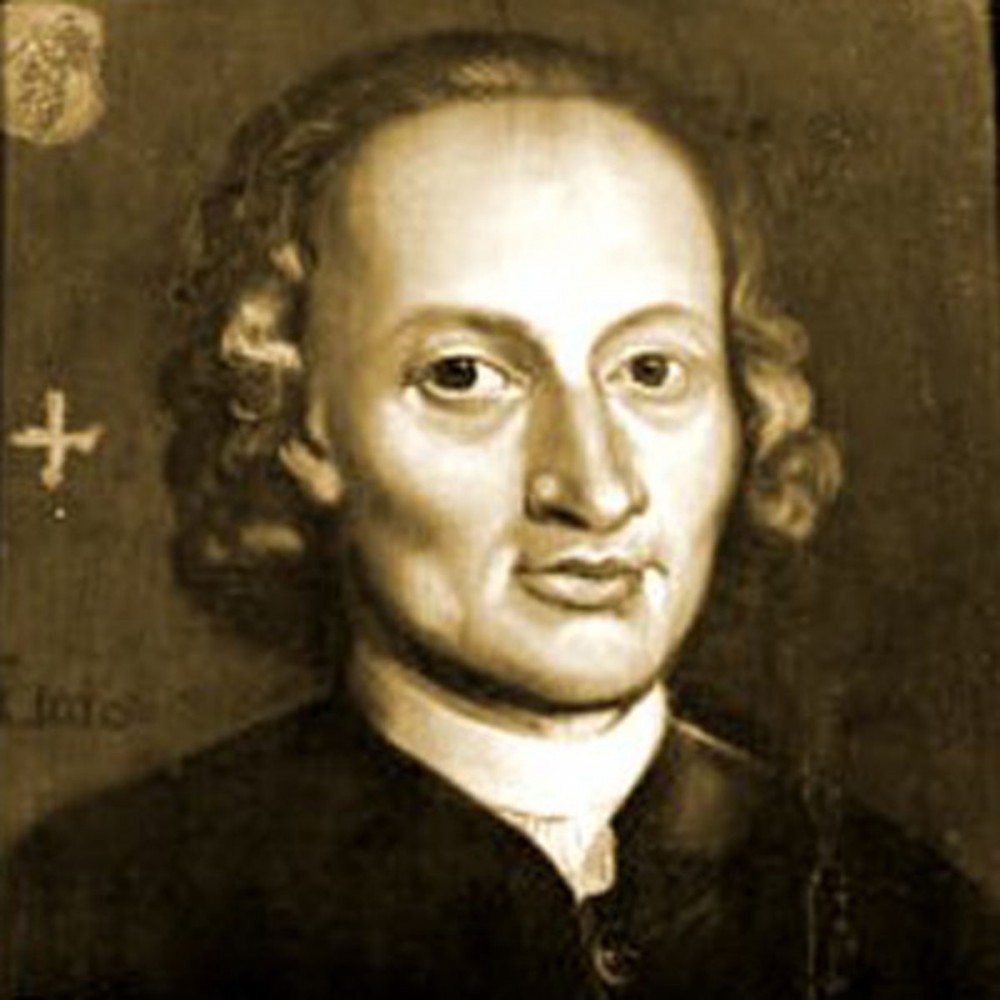 Johann Pachelbel1653–1706
 Arcangelo Corelli1653–1713
 Henry Purcell1659–1695
 Antonio Vivaldi1678–1741
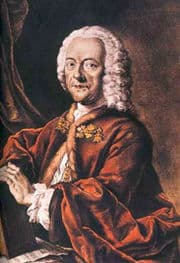 Georg Philipp Telemann1681–1767
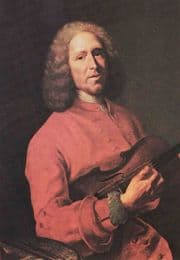 Jean-Philippe Rameau1683–1764
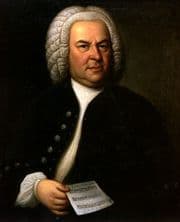 Johann Sebastian Bach1685–1750
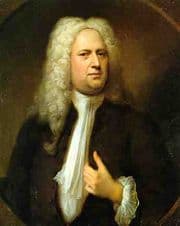 George Frideric Handel1685–1759
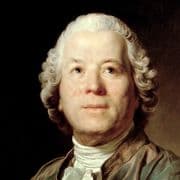 Christoph Willibald Gluck1714–1787
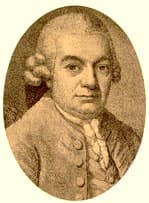 Carl Philipp Emanuel Bach1714–1788
Johann Pachelbel 1653–1706Arcangelo Corelli 1653–1713Henry Purcell 1659–1695Antonio Vivaldi 1678–1741Georg Philipp Telemann 1681–1767Jean-Philippe Rameau 1683–1764Johann Sebastian Bach 1685–1750George Frideric Handel 1685–1759Christoph Willibald Gluck 1714–1787Carl Philipp Emanuel Bach 1714–1788Where to start listening
Works of this era- 01The Four Seasons: SpringAntonio VivaldiFollow the birds in the solo violins and the thunder in the low strings.Open the work
- 02Prelude in C major, BWV 846Johann Sebastian BachThe first of The Well-Tempered Clavier. Nothing but broken chords, and it never tires.Open the work
- 03Brandenburg Concerto No. 3Johann Sebastian BachStrings split into three groups that answer each other throughout.Open the work
- 04When I am laid in earth (Dido’s Lament)Henry PurcellA descending bass line repeats under the whole aria.Open the work
- 05Messiah: HallelujahGeorge Frideric HandelChoir and trumpets in celebration. The most sung piece in the choral repertoire.Open the work
Where to start playing
Pieces chosen by the house, at the level rated by the musicians of IMSLP.
Beginner
Intermediate
- Two-Part InventionsJohann Sebastian BachBach wrote them to teach hearing and playing two independent voices.
- 12 Violin Sonatas, Op.5Arcangelo CorelliThe sonatas that founded the Baroque violin school.
- Cello Suite No.1 in G major, BWV 1007Johann Sebastian BachBach's best-known suite for solo cello. Its Prelude opens the repertoire.
- 12 Fantasias for Flute without Bass, TWV 40:2-13Georg Philipp TelemannFantasias for unaccompanied flute: it carries both melody and harmony.
- Toccata and Fugue in D minorJohann Sebastian BachThe best-known organ piece of all.
Advanced
- Summer (The Four Seasons)Antonio VivaldiSummer, from The Four Seasons: a storm and Baroque virtuosity.
- Fantasia and Fugue in G minor, BWV 542Johann Sebastian BachThe Great Fantasia and Fugue: dramatic, with a very long fugue.
- 15 Sinfonias, BWV 787-801Johann Sebastian BachThe sequel to the Inventions, now in three voices.
Did you know?
- At twenty, Bach walked about four hundred kilometres from Arnstadt to Lübeck to hear the organist Dieterich Buxtehude, and stayed months longer than his leave allowed.
- Vivaldi was a priest, nicknamed “il Prete Rosso,” the red priest, for the colour of his hair.
- The story goes that King George II stood during the Hallelujah at the London premiere of Messiah, and that audiences have stood ever since. No record confirms it.