
Clarinet
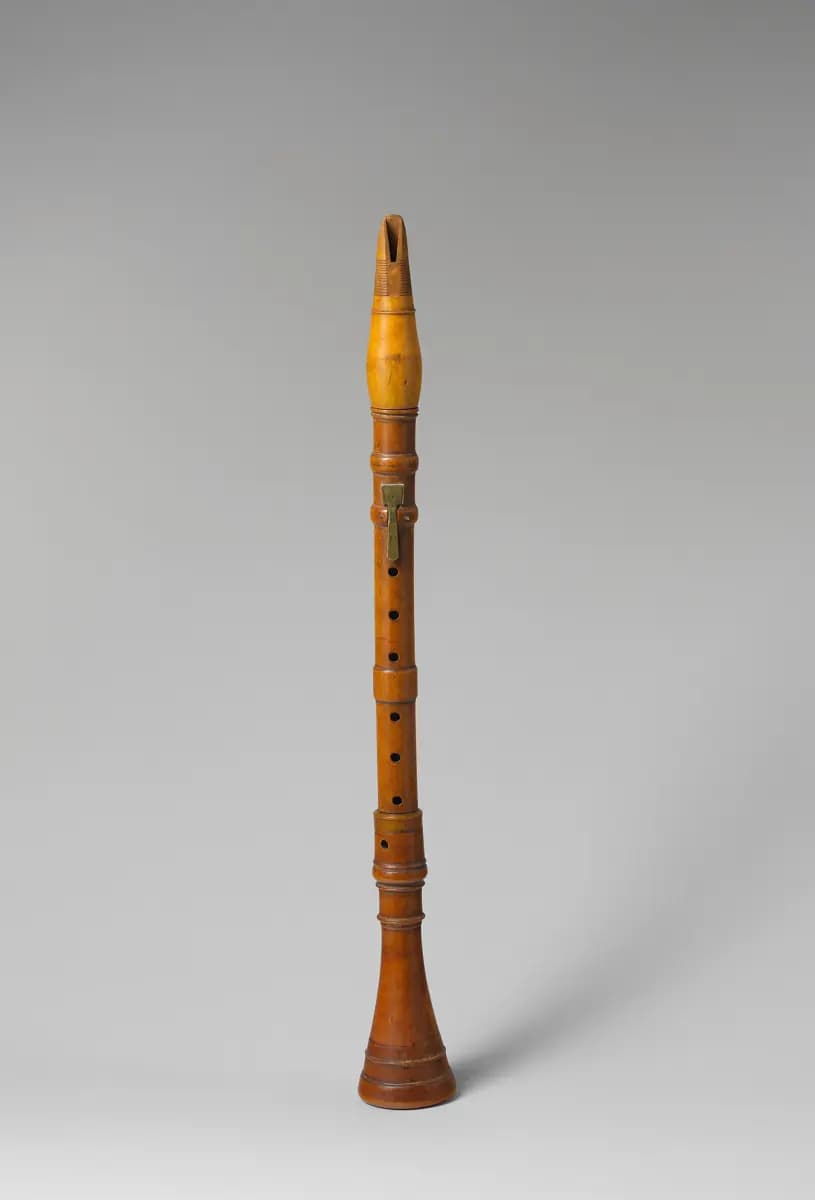
Nuremberg, around 1700
The clarinet is the youngest of the orchestra’s woodwinds and one of the most versatile. It ranges from a barely audible whisper to a shout, and it has lived in concert music, jazz, klezmer and choro.
Works for clarinetHow it works
It uses a single reed, fixed to a mouthpiece, which vibrates against it as the player blows. The tube is cylindrical, so the clarinet overblows not to the octave, like the flute and oboe, but to the note a twelfth higher. That gives it registers with very different colours: the low one, dark and warm, called chalumeau, and the middle and high ones, brighter.
The story
Around 1700, in Nuremberg, Johann Christoph Denner added a key to a simple instrument called the chalumeau and created the clarinet. The name comes from clarino, the high register of the trumpet, which the new instrument recalled.
Mozart helped establish the clarinet in concert music. Charmed by the playing of Anton Stadler, he wrote for him the Quintet, K. 581, and the Concerto, K. 622, one of his last works. In the nineteenth century Carl Maria von Weber wrote concertos for Heinrich Baermann, and Brahms, already thinking of retiring, started composing again after hearing Richard Mühlfeld and left four masterpieces for the clarinet.
In the twentieth century the clarinet became a jazz star with Benny Goodman, who commissioned works from Bartók and Copland. Gershwin’s Rhapsody in Blue opens with a famous clarinet glissando. In Brazil it is one of the core instruments of choro, with Abel Ferreira and Paulo Moura.
The clarinet is a transposing instrument: what is written as C sounds as B-flat or A, depending on the model, and players switch instruments to suit the key of the piece. Around 1844 Hyacinthe Klosé and Louis-Auguste Buffet adapted Boehm’s key system to the clarinet, now the most widely used; Germany and Austria kept the Oehler system, with its darker tone.
What was written for it
Mozart, Weber and Brahms form the Classical and Romantic core. In the twentieth century: Debussy (Première Rhapsodie), Stravinsky (Three Pieces), Poulenc, Copland, Bartók (Contrasts) and Messiaen (Abîme des oiseaux).
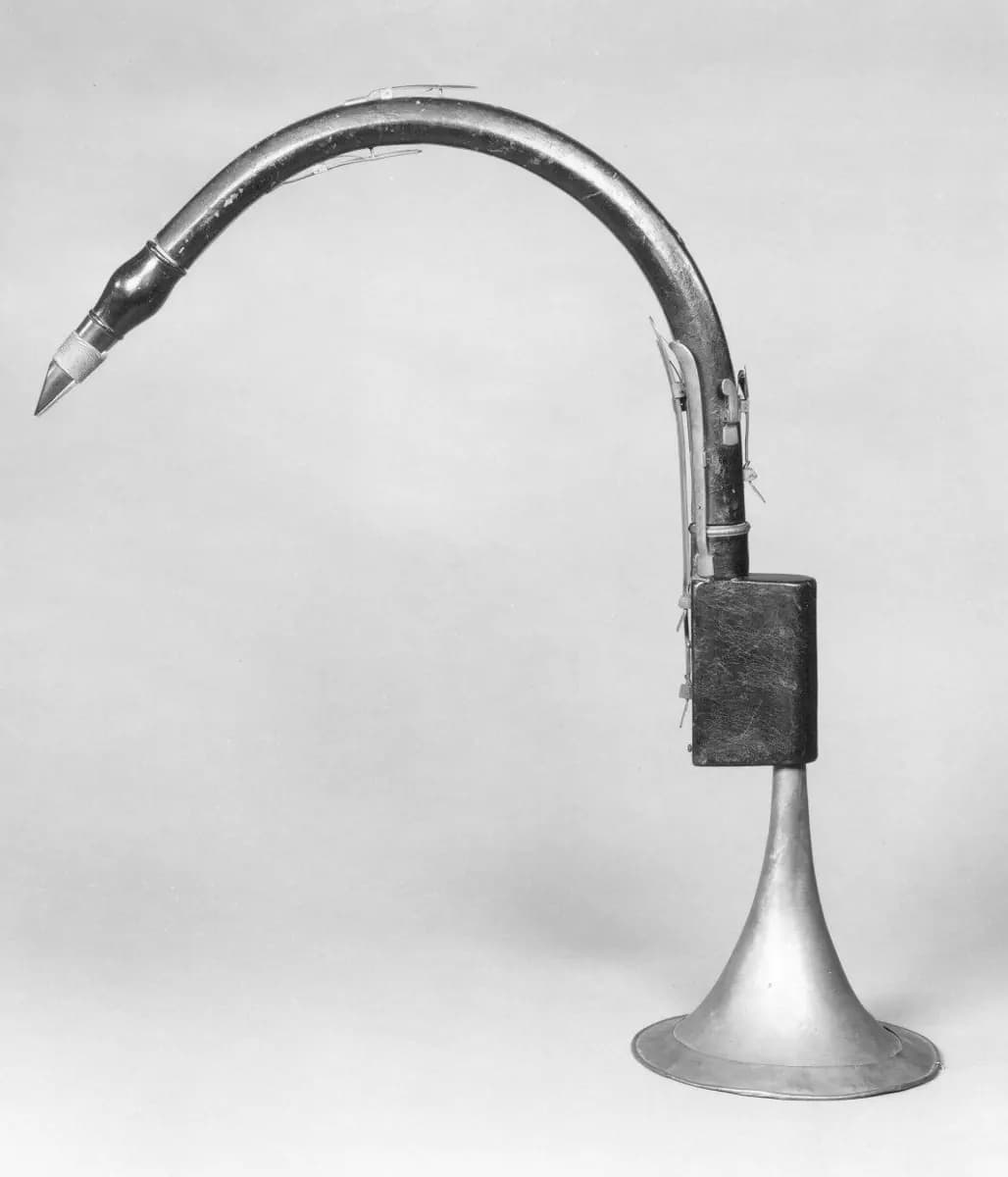
In pictures
Where to start listening
- 1Clarinet Concerto, K. 622: AdagioWolfgang Amadeus MozartOne of Mozart’s most serene melodies. Open the work
- 2Clarinet Quintet, Op. 115Johannes BrahmsAutumnal and nostalgic, written for Mühlfeld. Open the work
- 3Rhapsody in BlueGeorge GershwinThe clarinet slides up two octaves right at the start. Open the work
- 4Quartet for the End of Time: Abîme des oiseauxOlivier MessiaenClarinet alone, between silences and birdsong. See the composer
Where to start playing
Pieces chosen by the house, at the level rated by the musicians of IMSLP.
Intermediate
Advanced
- Clarinet Concerto No.1 in F minor, Op.73Carl Maria von WeberWeber wrote it for the clarinettist Heinrich Baermann.
- Clarinet Sonata No.1, Op.120 No.1Johannes BrahmsBrahms returned to composing because of the clarinettist Richard Mühlfeld.
- 3 Pieces for Clarinet Solo, K033Igor StravinskyThree pieces by Stravinsky for clarinet alone.
Did you know?
- The Rhapsody in Blue glissando was born in rehearsal: Ross Gorman, clarinettist in Paul Whiteman’s band, slid up the scale as a joke, and Gershwin asked him to keep it.
- Mozart wrote the Concerto for a special clarinet of Stadler’s that went lower. The original score is lost, and what is played today is an adaptation for the standard clarinet.