
Flute
Prehistory; modern flute in 1847
Bone flutes more than 35,000 years old are among the oldest instruments ever found. The modern transverse flute, metal and full of keys, dates from 1847.
Works for fluteHow it works
The flute has no reed. The player blows across a hole, like sounding a bottle, and the air splits on the edge and sets the column of air inside the tube vibrating. Fingers open and close holes through keys, changing the length of that column and so the note. Blowing harder with tighter lips makes the flute jump to its upper register.
The story
In the Hohle Fels cave in Germany, archaeologists found a flute made from a vulture’s wing bone more than 35,000 years old. Flutes of many kinds have existed in almost every culture. In Europe, the recorder, held vertically, dominated the Renaissance, and the wooden one-keyed transverse flute gained ground in the Baroque.
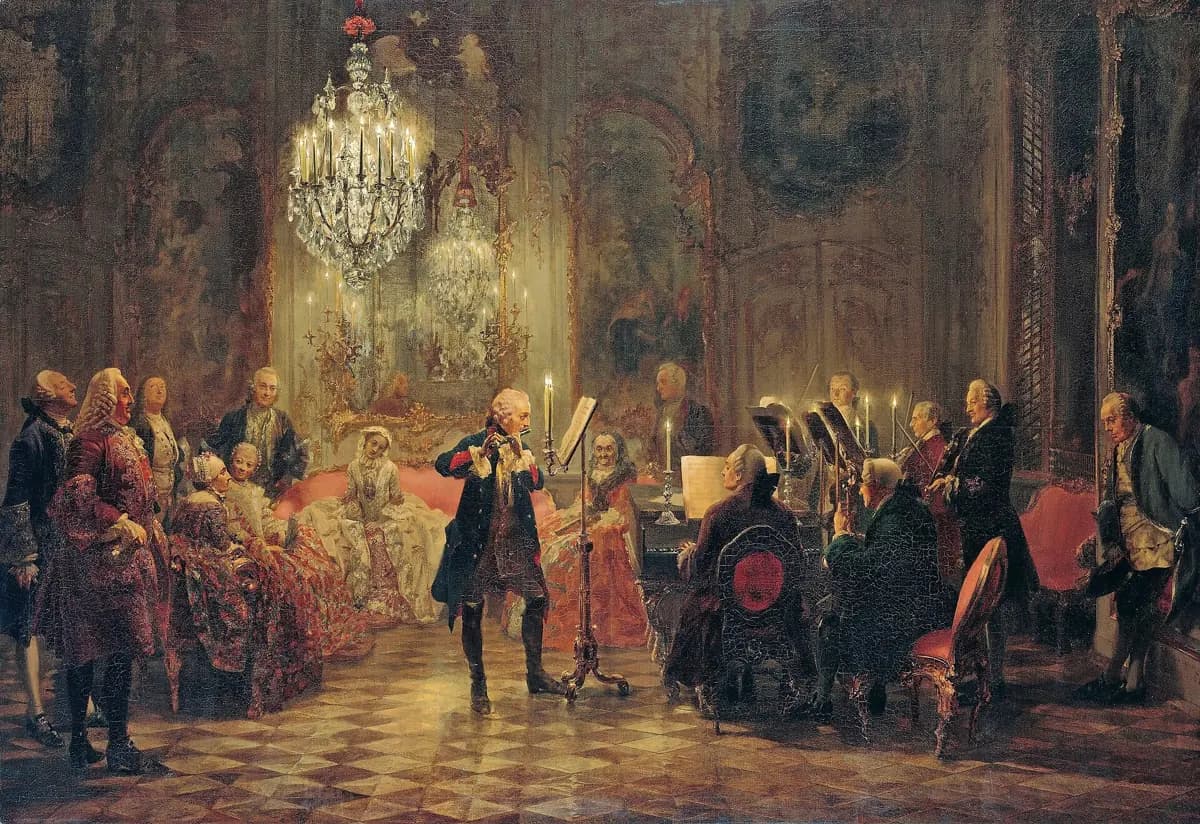
King Frederick the Great of Prussia played the flute, composed for it, and studied with Johann Joachim Quantz, who wrote a famous treatise on the instrument. Bach wrote a Partita for solo flute, and Mozart, who claimed not to like it much, left two concertos and a quartet.
In 1847 the German flautist and goldsmith Theobald Boehm created the metal flute with a cylindrical bore and a key system that plays in tune in every key. It is the flute still in use. In the twentieth century Debussy wrote Syrinx for flute alone, and in Brazil the flute is the lead voice of choro, with masters such as Pixinguinha and Altamiro Carrilho.
In the eighteenth century the transverse flute became the gentleman amateur’s instrument, and publishers turned out sonatas and duets by the dozen for that market. The flute of Frederick the Great had a single key: playing the chromatic notes in tune depended on the player’s ear and lips.
In Brazil the flute has been the leading voice of choro since the nineteenth century. Joaquim Callado, considered the father of the genre, led one of the first choro groups in Rio de Janeiro, followed by Patápio Silva, Pixinguinha and Altamiro Carrilho.
What was written for it
Bach, Telemann, Quantz and Vivaldi in the Baroque; Mozart in the Classical period; Debussy, Ravel, Poulenc, Prokofiev and Varèse (Density 21.5) in the twentieth century. In the orchestra, memorable solos in the Prélude à l’après-midi d’un faune and Daphnis et Chloé.
In pictures
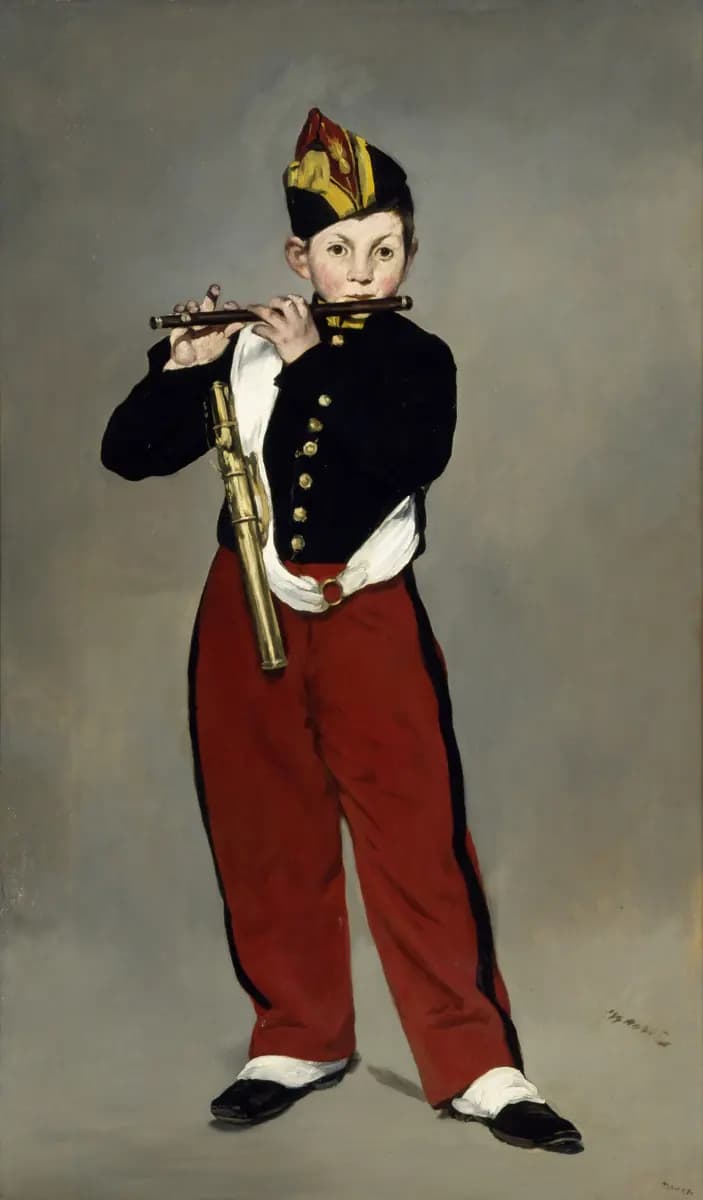
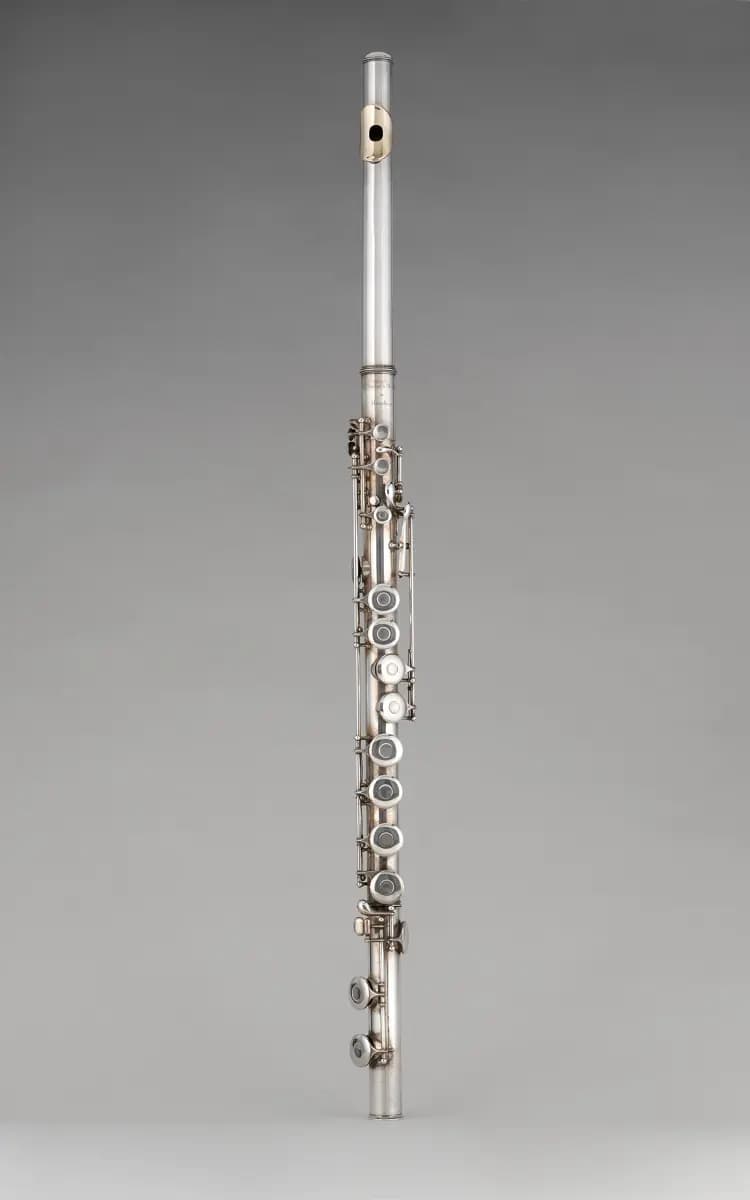
Where to start listening
- 1Prélude à l’après-midi d’un fauneClaude DebussyIt opens with the flute alone in a melody that will not settle. Open the work
- 2SyrinxClaude DebussyThree minutes for solo flute, about the god Pan. Open the work
- 3Flute Concerto No. 1, K. 313Wolfgang Amadeus MozartLight and elegant, a portrait of the Classical style. Open the work
- 4CarinhosoPixinguinhaThe choro that is almost a Brazilian anthem, with the flute in front. Find it in the archive
Where to start playing
Pieces chosen by the house, at the level rated by the musicians of IMSLP.
Beginner
Intermediate
- 24 Etudes for Flute, Op.33Joachim AndersenStudies that flautists still train on today.
- Andante in C major, K.315/285eWolfgang Amadeus MozartAn andante by Mozart: little apparent difficulty, great demands on sound.
- 12 Fantasias for Flute without Bass, TWV 40:2-13Georg Philipp TelemannFantasias for unaccompanied flute: it carries both melody and harmony.
Did you know?
- In the orchestra the flute has a smaller, higher relative, the piccolo, which sounds an octave up and cuts through the whole orchestra even at full volume.
- Varèse’s Density 21.5 is named after the density of platinum, the metal of the flute owned by the soloist who commissioned it.