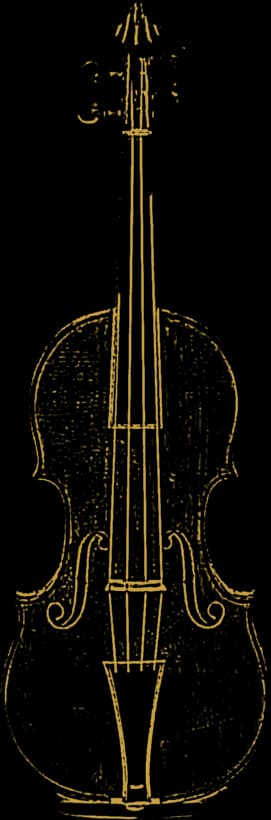
Violin
Cremona, around 1550
The violin is the smallest and highest member of the string family, and the one closest to the human voice. The finest are still those made in Cremona more than three hundred years ago.
Works for violinHow it works
It has four strings tuned G, D, A and E, a fifth apart. The bow, horsehair rubbed with rosin, grips and releases the string hundreds of times a second, and the string vibrates. The bridge passes the vibration to the spruce top, and the hollow body amplifies it. A small wooden dowel hidden inside, the soundpost, links top and back and shapes the tone a great deal.
The story
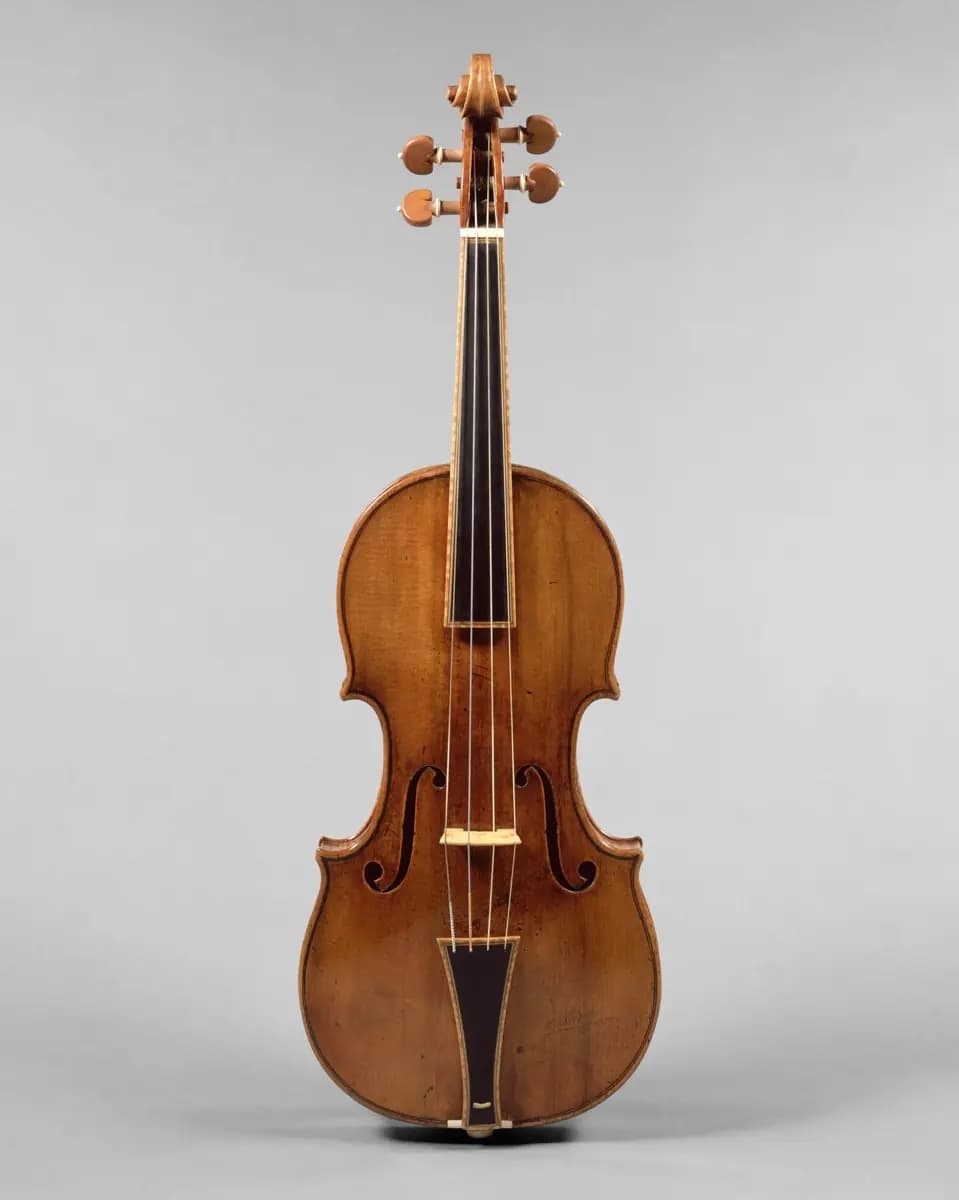
The earliest surviving violins were made by Andrea Amati in Cremona, Italy, around 1560. The town became the centre of the craft: his grandson Nicolò Amati taught the next generation, which produced Antonio Stradivari and the Guarneri family. Instruments made there between 1650 and 1750 remain the most coveted.
In the Baroque, the violin went from dance instrument to star. Corelli and Vivaldi wrote sonatas and concertos that demanded new technique, and Bach left six Sonatas and Partitas for violin alone. Late in the eighteenth century, the French bow maker François Tourte created the modern bow, longer and curved inwards, able to give more volume and a wider range of strokes.
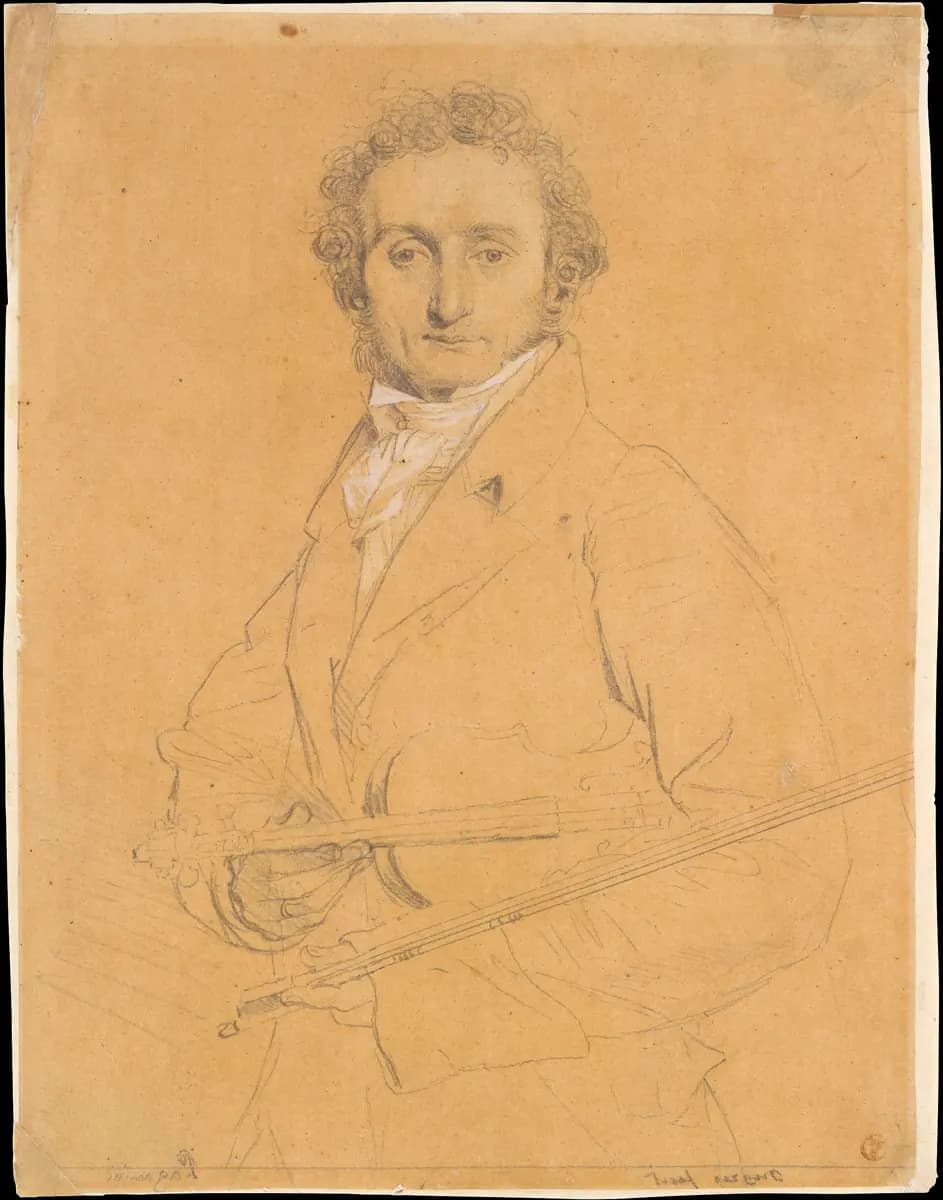
In the nineteenth century, Niccolò Paganini turned the violin into a virtuoso spectacle, and the great Romantic concertos, by Beethoven, Mendelssohn, Brahms and Tchaikovsky, became the repertoire soloists still play. In the orchestra, the violins are the largest section, divided into firsts and seconds.
The violin’s outline has barely changed since Stradivari, but its insides have. In the nineteenth century old instruments were rebuilt with a longer, angled neck, a stronger bass bar and higher string tension, so they could fill ever larger concert halls. Almost every Stradivarius heard today went through that conversion.
The violin is also a folk instrument across much of the world, from the Irish fiddle to the Romani violin of Central Europe. In northeastern Brazil the rabeca, a rustic relative of the violin often made by the musician who plays it, drives the cavalo-marinho, the reisado and forró, with masters such as Mestre Salustiano in Pernambuco.
What was written for it
Vivaldi, Bach, the Romantic concertos of Beethoven, Mendelssohn, Brahms and Tchaikovsky, Paganini’s Caprices and, in the twentieth century, Sibelius, Prokofiev, Bartók and Berg. In Brazil, Villa-Lobos and Camargo Guarnieri wrote for the instrument.
In pictures
Where to start listening
- 1The Four Seasons: Summer, prestoAntonio VivaldiThe solo violin is the hailstorm. Open the work
- 2Partita No. 2: ChaconneJohann Sebastian BachFifteen minutes of one violin sounding like an orchestra. Open the work
- 3Violin Concerto in E minorFelix MendelssohnThe soloist enters in the second bar with an unforgettable tune. Open the work
- 4Caprice No. 24Niccolò PaganiniA theme and variations that tests every technique on the instrument. Open the work
Where to start playing
Pieces chosen by the house, at the level rated by the musicians of IMSLP.
Beginner
- 40 Elementar-Etüden für Violine, Op.54Franz WohlfahrtElementary studies that go with the first years of the violin.
- 44 Duos for 2 Violins, Sz.98Béla BartókDuos to play with the teacher, drawn from folk music.
- Violin Sonata in C major, K.6Wolfgang Amadeus MozartMozart as a child: a sonata for violin and keyboard in simple writing.
Intermediate
- 12 Violin Sonatas, Op.5Arcangelo CorelliThe sonatas that founded the Baroque violin school.
- 3 Sonatinas, Op.137Franz SchubertSchubert's sonatinas: melody first, in dialogue with the piano.
- Berceuse, Op.16Gabriel FauréA lullaby for violin, good for working on sound.
- 3 Romances, Op.22Clara SchumannThree romances by Clara Schumann, in long lines of song.
Did you know?
- About six hundred Stradivari instruments survive. His best violins have sold for more than fifteen million dollars.
- Paganini’s favourite violin, a Guarneri nicknamed Il Cannone for its powerful sound, is kept at Genoa’s city hall and is still played on special occasions.