John Dowland
- Born
- 1 January 1563
- Died
- 20 February 1626
- aged 63
- Country
- England
- Era
- Renaissance
John Douland · John Dooland
Biography
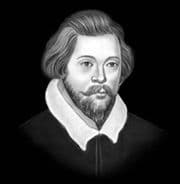
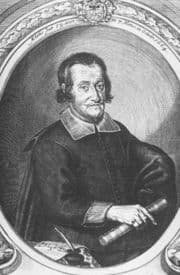
John Dowland (also spelled John Douland or John Dooland) was born around 1563, probably in London, although there are hypotheses about origins in Dublin or Westminster. He was English and died in London, being buried on February 20, 1626.
Little is known about his early training, but as early as 1580 he was in Paris in the service of the English ambassador Sir Henry Cobham. During this first phase of his journey he encountered Catholics and may have adopted the faith privately. Around 1584 he returned to England, married and, in 1588, received the degree of Mus. Bac. at Christ Church, Oxford. Between 1594 and 1595 he traveled again through Europe, passing through Germany, where he received the patronage of the Duke of Brunswick and the landgrave of Hesse, and through Italy – Padova, Venice and Florence – an experience that he himself describes in the dedication of his First Book of Songs.
Dowland's music combines the tradition of consort songs and dances of his time, absorbing influences from the musicians he encountered on his travels. Works for lute predominate, both solo pieces and songs for voice and lute, as well as music for viol consort with lute accompaniment. His style is marked by a singular melancholy, often associated with themes of sadness and longing, as exemplified in the songs “Flow my tears” and the peacocks from the Lachrimae collection.
He stood out as a composer of songs and instrumental music for the lute. He published the First Book of Songs (1597), followed by the Second Book of Songs (1600) and the Third Book of Songs (1603), which contained widely disseminated songs for voice and lute. In 1604 he released Lachrimae, or Seaven Teares, a set of seven peacocks based on the theme of “Flow my tears”, which became one of the best-known collections of consort music of the time. He worked at the court of ChristianIV of Denmark (c.1598-c.1606), where he received a high salary, and, from 1612, he served as one of JamesI's lute-bearers.
In his personal life, Dowland was married and had children, including the musician Robert Dowland, but spent long periods away from his family due to commitments at the Danish court and publishing trips. In letters from 1595 he revealed Catholic sympathies, although he assured loyalty to Queen Elizabeth I and, later, King James I. This religious aspect and the frequency of family separations constitute a distinctive mark of his career.
Written by artificial intelligence and not yet reviewed by a person.
Where to start
Curiosities
- Was the greatest lute composer in history.
- His melancholic songs like "Flow My Tears" defined an era.
- Traveled throughout Europe, serving at various courts.
- His "Lachrimae" influenced composers for generations.
Works
77 works- Lachrimae, or Seven Tears, RISM A/I: D 3485Alaúde · 1604* ou antes
- Flow My TearsViola
- Lachrimae antiquaePiano
- Come Again, Sweet Love doth Now InvitePiano · até 1597
- Fine Knacks for LadiesViola
- Melancholy GalliardAlaúde
- Lachrimae amantisPiano
- In Darkness Let Me DwellSoprano
- Captain Digorie Piper his GalliardAlaúde
- Lachrimae Pavan for LuteAlaúde · 1590 ca.
- Lachrimae antiquae novaePiano
- 6 Ayres for Four VoicesVoz
- Lachrimae tristesPiano
- Lachrimae gementesPiano
- Lachrimae veraePiano
- Mr. John Langton's PavanPiano · até 1604
- Lachrimae coactaePiano
- Clear or Cloudy Sweet as April ShoweringVoz
- Flow Not so Fast, Ye FountainsPiano · até 1603
- A Lute LullabyVoz
- Mistress Nichols AlmandQuarteto
- Mr. George Whitehead his AlmandQuarteto
- Mr. Giles Hobies GalliardViolino
- Dowland's GalliardAlaúde
- Can She Excuse my WrongsPiano · 1597 ca.
- FarewellAlaúde · 1600 ca.
- Mistress Winter's JumpAlaúde
- Mr. Thomas Collier his GalliardPiano
- Mr Dowland's MidnightAlaúde
- Mr. Bucton's GalliardPiano


Something wrong on this page? or send a missing work.