Sergey Prokofiev
- Born
- 27 April 1891
- Died
- 5 March 1953
- aged 61
- Country
- Russia
- Era
- Modernism
Сергей Сергеевич Прокофьев · Sergej Sergejevič Prokof'ev · Sergei Sergeevich Prokof'ev
Biography
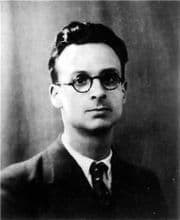
Sergei Sergeyevich Prokofiev was born on April 27, 1891, in Sontsovka, then part of the Russian Empire, and died on March 5, 1953. Of Russian nationality, he stood out as a composer, pianist and conductor, being recognized as one of the main composers of the 20th century.
He graduated from the Saint Petersburg Conservatory, where he studied composition, piano, conducting and orchestration. His teachers included Alexander Winkler (piano), Anatoly Lyadov (harmony and counterpoint), Nikolai Tcherepnin (conducting) and, to a lesser extent, Nikolai Rimsky‑Korsakov (orchestration). His first contact with the world of professional music occurred as a teenager, when he began to present his own works at events such as the StPetersburg Evenings of Contemporary Music, attracting attention by performing pieces of a strongly dissonant and virtuosic nature.
Prokofiev's style combines a modernist language, marked by aggressive dissonances, irregular rhythms and ironic humor, with a talent for accessible melody. This duality appears in works that cross multiple genres: the march of The Love for Three Oranges, the Lieutenant Kijé suite, the ballet Romeo and Juliet (whose “Dance of the Knights” has become iconic), and the orchestral narrative Peter and the Wolf. Throughout his life he composed seven operas, seven symphonies, eight ballets, five concertos for piano, two for violin, one cello concerto, one symphony concerto for cello and nine piano sonatas, among other pieces.
Prokofiev's career developed between the Russian Revolution, his flight to the United States, Germany and Paris, and his definitive return to the Soviet Union in 1936. In the Soviet context he achieved great success with works such as Lieutenant Kijé, Cinderella, Alexander Nevsky, Symphonies V and VI and the piano sonatas nº6-8. During the Second World War he composed the opera based on War and Peace, in partnership with his partner and future second wife, Mira Mendelson. In 1948 he was accused of “anti-democratic formalism”, but maintained the support of musicians such as Sviatoslav Richter (for whom he wrote the Ninth Piano Sonata) and Mstislav Rostropovich (author of the Symphony-Concerto).
On a personal level, he married the Spanish singer Carolina (Lina) Codina in 1923, with whom he had two children; the marriage ended in divorce in 1947. His love of chess, cultivated since childhood, led him to face champions such as José Raúl Capablanca and Mikhail Botvinnik, revealing an aspect of his life marked by intellectual competition in addition to music.
Written by artificial intelligence and not yet reviewed by a person.
Where to start
Curiosities
- "Peter and the Wolf" was created to teach instruments to children.
- Returned to the Soviet Union in 1936, leaving international success behind.
- Was an excellent chess player and even considered a professional career.
- Composed "Romeo and Juliet", one of the most popular ballets of the 20th century.
Works
126 works- Cinderella, Op.87Orquestra · 1944
- Cinderella (1st suite), Op.107Orquestra · 1946
- 10 Pieces for Piano, Op.12Piano · 1906-13 · Advanced
- Cello Sonata, Op.119Violoncelo · 1949
- 4 Pieces for Piano, Op.4Piano · 1908, revisada em 1910–12 · Advanced
- 10 Pieces from Cinderella, Op.97Piano · 1943
- Adagio, Op.97bisPiano · 1943
- 5 Mélodies, Op.35Piano · 1920
- 4 Etudes, Op.2Piano · 1909 · Advanced
- 4 Pieces for Piano, Op.32Piano · 1918 · Advanced
- 2 Sonatinas, Op.54Piano · 1931–32 · Advanced
- 4 Pieces for Piano, Op.3Piano · 1907-08, revisada em 1911
- Cello Concerto, Op.58Violoncelo · 1933-38
- 3 Pieces for Piano, Op.96Piano · 1941-42
- Ballade, Op.15Violoncelo · 1912 · Advanced
- 12 Russian Folksongs, Op.104Piano · 1944
- Sonatas for PianoPiano
- Divertissement, Op.43Orquestra · 1925–29
- 2 Poems, Op.9Voz · 1910–11
- 5 Poems, Op.23Voz · 1915
- Romeo and Juliet (1st suite), Op.64bisRomeo and Juliet (ballet) · Orquestra · 1936
- Romeo and Juliet (2nd suite), Op.64terRomeo and Juliet (ballet) · Orquestra · 1936
- Romeo and Juliet (3rd suite), Op.101Romeo and Juliet (ballet) · Orquestra · 1946
- Romeo and Juliet (ballet), Op.64Romeo and Juliet (ballet) · Orquestra · 1935–36
- 3 Romances after Pushkin, Op.73Voz · 1936
- 2 Duets, Op.106Piano · 1945
- Chout Suite, Op.21bisHarpa · 1920
- 2 Choral Songs, Op.66aCoro · 1935
- 4 Songs, Op.66bVoz · 1935
- L'enfant prodigue, Op.46Orquestra · 1928-29




Something wrong on this page? or send a missing work.