 1900–1950
Modernism
In the first half of the twentieth century, composers questioned rules that had seemed eternal: tonality, a steady beat, the usual orchestra. In a few years, Paris and Vienna heard more new things than in an entire century before.
Claude Debussy opened the door with the Prélude à l’après-midi d’un faune of 1894. The flute that begins the piece leads nowhere predictable: chords slide without resolving, and whole-tone scales blur any sense of a home key. People called it impressionism, a label Debussy hated. Maurice Ravel, in the same Paris, took orchestration to a watchmaker’s precision, which you can hear in his Boléro of 1928.
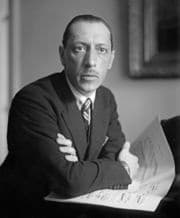
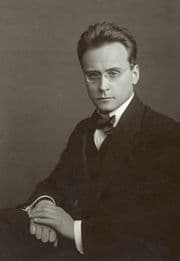
On 29 May 1913, Igor Stravinsky’s The Rite of Spring opened at the Théâtre des Champs-Élysées with Nijinsky’s choreography. Rhythms that change every bar, chords hammered out with violence and the strange dancing provoked jeers and fights in the audience. A year earlier, in Berlin, the Viennese Arnold Schoenberg had premiered Pierrot lunaire, music with no key at all. Soon afterwards he devised twelve-tone composition, in which all twelve notes of the scale are arranged in a row. His pupils Alban Berg and Anton Webern formed, with him, the so-called Second Viennese School.
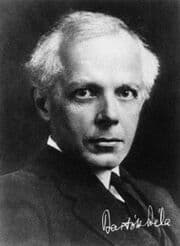
Others looked for the new in the old and the popular. Béla Bartók travelled through villages in Hungary and Romania with a phonograph, recording peasants, and brought their rhythms and scales into concert music. Stravinsky and Sergei Prokofiev returned to eighteenth-century forms with modern eyes, the neoclassical style. George Gershwin joined jazz and orchestra in Rhapsody in Blue, in 1924.
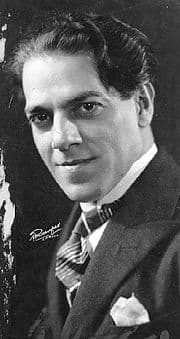
In Brazil, Heitor Villa-Lobos mixed Rio’s choro, Indigenous music and what he heard travelling the interior with European technique. In the Bachianas Brasileiras, written between 1930 and 1945, he brings Bach and Brazilian music together. The Aria from No. 5, for soprano and cellos, is one of the most performed Brazilian works in the world.
Politics entered music. In the Soviet Union, Dmitri Shostakovich was attacked in 1936 by a Pravda editorial against his opera Lady Macbeth of Mtsensk, and spent his life balancing what he could say and what he wanted to say. In 1941, held in a German prison camp, Olivier Messiaen wrote the Quartet for the End of Time and premiered it for the prisoners. Meanwhile radio and records carried all this music to people who had never been to a concert hall.
What changed
- 1Tonality loses its holdWhole-tone scales, old modes, music with no home key and, with Schoenberg, the twelve-tone row.
- 2Rhythm takes centre stageMetres that change by the moment and irregular accents, as in The Rite of Spring.
- 3Folk music and jazz enter the hallBartók records peasants, Villa-Lobos listens to choro, Gershwin brings the blues to the orchestra.
- 4Recording changes who listensRadio and records spread concert music. For the first time, people can hear the same performance again and again.
The forms of the era
- Ballet
- Moves to the centre with Diaghilev’s Ballets Russes, which commission Stravinsky, Ravel and Prokofiev.
- Serial music
- Works built on a row of all twelve notes, none repeated before all have sounded.
- Neoclassicism
- Eighteenth-century forms, such as the concerto grosso and the suite, with modern harmony.
- Chamber music for new groups
- Unexpected line-ups, such as Pierrot lunaire’s, with a half-spoken, half-sung voice.
- Film score
- Sound film, from 1927, opens a new field for concert composers.
Who lived in it
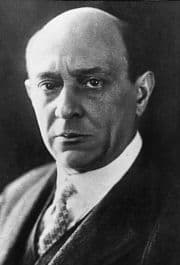
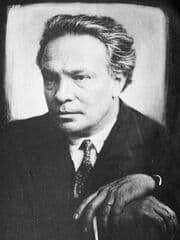
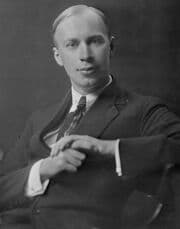
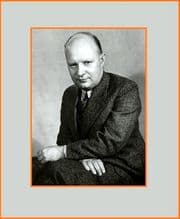
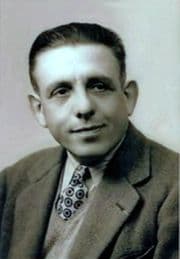
Some composers of the era, on the timeline.
Where to start listening
Works of this era- 01Clair de luneClaude DebussyFor solo piano. The gentlest way into Debussy’s sound.Open the work
- 02BoléroMaurice RavelOne melody repeated for fifteen minutes, changing only its instruments and growing all the way.Open the work
- 03The Rite of Spring: Augurs of SpringIgor StravinskyThe same chord hammered with accents you cannot predict.Open the work
- 04Bachianas Brasileiras No. 5: AriaHeitor Villa-LobosSoprano and eight cellos. The wordless melody at the start stays with you.Open the work
- 05Peter and the WolfSergei ProkofievA story for children in which each character is an instrument.Open the work
Did you know?
- At the premiere of The Rite, the noise in the audience was so loud that the dancers could not hear the orchestra. Nijinsky stood on a chair in the wings, shouting out the counts.
- The Quartet for the End of Time was written for the instruments available in the camp: violin, cello, clarinet and an old piano. It was first played in January 1941, for hundreds of prisoners and guards, in a freezing hut.
- In Peter and the Wolf, the bird is the flute, the duck the oboe, the cat the clarinet, the grandfather the bassoon, the wolf three horns and Peter the strings.