Jean-Philippe Rameau
- Born
- 25 September 1683
- Died
- 12 September 1764
- aged 80
- Country
- France
- Era
- Baroque
Johann Philipp Rameau · Ζαν Φιλίπ Ραμώ · Рамо Жан-Филипп
Biography
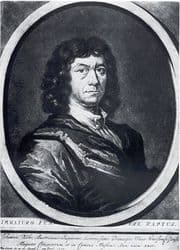
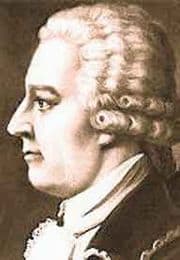
Jean‑Philippe Rameau was born on September 25, 1683, in Dijon, and died on September 12, 1764, in Paris, being French by nationality. His father, also an organist, introduced him to music before he learned to read or write; He was educated at the Jesuit College of Godrans, although he was not a diligent student, and initially studied law. He opted for a musical career, briefly spent time in Milan and returned to France, working as a violinist in traveling companies and as an organist in provincial cathedrals, before settling in Paris, where in 1706 he published his first book of harpsichord pieces, the Pièces de Clavecin, influenced by his friend Louis Marchand.
Rameau stood out as a theorist and composer. In 1722 he published the Traité de l'harmonie, a treatise that gave him an international reputation, followed in 1726 by the Nouveau système de musique théorique. His operatic music introduced harmonic innovations that provoked controversy, as in the premiere of Hippolyte et Aricie (1733), considered the most important work after Lully. Among his most celebrated operas and ballet-operas are Les Indes galantes, Castor et Pollux, Dardanus, Les fêtes d'Hébé, Platée, Le temple de la gloire and La princesse de Navarre. In recent years he composed Les Paladins (1760) and left Les Boréades unfinished, only performed in the 20th century.
In the historical context of the late Baroque, Rameau replaced Lully as the dominant figure of French opera and, alongside François Couperin, led writing for harpsichord. His work was the subject of intense debates, such as the “Querelle des Bouffons” (1752‑54), which positioned him against defenders of Italian opera. Although it was marginalized at the end of the 18th century, its repertoire was reevaluated in the 20th century, becoming frequent in contemporary programs.
A striking aspect of his personal life is the reserved and solitary character he cultivated. He married on February 25, 1726, Marie-Louise Mangot, aged 19, originally from Lyon; the marriage was described as happy and produced four children. Rameau remained discreet about his childhood, and reports from contemporaries point to a irritable man, proud of his theoretical achievements, with a strong voice and writing that was difficult to decipher. In his final moments, as he succumbed to a fever, he reportedly protested a funeral dirge, exclaiming: "What the hell do you want to sing to me, Father? It's out of tune."
Written by artificial intelligence and not yet reviewed by a person.
Where to start
Curiosities
- Wrote the "Treatise on Harmony" that revolutionized musical theory.
- Was considered the greatest French composer before Debussy.
- Started composing operas only at age 50, but created masterpieces.
- Applied scientific principles to the analysis of musical harmony.
Works
91 works- Les Indes galantes, RCT 44The Gallant Indies · Orquestra
- Nouvelles suites de pièces de clavecin, RCT 5-6Cravo · Advanced
- Gavotte in A minor, RCT 5Teclado
- Les Boréades, RCT 31Voz · até 1763
- Hippolyte et Aricie, RCT 43Orquestra · 1733, revisada em 1742-43, 1757, 1767.
- Castor et Pollux, RCT 32Orquestra · 1737 ca.? (revisada em 1754)
- Dardanus, RCT 35Orquestra · 1739 (first performance)
- Pièces de clavecin avec une méthode, RCT 2-4Cravo · até 1724 · Beginner
- Danza Rural for Cello and PianoCravo
- Le Temple de la gloire, RCT 59Vocal · 1745
- Les Fêtes d'Hébé, RCT 41Orquestra · 1739
- Avec du vin, endormons-nous, RCT 18Vocal
- 6 Concerts transcrits en sextuorViolino
- Cantates FrançaisesViolino
- La Dauphine, RCT 12Cravo · 1747
- Les Fêtes de Ramire, RCT 40Vocal · 1745
- Fifth Concert in D minor, RCT 11Cravo · 1726-27
- Les Surprises de l'amour, RCT 58Voz · 1748, revisada em 1757
- In convertendo Dominus, RCT 14Violino · 1751
- Les Fêtes de l'Hymen et de l'Amour, RCT 38Vocal · 1747
- First Concert in C minor, RCT 7Cravo · 1726-27
- La Princesse de Navarre, RCT 44Orquestra · 1745
- Daphnis et Eglé, RCT 34Coro · 1753
- Les Fêtes de Polymnie, RCT 39Orquestra · até 1745
- Les Paladins, RCT 51Flauta Doce · 1760
- Laboravi, RCT 16Voz
- Cantate pour le jour de la Saint-Louis, RCT 25Piano · c.a. 1740
- Fourth Concert in B-flat major, RCT 10Violino · 1726-27
- Code de musique pratiquePiano
- La Guirlande, RCT 42Orquestra · 1751





Something wrong on this page? or send a missing work.