Maurice Ravel
- Born
- 7 March 1875
- Died
- 28 December 1937
- aged 62
- Country
- France
- Era
- Romantic
Joseph Maurice Ravel · モーリス・ラヴェル · 모리스 라벨 (ko
Biography
Joseph Maurice Ravel was born on 7 March 1875 in the Basque town of Ciboure, France, and died on 28 December 1937, having been naturalised French. He was the son of Pierre‑Joseph Ravel, an engineer and inventor, and of Marie Delouart, of Basque origin and raised in Madrid; he was baptised six days after his birth and, three months later, the family moved to Paris, where his younger brother Édouard was also born.
From childhood Ravel received musical instruction, beginning piano at seven with Henri Ghys and, five years later, studying harmony, counterpoint and composition with Charles‑René, a pupil of Léo Delibes. In 1888 he met the pianist Ricardo Viñes, a friend who introduced him to the Spanish repertoire, and in 1889 he attended the Paris World Exhibition, where he was impressed by the Russian works conducted by Nikolai Rimsky‑Korsakov and by the sound of the Javanese gamelan. He entered the Conservatoire de Paris in 1889, won the piano competition in 1891, but did not stand out in the other exams. He studied piano with Charles‑Wilfrid de Bériot, harmony with Émile Pessard and, from 1897, composition with Gabriel Fauré, as well as counterpoint with André Gedalge. The conservative atmosphere of the Conservatoire, especially the opposition of its director Théodore Dubois, led to his expulsion in 1895 and again in 1900; he remained as an “auditeur” until leaving the institution in 1903. Among his first notable works are the piano piece Pavane pour une infante défunte (1899) and the overture Shéhérazade (prized in 1897). Around 1900 he joined the informal group Les Apaches, which gathered young artists and defended Claude Debussy’s music, although the friendship between the two never became intimate.
Ravel’s style is characterised by formal clarity and a capacity for synthesis, incorporating elements of modernism, Baroque, neoclassicism and, in his later years, jazz influences. Recognised for his mastery of orchestration, he experimented with musical form, as demonstrated by Boléro (1928), in which repetition replaces traditional thematic development. His piano writing, exemplified by Gaspard de la nuit (1908), is renowned for its extreme difficulty, while orchestral works such as Daphnis et Chloé (1912) demand great balance in performance. Ravel also produced two piano concertos, ballet music, two operas, eight song cycles and made orchestral arrangements, the most notable being the 1922 version of Pictures at an Exhibition by Mussorgsky.
In the musical landscape of the early twentieth century, Ravel was internationally recognised as France’s greatest living composer during the 1920s and 1930s. He took part in the first recordings of his works, supervising sessions that helped disseminate his music to a wider audience, despite his limited abilities as a pianist or conductor. His output, although less numerous than that of some contemporaries, became part of the classical repertoire and influenced later generations of composers.
A striking aspect of his personal life was his deep devotion to his mother, whose folk songs marked his childhood and permeated his artistic sensibility. Ravel maintained a rigorously self‑critical stance, was meticulous about his appearance—described as “an elegant jockey”—and cultivated a reserved character that accompanied him throughout his career.
Written by artificial intelligence and not yet reviewed by a person.
Where to start
Curiosities
- "Bolero" repeats the same theme 18 times with growing instrumentation.
- Was an extreme perfectionist and composed very slowly.
- Loved mechanical toys and miniature objects.
- Suffered from a neurological disease that prevented him from composing in his final years.
Works
85 works- Boléro, M.81Orquestra · 1928
- Gaspard de la nuit, M.55Gaspard of the Night · Piano · 1908 · Advanced
- Ma mère l'Oye, M.60Mother Goose · Piano · 1908 (No.1), 1910 (Nos.2–5)
- Le tombeau de Couperin, M.68The Tomb of Couperin · Piano · 1914–17 · Advanced
- La valse, M.72La Valse · Orquestra · 1919–20
- Le tombeau de Couperin, M.68aThe Tomb of Couperin · Orquestra · 1919
- Daphnis et Chloé Suite No.2, M.57bDaphnis and Chloe · Orquestra · 1913
- Daphnis et Chloé, M.57Daphnis and Chloe · Orquestra · 1909-12
- Jeux d'eau, M.30Fountains · Piano · 1901 · Advanced
- Daphnis et Chloé Suite No.1, M.57aDaphnis and Chloe · Coro · 1911
- Ma mère l'Oye, M.62Mother Goose · Orquestra · 1911-12
- 2 Mélodies hébraïques, M.A 22Voz · 1914
- Violin Sonata No.1, M.12Violino · 1897 (April)
- Introduction et allegro, M.46Violino · 1905
- L'enfant et les sortilèges, M.71Orquestra · 1919–25
- Chansons madécasses, M.78Piano · 1925-26
- Menuet antique, M.7Piano · 1895
- Berceuse sur le nom de Gabriel Fauré, M.74Violino · 1922
- 3 Chansons, M.69Solo · 1914–15
- 3 Poèmes de Stéphane Mallarmé, M.64Violino · 1913
- Histoires naturelles, M.50Piano · 1906
- 5 Mélodies populaires grecques, M.A 4-5, 9-11, M.A 9, 10, 4, 5, 11Voz · 1904-06
- Fanfare for the ballet 'L'éventail de Jeanne', M.80Orquestra · 1927
- Chants populaires, M.A 17Voz
- Frontispice, M.70Piano · 1918
- L'heure espagnole, M.52Voz · 1907-09
- Manteau de fleurs, M.39Voz · 1903
- Les grands vents venus d'outre-mer, M.48Voz · 1906
- Miroirs, M.43Mirrors · Piano · 1904–05 · Advanced
- Epigrammes de Clément Marot, M.21/10, M.21 (No.1), M.10 (No.2)Piano · 1896 (No.2), 1899 (No.1)
Further reading
See the blog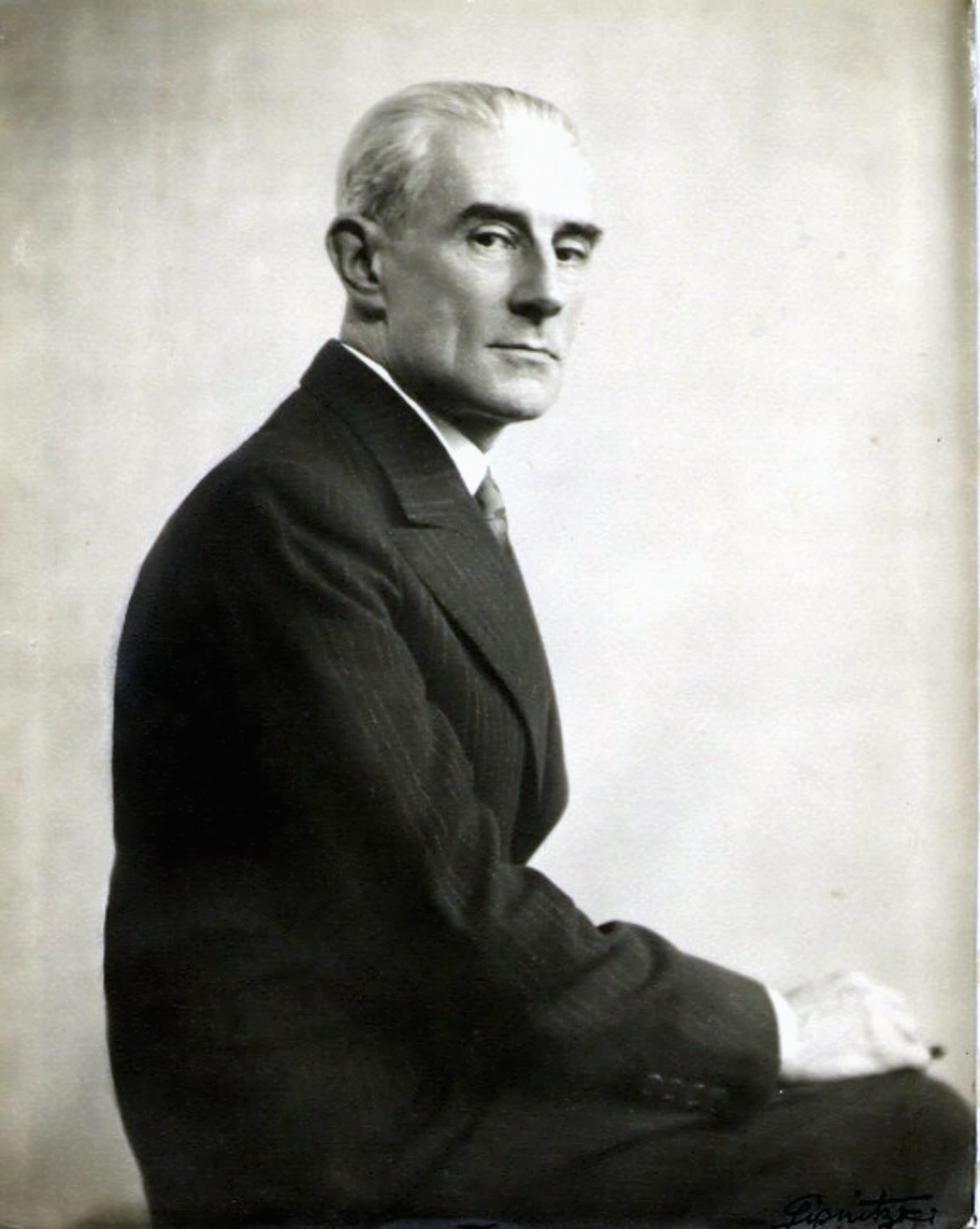






Something wrong on this page? or send a missing work.