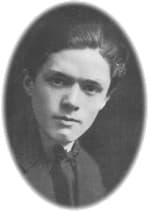
Camille Saint-Saëns
- Born
- 9 October 1835
- Died
- 16 December 1921
- aged 86
- Country
- France
- Era
- Romantic
Charles-Camille Saint-Saëns · كامي سان صانز · Сен-Санс
Biography
Camille Saint‑Saëns was born in Paris on October 9, 1835 and died in the same city, on December 16, 1921, being a French citizen. He demonstrated precocious talent when composing his first piece at the age of four and, at thirteen, he entered the Paris Conservatory, where he studied piano with Pierre Zimmermann, violin with Louis-Pierre Norblin and composition with Ferdinando Paer, graduating in 1855. His training was marked by the rigorous French classical tradition, but he also absorbed influences from composers such as Mendelssohn, Wagner and German chamber music, which gave him a language that mixed structural clarity and melodic richness.
Saint‑Saëns' style is characterized by formal elegance, transparency of textures and mastery of orchestration. He maintained the classical balance inherited from Haydn and Mozart, while exploring the romantic colors of the period, especially in the use of the organ and harpist, and demonstrating an interest in new sounds, such as the inclusion of exotic instruments in works such as “Samson et Dalila”. His writing combines cantabile melody, functional harmony and frequent references to classical forms, which made him one of the last representatives of Romanticism who knew how to transition into early modernism.
Among the best-known works are the “Symphony no. “Danse macabre” (1874). As an organist, he directed the organ of the Saint-Merri church for more than fifty years, and as a professor at the Conservatory (1875-1895) he trained generations of musicians. In 1871 he co-founded the Société Nationale de Musique, an institution created to promote French music and which included Debussy and Ravel among its members.
He lived in a period of intense cultural transformations in France, from the Second Empire to the First World War, and his production reflects both the nationalist spirit and openness to international currents. Its importance lies not only in its extensive catalog of works, but also in its role as a mediator between tradition and innovation, influencing later composers and consolidating the French repertoire on the world stage.
A striking aspect of his personal life was his love of navigation: Saint-Saëns owned a sailboat, the “L’Hirondelle”, and spent long periods at sea, an experience that inspired several of his compositions, such as the “Suite algérienne” and the “Suite for violin and piano”. His adventurous spirit and scientific skepticism, expressed in writings about music and science, reveal a curious and multifaceted intellectual, whose career went beyond the limits of music to encompass a broad cultural spectrum.
Written by artificial intelligence and not yet reviewed by a person.
Where to start
Curiosities
- "The Swan" from "Carnival of the Animals" became one of the most beloved melodies.
- Was a child prodigy who composed his first piece at age 3.
- Had scientific interests and even wrote about astronomy.
- Traveled extensively, including several visits to Egypt and Algeria.
Works
327 works- Symphony No.3, Op.78Organ Symphony · Orquestra · 1886 (April)
- Allegro appassionato, Op.43Violoncelo · 1873 (or before) · Intermediate
- Bassoon Sonata, Op.168Fagote · 1921 May-June
- Ave Maria in A major, ICS 19Soprano · 1865
- 6 Études, Op.52Piano · 1877 · Advanced
- 3 Preludes and Fugues, Op.99Órgão · 1894
- AscanioOrquestra · 1887-88
- Africa, Op.89Piano · 1891
- 7 Improvisations, Op.150Órgão · 1916-17
- Ave Maria, Op.145Coro · 1914
- 2 Choruses, Op.68Coro · 1882
- 6 Duos, Op.8Piano · 1858
- Ave Maria in A major, ICS 18Órgão · 1860 ca.
- 6 Bagatelles, Op.3Piano · 1855
- 6 Études, Op.111Piano · 1892 · Advanced
- 3 Rhapsodies, Op.7Órgão · 1866
- Adagio and Andante, R.108Trompa · até 1853
- Aimons-nousVoz · 1892
- Assassinat du Duc de Guise, Op.128Piano · 1908
- 6 Études pour la main gauche seule, Op.135Piano · 1912
- 3 Preludes and Fugues, Op.109Órgão
- 2 Choruses, Op.141Coro · 1913
- 3 Morceaux, Op.1Harmônio · 1852
- Allegro appassionato, Op.70Piano · 1884
- Album, Op.72Piano · 1884
- 6 Fugues, Op.161Piano · 1920
- Allegro de concert, Op.61Violino · 1913
- 3 Transcriptions de quatuors de BeethovenPiano · 1858-59
- 5 Poèmes de RonsardVoz · 1907-1921
- Le carnaval des animaux, R.125The Carnival of the Animals · Piano · 1886 (February)


Something wrong on this page? or send a missing work.