Robert Schumann
- Born
- 8 June 1810
- Died
- 29 July 1856
- aged 46
- Country
- Germany
- Era
- Romantic
Robert Alexander Schumann · Ekert · Florestan und Eusebius
Biography
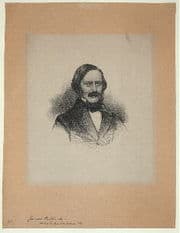
Robert Schumann was born on 8 June 1810 in Zwickau, Saxony, then Prussia, and died on 29 July 1856, at the age of 46, in Germany. He was the son of August and Johanna Schumann, came from an affluent middle‑class family with no musical connections but with extensive access to classical literature, which shaped his cultural formation. From an early age he studied piano with the local organist Johann Gottfried Kuntsch, also taking lessons in cello and flute, and showed a talent for expressing feelings in melody.
He initially studied law at the universities of Leipzig and Heidelberg, but maintained an intense contact with music, studying piano with Friedrich Wieck and, from 1831, harmony and counterpoint with Heinrich Dorn. A progressive problem in his right hand made a virtuoso piano career impossible, leading him to focus on composition. In 1834 he co‑founded the magazine Neue Zeitschrift für Musik, which he edited for ten years, and began using the pseudonyms “Florestan” (impetuous side) and “Eusebius” (poetic side) to express the contrasts of his personality.
In 1840 he married Clara Wieck, daughter of his former teacher, despite strong opposition from Friedrich Wieck. The marriage inaugurated a period of intense creativity: he wrote songs and vocal cycles such as Frauenliebe und Leben and Dichterliebe, piano works such as Carnaval, Davidsbündlertänze, Fantasiestücke, Kreisleriana and Kinderszenen, as well as the first of his four symphonies (1841) and important chamber music (three string quartets, a quintet and a piano quartet). In 1850 he composed the opera Genoveva, which was not successful. He moved to Düsseldorf to assume the city’s musical directorship, but his shyness and mental instability hampered his work, leading him to resign after three years. In 1853 he met the young Johannes Brahms, whom he promoted in the magazine. The following year his mental health deteriorated severely; he attempted to jump into the Rhine, was rescued, and was admitted to a sanatorium near Bonn, where he remained until his death.
Schumann’s output is characterized by a deeply programmatic Romantic language, especially in the piano repertoire and songs, where he combines poetic lyricism with innovative structures. His role as critic and editor influenced the dissemination of new composers and styles, and his legacy inspired later generations, from Mahler, Strauss and Schoenberg to Bizet, Debussy, Ravel, Rubinstein and Tchaikovsky. The “Florestan/Eusebius” duality remains a distinctive mark of his aesthetic and psychological approach to music.
Written by artificial intelligence and not yet reviewed by a person.
Where to start
Curiosities
- Injured his hand trying to strengthen a finger, ending his piano career.
- Married Clara Wieck against her father's will, after a legal battle.
- Was an influential music critic before dedicating himself completely to composition.
- Created fictional characters (Florestan and Eusebius) that represented aspects of his personality.
Works
207 works- Kinderszenen, Op.15Scenes from Childhood · Piano · 1838 · Intermediate
- Album für die Jugend, Op.68Album for the Young · Piano · 1848 · Intermediate
- 3 Romances, Op.94Violino · 1849
- 3 Romanzen, Op.94Violino · 1849 · Advanced
- Fantasiestücke, Op.12Piano · 1837 (July) · Advanced
- 5 Stücke im Volkston, Op.102Violino · 1849 · Advanced
- 12 Klavierstücke für kleine und große Kinder, Op.85Piano · 1849
- 3 Romanzen, Op.28Piano · 1839 · Advanced
- 3 Piano Sonatas for the Young, Op.118Piano · 1853 June · Intermediate
- 12 Gedichte, Op.35Voz · 1840
- 6 Fugues on B.A.C.H., Op.60Órgão · 1845 (manuscript dating of each fugue) 1848 September 26 (Dresden) (Title page, Manuscript, see below)
- 6 Fugues on B.A.C.H.,Op.60Órgão · 1845 (manuscript dating of each fugue) 1848 September 26 (Dresden) (Title page, Manuscript, see below)
- 50 SongsVoz
- 3 Fantasiestücke, Op.111Piano · Advanced
- 4 Duets, Op.78Piano · 1849
- 4 Skizzen für den Pedalflügel, Op.58Órgão
- 4 Nachtstücke, Op.23Piano · 1839
- 5 Lieder, Op.40Voz · 1840
- 4 Duets, Op.34Piano · 1840
- 6 Gedichte von N. Lenau und Requiem, Op.90Voz · 1850
- 3 Gedichte, Op.29Piano
- 3 Zweistimmige Lieder, Op.43Piano
- 4 Klavierstücke, Op.32Piano · 1835-36
- 5 Lieder und Gesänge, Op.127Voz · 1850-51
- 4 Fugues, Op.72Piano · 1845
- 3 String Quartets, Op.41Violino · 1842
- 2 Balladen, Op.122Piano · 1852
- 4 Marches, Op.76Piano · 1849
- 6 Gedichte, Op.36Voz · 1840
- 6 Gesänge, Op.107Voz · 1851-52





Something wrong on this page? or send a missing work.