Heinrich Schütz
- Born
- 8 October 1585
- Died
- 6 November 1672
- aged 87
- Country
- Germany
- Era
- Baroque
Schuetz · Schutz · Henricus Sagittarius
Biography
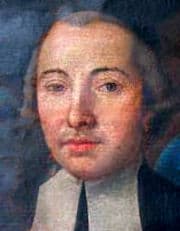
Heinrich Schütz was born on October 8, 1585, in the small village of Köstritz, in the Principality of Saxony, then part of the Holy Roman Empire. He died in Dresden, capital of Saxony, on November 6, 1672, at the age of 87, having spent most of his life in the service of the Saxon courts. His nationality was German and he is considered the most important German composer of the early Baroque period.
His musical training began at home, under the guidance of his father, who was the organist at the local church. In 1600, Schütz went to advanced study in Dresden, where he entered the service of the Elector's court of Saxony. Between 1609 and 1615 he traveled to Venice, where he studied with Giovanni Gabrieli, then master of the Cappella Marciana. This experience provided him with direct contact with Venetian polyphony and the innovative use of the antiphon and the doppio choir, influences that profoundly marked his later production.
Schütz's style combines the contrapuntal clarity of the Lutheran tradition with the sonorities and the use of concerto grosso typical of Italian music. He introduced in Germany the systematic use of basso continuo and instrumental writing to reinforce voices, as well as exploring the contrast between vocal and instrumental groups. His vocal music stands out for its textual expressiveness, seeking to reflect the meaning of sacred and secular words, a practice that preceded J.S. Bach's style.
Among his most important works are the two collections of motets “Musikalische Exequien” (1635–36) and “Psalm‑Versen” (1648), the “Symphoniae sacrae” I (1629) and II (1647), the “Kleine Geistliche Konzerte” (1656) and the “Weihnachtshistorie” (1664). He also composed the first great German mass, the “Psalmen Davids” (1661), and the “Konzert für 5 Stimmen” (1655). These pieces cemented his role as a pioneer of German sacred music and paved the way for the later Baroque tradition.
He lived much of his life in times of religious and political turmoil, including the Thirty Years' War (1618–1648). Despite the difficulties, he maintained a stable position as Kapellmeister at the Dresden court, where he was responsible for court and church music. A striking aspect of his personal life was his deep devotion to the Lutheran faith, which guided not only the content of his compositions, but also his ethical conduct and his commitment to the reform of sacred music in Germany.
Written by artificial intelligence and not yet reviewed by a person.
Where to start
Curiosities
- Is considered the greatest German composer before Bach.
- Studied with Giovanni Gabrieli in Venice.
- Lived during the Thirty Years' War, which influenced his works.
- Established the foundations of German Protestant sacred music.
Works
173 works- Becker Psalter, Op.5, Op.5 ; SWV 097-256Contrabaixo · 1628 ca., revisada em 1661 ca.
- Becker Psalter, Op.5, SWV 97-256, Op.5 ; SWV 097-256Contrabaixo · 1628 ca., revisada em 1661 ca.
- Cantiones sacrae, Op.4, Op.4 ; SWV 53-93 ; RISM A/I: S 2279Piano
- Also hat Gott die Welt geliebt, SWV 380, SWV 380 ; Op.11 No.12Piano
- Die Himmel erzählen die Ehre Gottes, SWV 386, SWV 386 ; Op.11 No.18Coro
- Da Jesus an dem Kreuze stund, SWV 478Voz
- Cantate Domino canticum novum, SWV 81, SWV 81 ; Op.4 No.16Voz
- Du Schalksknecht, SWV 397, SWV 397 ; Op.11 No.29Tenor
- Der Schwanengesang, Op.13, Op.13 ; SWV 482-494Coro
- Da pacem, Domine, SWV 465Coro · 1627?
- Der Engel sprach zu den Hirten, SWV 395, SWV 395 ; Op.11 No.27Coro
- Ein Kind ist uns geboren, SWV 384, SWV 384 ; Op.11 No.16Coro
- Auf dem Gebirge hat man ein Geschrei gehöret, SWV 396, SWV 396 ; Op.11 No.28Coro
- Es ist erschienen die heilsame Gnade Gottes allen Menschen, SWV 371, SWV 371 ; Op.11 No.3Coro
- Attendite popule meus legem meam, SWV 270, SWV 270 ; Op.6 No.14Violino
- Das ist je gewißlich wahr, SWV 388, SWV 388 ; Op.11 No.20Coro
- Aller Augen warten auf dich, Herre, SWV 429Soprano
- Das Wort ward Fleisch, SWV 385, SWV 385 ; Op.11 No.17Coro
- Er wird sein Kleid in Wein waschen, SWV 370, SWV 370 ; Op.11 No.2Coro
- Erbarm dich mein, o Herre Gott, SWV 447Violino
- D'orrida selce alpina, SWV 6, SWV 6 ; Op.1 No.6Voz
- Christ ist erstanden, SWV 470Coro
- Così morir debb'io, SWV 5, SWV 5 ; Op.1 No.5Voz
- Die Himmel erzählen die Ehre Gottes, SWV 455Voz
- Das ist mir lieb, daß der Herr mein Stimm und Flehen höret, SWV 51Piano
- Der Herr ist mein Hirt, SWV 398, SWV 398 ; Op.12 No.1Cordas
- Domine deus, Deus virtutum, SWV AgViolino
- Dunque addio, SWV 15, SWV 15 ; Op.1 No.15Voz
- Ego dormio et cor meum vigilat, SWV 63-64, SWV 63-64 ; Op.4 XI-XII/5Voz
- Ach Herr, du Schöpfer aller Ding, SWV 450Piano


Something wrong on this page? or send a missing work.