Pyotr Tchaikovsky
- Born
- 7 May 1840
- Died
- 6 November 1893
- aged 53
- Country
- Russia
- Era
- Romantic
Пётр Ильич Чайковский · Pëtr Il’ič Čajkovskij · Petr Il'ich Chaikovskii
Biography
Pyotr Ilyich Tchaikovsky was born on May 7, 1840, in Votkinsk, in present‑day Udmurtia, and died on November 6, 1893. He was Russian and, despite his initial education being geared toward a career as a civil servant, he stood out as a composer of the Romantic period, becoming the first Russian whose music achieved lasting recognition on the international scene.
He received his musical training at the Saint Petersburg Conservatory, where he studied harmony and counterpoint with Nikolai Zaremba and instrumentation and composition with Anton Rubinstein. This western‑oriented training set him apart from the nationalist composers of the group known as the Five, generating an ambiguous professional relationship with them. Tchaikovsky’s first symphony, submitted to the Russian Musical Society, was rejected by Rubinstein and Zaremba, and its full premiere took place in Moscow in February 1868, without the alterations that had been demanded.
Tchaikovsky’s style combines Western and Russian elements, reflecting his conviction that both traditions are “interwoven and mutually dependent.” This synthesis appears in works that have become references of the classical repertoire, such as the 1812 Overture, Piano Concerto No. 1, the Violin Concerto, the Romeo and Juliet Overture‑Fantasy, several symphonies, the opera Eugene Onegin, and the ballets Swan Lake, The Sleeping Beauty, and The Nutcracker.
In the historical context of nineteenth‑century Russia, Tchaikovsky represented the bridge between Russian musical tradition and European models, receiving both admiration and criticism for not fully meeting nationalist expectations. His music was valued abroad for transcending exotic stereotypes and, at the same time, generated scepticism among some Russian critics who deemed it insufficiently authentic.
His personal life was marked by emotional crises: the early death of his mother from cholera in 1854, the separation of his family for boarding school, his failed marriage to Antonina Miliukova, the long patronage relationship with Nadezhda von Meck, and his homosexual orientation, which he kept secret. The dedication of the Sixth Symphony to his nephew Vladimir Davydov, with whom he maintained affectionate correspondence, illustrates the intensity of the emotional bonds that profoundly influenced his work.
Written by artificial intelligence and not yet reviewed by a person.
Where to start
Curiosities
- Composed the three most famous ballets: The Nutcracker, Swan Lake, and Sleeping Beauty.
- Used real cannons in the "1812 Overture" to simulate battles.
- Had obsessive rituals, like drinking exactly 4 cups of tea per day.
- Suffered from extreme shyness and anxiety when conducting his own works.
Works
164 works- The Nutcracker (ballet), Op.71, Op.71 ; TH 14The Nutcracker · Orquestra · 1892
- Symphony No.5, Op.64, Op.64 ; TH 29 ; ČW 26Tchaikovsky's Fifth · Orquestra · 1888
- Swan Lake (ballet), Op.20, Op.20 ; TH 12Swan Lake · Orquestra · 1875–77 A ; 1894–95 B (arr. Riccardo Drigo and Modest Tchaikovsky)
- 1812 Overture, Op.49, Op.49 ; TH 49 ; ČW 461812 Overture · Orquestra · 1880
- 6 Pieces, Op.19, Op.19 ; TH 133Piano · 1873
- 6 Pieces, Op.51, Op.51 ; TH 143Piano · 1882
- 12 Pieces, Op.40, Op.40 ; TH 138 ; ČW 136-147Piano · 1878
- 18 Pieces, Op.72, Op.72 ; TH 151 ; ČW 187-204Piano · 1892–93
- 6 Romances, Op.6, Op.6 ; TH 93 ; ČW 211-216Voz · 1869
- Allegretto moderato, TH 152, TH 152 ; ČW 323Violino · 1863/64
- Adagio, TH 156, TH 156 ; ČW 328Trompa · 1863/64
- Concert Fantasia, Op.56, Op.56 ; TH 61Piano · 1884
- 2 Pieces, Op.10, Op.10 ; TH 132Piano · 1871–72
- Adagio, TH 160, TH 160 ; ČW 330Alaúde · 1863/64
- Adagio molto, TH 158, TH 158 ; ČW 326Violino · 1863/64
- Andante and Finale, Op.79, Op.79 ; TH 241 ; ČW 444Piano · 1893 (unfinished) ; 1896 (completed by Sergey Taneyev)
- Andante ma non troppo, TH 157, TH 157 ; ČW 335Violino · 1863/64
- 6 Romances, Op.16, Op.16 ; TH 95Voz · 1872–73
- 9 Sacred Pieces, TH 78Coro · 1884–85
- 2 Pieces, Op.1, Op.1 ; TH 124 (No.1), TH 122 (No.2)Piano · 1867 (No.1) ; 1863-64 (No.2)
- Andante molto, TH 155, TH 155 ; ČW 322Violino · 1863/64
- Aveu passionné, TH 148, TH 148 ; ČW 185Piano · 1891
- Allegro, TH 159, TH 159 ; ČW 327Violino · 1863/64
- 6 Pieces, Op.21, Op.21 ; TH 134Piano · 1873
- All-Night Vigil, Op.52Coro · 1881–82
- 16 Songs for Children, Op.54, Op.54 ; TH 104Voz · 1881 (No.16) ; 1883 (Nos.1–15)
- Allegretto, TH 153, TH 153 ; ČW 333Violino · 1863/64
- Allegro vivace, TH 154, TH 154 ; ČW 325Violino · 1863/64
- Allegro vivo, TH 165, TH 165 ; ČW 332Contrabaixo · 1863/64
- Agitato and Allegro, TH 163, TH 163 ; ČW 331Contrabaixo · 1863/64
Further reading
See the blog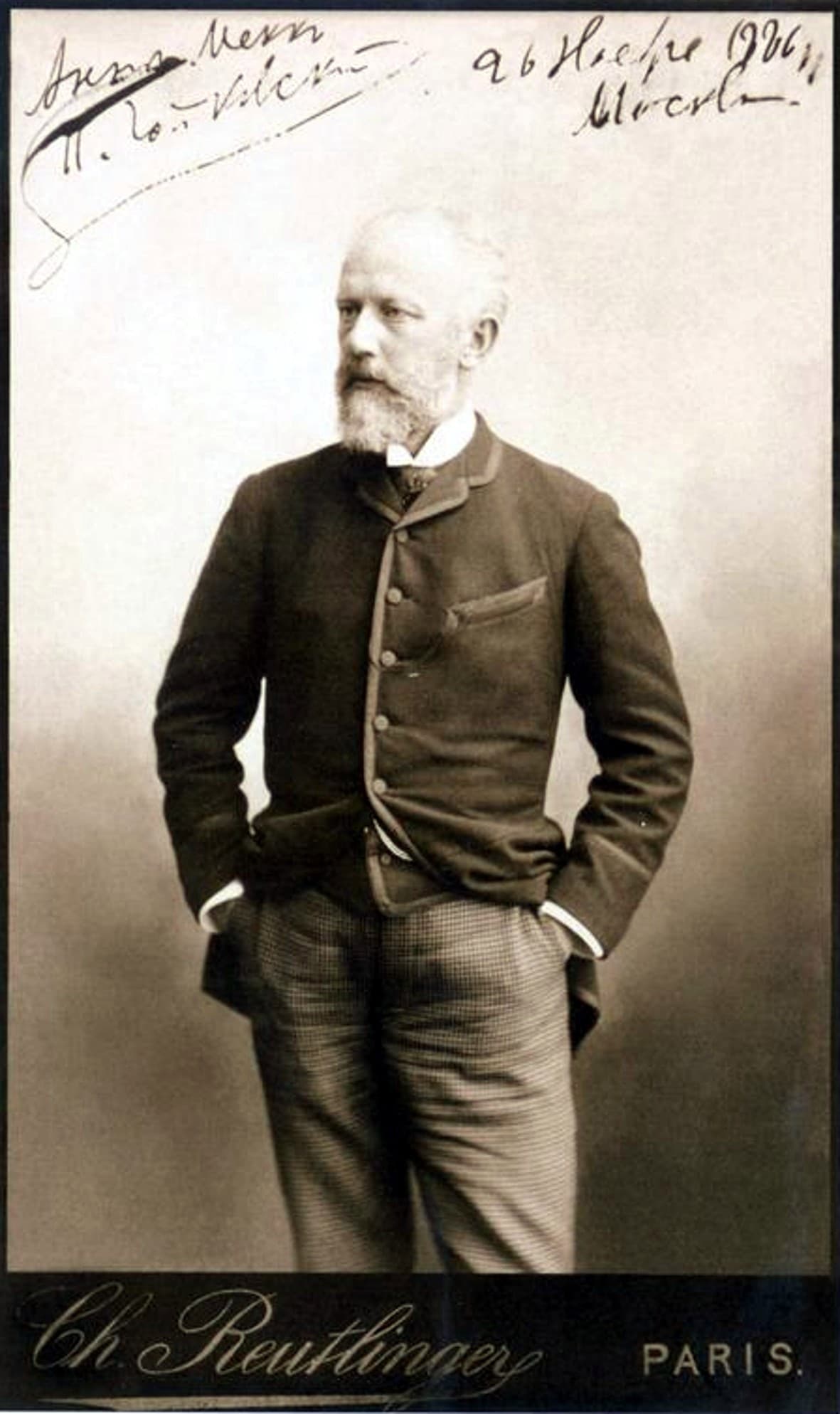







Something wrong on this page? or send a missing work.