Friedrich Burgmüller
- Born
- 4 December 1806
- Died
- 13 February 1874
- aged 67
- Country
- Germany
- Era
- Classical
- Wrote for
- Piano · violão · orquestra · voz · violoncelo
Johann Friedrich Franz Burgmüller · Frédéric Burgmüller
Biography
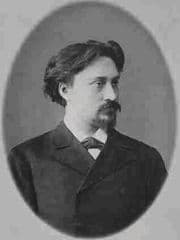
Johann Friedrich Franz Burgmüller was born on December 4, 1806, in the city of Regensburg, then part of the Holy Roman Empire, and died on February 13, 1874, in Paris. Of German origin, he moved to France at a young age, where he became known as Frédéric Burgmüller and developed his musical career.
Graduated from the Paris Conservatory, Burgmüller studied violin with Pierre Baillot and piano with Henri Herz, absorbing both classical rigor and the new romantic trends that were spreading through European salons. The influence of composers such as Carl Czerny and Johann Nepomuk Hummel is noticeable in his writing, especially in the emphasis on melodic clarity and technical ease. Although he was also a violist, his public activity focused mainly on composition and teaching piano.
Burgmüller's style is characterized by simple melodies, diatonic harmonies and clear structures, ideal for the pedagogical repertoire. His piano works, especially the “25 Easy Studies, Op.100”, combine technical exercises with attractive music, facilitating learning for beginners. In addition to these studies, he wrote salon pieces such as waltzes, minuets and rondos, which were widely published by Parisian publishers and adopted as teaching material in conservatories.
Burgmüller's importance lies, above all, in the dissemination of a teaching method that combined technique and expressiveness, contributing to the training of generations of pianists throughout the 19th century. His legacy lives on in piano classrooms around the world, where his studies are still part of the core repertoire. On a personal level, it is worth highlighting the fact that, upon settling in Paris, Burgmüller joined the circle of foreign musicians who influenced the development of French ballroom music, maintaining strong ties with his Germanic roots.
Written by artificial intelligence and not yet reviewed by a person.
Where to start
Curiosities
- His brother Norbert, also a composer, drowned in Aachen during an epileptic seizure at a spa.
- His Souvenir de Ratisbonne was used in the 1841 ballet Giselle as the peasant pas de deux.
- Moved to Paris in 1832, where he adopted the light salon style that marks his piano studies.
Works
53 works- 25 Études faciles et progressives, Op.10025 Easy and Progressive Studies · Piano · Beginner
- 18 Études, Op.109Piano · Intermediate
- 12 Études, Op.105Piano · Advanced
- 3 Nocturnes for Cello and Guitar, Letter AVioloncelo
- Fleurs mélodiques, Op.82Piano
- Les étincelles, Op.97Piano
- La corbeille de roses, Op.68Piano
- Rondo Alla Turca, Op.68Piano
- 6 Mélodies gracieuses de Bellini, Op.26Piano
- Ay ChiquitaPiano
- La PériOrquestra
- Souvenir de Bellini, Op.27Piano
- Souvenir de Schönbrunn, Op.32, Op.32 / 32bPiano
- Fantaisie brillante sur 'Ernani', Op.92Piano
- Souvenirs de LondresPiano
- La cachucha, Op.36Piano
- L'ange consolateurVoz
- Grande valse de salon sur 'Le pardon de Ploërmel'Piano
- Murmures du Rhone, Op.66Piano
- Cavatine de 'Bianca e Fernando', Op.17Piano
- ObéronPiano
- 3 Morceaux, Op.93Piano
- 3 Nocturnes for Violin and Guitar, Lettre AViolino
- Valse de salon sur 'Le papillon'Piano
- Chanson de l'alouette, Op.110Piano
- Collection de DansesPiano
- Fantaisie sur l'opéra 'Le carillonneur de Bruges', Op.102Piano
- Pensées expressives, Op.73Piano
- Fantaisie brillante sur 'La coupe du roi de Thulé', Op.113Piano
- Les oiseaux de Notre-DamePiano

Something wrong on this page? or send a missing work.