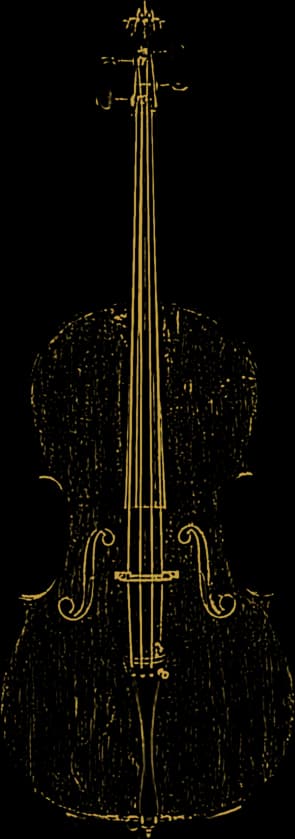
Cello
Italy, around 1560
The cello has the range closest to the human voice, from deep bass to high tenor. Played seated, with the instrument between the knees, it can sing and can carry the whole orchestra.
Works for celloHow it works
It has four strings tuned C, G, D and A, an octave below the viola. The instrument rests on the floor on a metal spike, the endpin, and the player sits with the bow crossing the body. Its large body gives the low notes a full sound and the high notes a brightness close to singing.
The story
The cello appeared in the mid-sixteenth century, in the workshops of Andrea Amati and other Italian makers, under the name violone and its variants. At first it served almost only to play the bass line of the continuo.
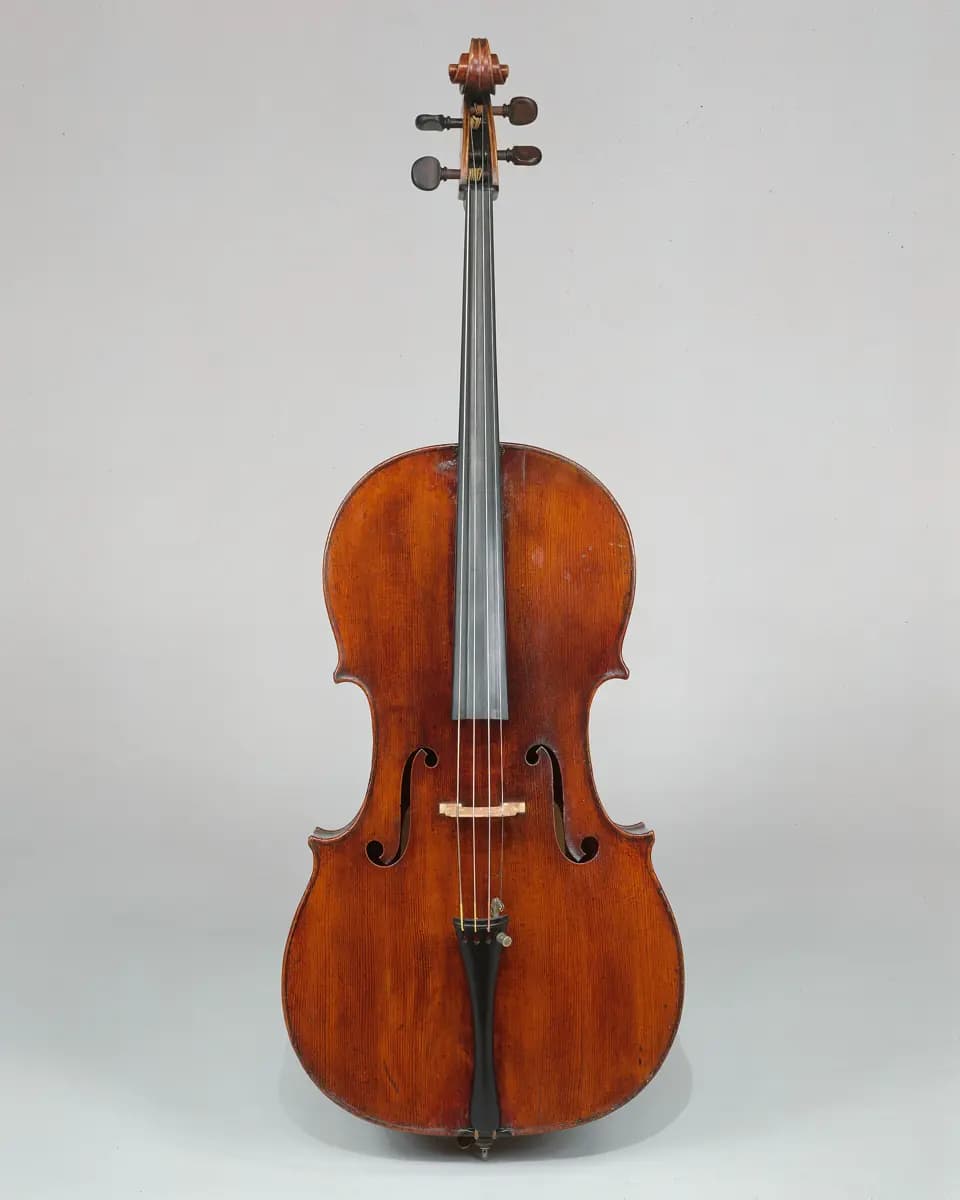
Late in the seventeenth century, strings with a gut core wound in metal let the instrument become smaller and nimbler, and it gained a solo repertoire. Bach wrote six Suites for solo cello, Vivaldi dozens of concertos, and Boccherini, a cellist himself, sonatas and concertos. The endpin only became standard in the nineteenth century; before that, the cello was held between the legs.
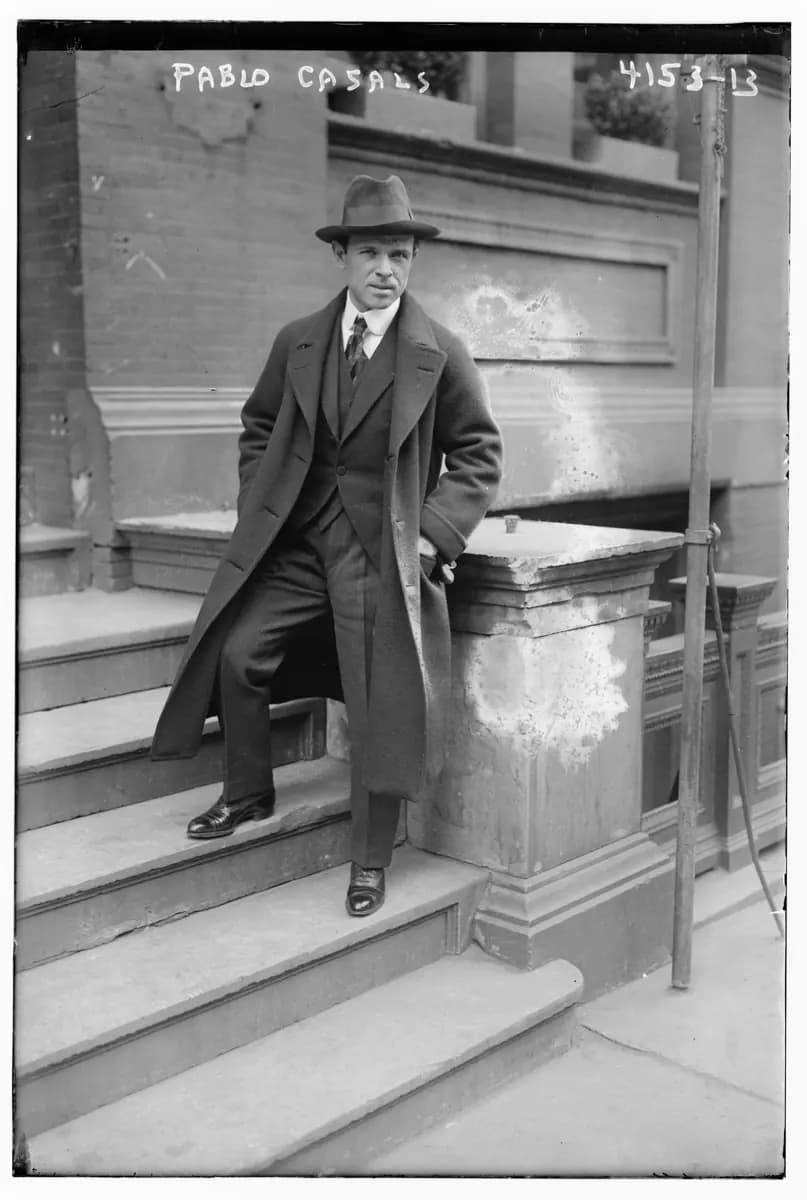
In the Romantic era and the twentieth century, the cello gained concertos by Schumann, Dvořák, Elgar and Shostakovich. Villa-Lobos wrote the Bachianas Brasileiras No. 1 for an orchestra of cellos alone, and the Catalan Pablo Casals changed the instrument’s history by recording Bach’s Suites.
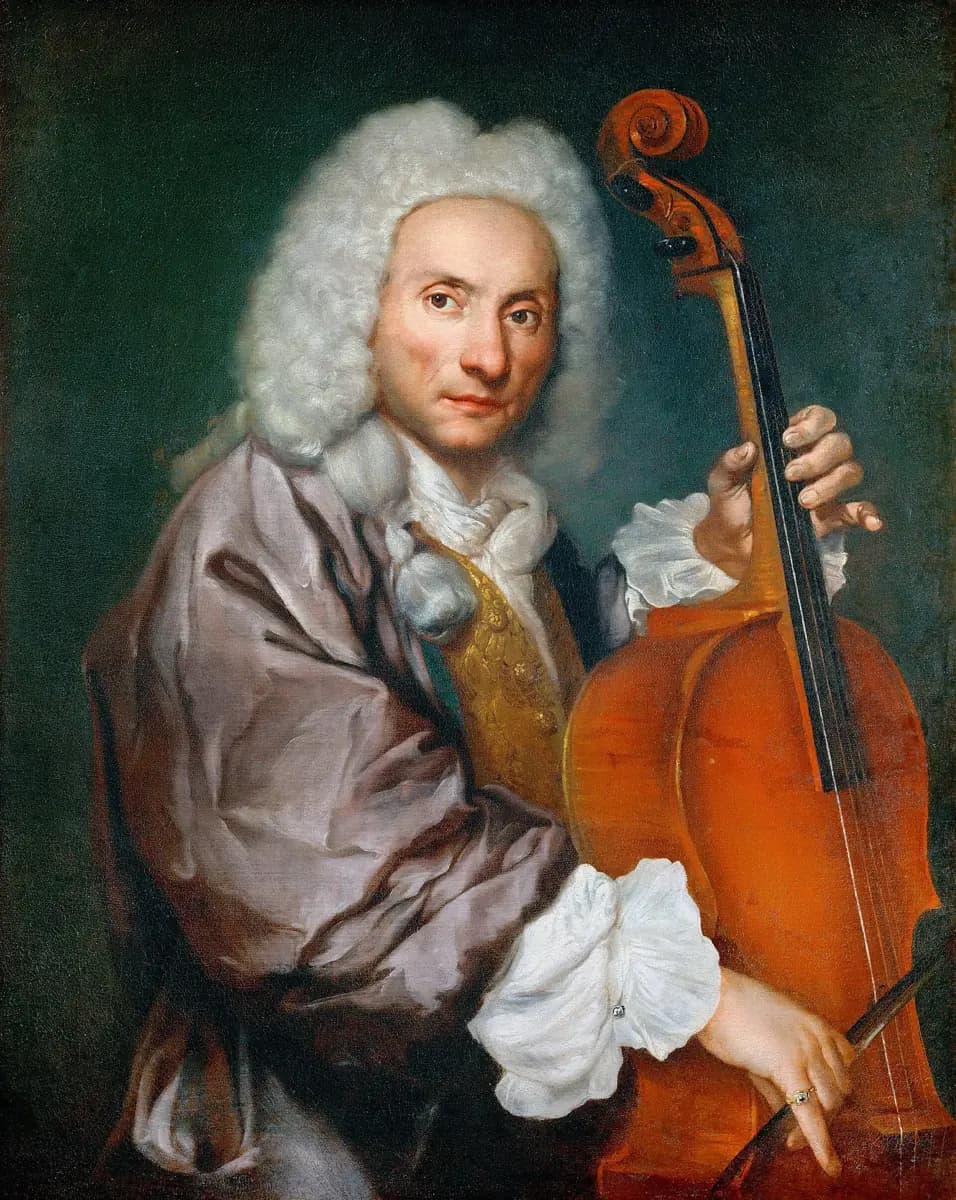
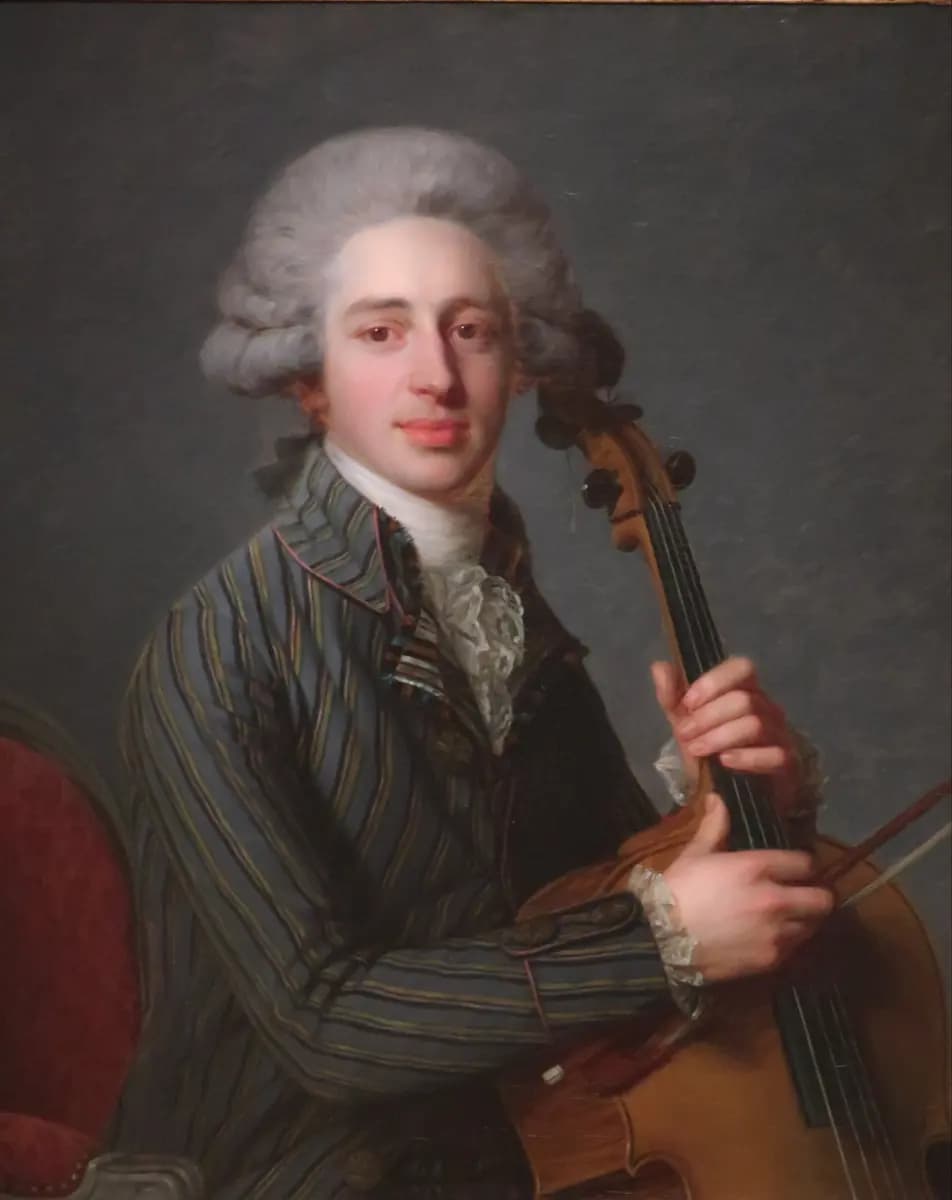
Before the endpin, the cello was held between the legs like the viola da gamba, and many eighteenth-century paintings show players that way. The bow, too, was held in several ways until François Tourte’s design, at the end of the eighteenth century, became the standard for the cello as well.
In Brazil the cello holds a special place in the work of Villa-Lobos, who studied it as a young man and played it in Rio de Janeiro’s cinemas and orchestras. Besides Bachianas No. 1 he wrote two concertos and a Fantasia for it, and the Aria of Bachianas No. 5 sets a soprano against eight cellos.
What was written for it
Bach’s Suites, the concertos of Haydn, Boccherini, Schumann, Dvořák, Elgar and Shostakovich, the sonatas of Beethoven and Brahms. In Brazil, Villa-Lobos gave the instrument the Bachianas No. 1 and the core of the Bachianas No. 5.
In pictures
Where to start listening
- 1Suite No. 1: PreludeJohann Sebastian BachBroken chords on a single cello. Perhaps the best-known piece for the instrument. Open the work
- 2The Carnival of the Animals: The SwanCamille Saint-SaënsA long melody over rippling piano. Open the work
- 3Cello ConcertoAntonín DvořákThe most played concerto in the repertoire, full of Bohemian tunes. Open the work
- 4Cello ConcertoEdward ElgarIt opens with solo chords that sound like a painful memory. Open the work
Where to start playing
Pieces chosen by the house, at the level rated by the musicians of IMSLP.
Beginner
Intermediate
- 6 Cello Sonatas, Op.1Benedetto MarcelloBaroque sonatas with continuo, a good bridge to Bach.
- Cello Suite No.1 in G major, BWV 1007Johann Sebastian BachBach's best-known suite for solo cello. Its Prelude opens the repertoire.
- Allegro appassionato, Op.43Camille Saint-SaënsA short, brilliant concert piece by Saint-Saëns.
Did you know?
- Pablo Casals found Bach’s Suites at thirteen, in a second-hand music shop in Barcelona. He studied them for more than ten years before playing them in public.
- Saint-Saëns barred The Carnival of the Animals from publication during his life, thinking it too frivolous. He allowed only The Swan.