Dietrich Buxtehude
- Born
- 1637
- Died
- 9 May 1707
- aged 70
- Country
- Germany
- Era
- Baroque
Dieterich Buxtehude · Diderik Buxtehude · Diderich Buxtehude
Biography
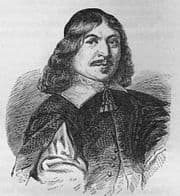
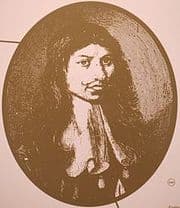
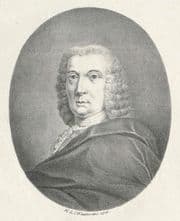
Dieterich Buxtehude (c.1637–9May1707) was probably born in Helsingborg, then part of Denmark, and recognized Denmark as his homeland. Son of Johannes Buxtehude, organist at St.Olaf’s in Helsingør and St.Mary’s in Helsingborg, he received his first musical training in the family environment, where the organ already played a central role. He began his career as an organist in Helsingborg (1657–c.1660) and then in Helsingør (1660–1668), before assuming, in 1668, the position of organist at the Marienkirche, in Lübeck, succeeding Franz Tunder.
Buxtehude's production reflects the style of the North German organistic school, marked by the tylusphantasticus. His nineteen praeludes for organ — sectional works that alternate free passage and strict counterpoint — are considered the high point of this genre in the 17th century, along with pieces by Nicolaus Bruhns. Also noteworthy are more than forty choral configurations (variations, ricercares, fantasies and preludes), which consolidate their importance in the chorale tradition. Among his chamber works, he published fourteen sonatas, and maintained a wide vocal repertoire, although few of these works were included in German manuscripts of the time.
In Lübeck, Buxtehude reorganized, from 1673 onwards, the series of evening concerts known as Abendmusik, which attracted musicians from different locations and lasted until 1810. This professional autonomy served as a model for later composers, such as Handel, Mattheson, Telemann and the young Johann Sebastian Bach, who in 1705 traveled more than 400km to hear the organist and watch the Abendmusik performances. Buxtehude also served as church treasurer, expanding his influence on Lübeck's civic and musical life.
He married AnnaMargarethe, daughter of his predecessor Franz Tunder, in 1668, a common practice at the time for the succession of positions. The couple had seven daughters, one of whom died in infancy, and maintained close family ties: Buxtehude's father moved to Lübeck in 1673 and died a year later, with the organist composing funeral music in his honor. This combination of family life and public activity highlights Buxtehude not only as a composer but as a central figure in late-Baroque Lübek cultural life.
Written by artificial intelligence and not yet reviewed by a person.
Where to start
Curiosities
- His organ concerts in Lübeck attracted musicians from all over Europe.
- Bach walked 400 km to hear him play.
- Created the "Abendmusiken", very popular evening sacred concerts.
- Profoundly influenced the style of Bach and other Baroque composers.
Works
240 works- Das neugeborne Kindelein, BuxWV 13Violino
- Das newgebohrne Kindelein, BuxWV 13Violino
- Chaconne in E minor, BuxWV 160Órgão
- Alles was ihr tut, BuxWV 4Coro · 1666 ca.
- Alles, was ihr tut mit Worten oder Werken, BuxWV 4Coro · 1666 ca.
- 7 Trio Sonatas, Op.1, Op.1 ; BuxWV 252-258Violino
- Complete Organ WorksÓrgão
- 7 Trio Sonatas, Op.2, Op.2 ; BuxWV 259-265Violino
- Ach Gott und Herr, BuxWV 177Órgão
- Christ unser Herr zum Jordan kam, BuxWV 180Órgão
- Also hat Gott die Welt geliebt, BuxWV 5Violino
- Cantate Domino canticum novum, BuxWV 12Soprano
- Der Herr ist mit mir, BuxWV 15Viola
- Der Herr ist mit mir, BuxWV 15Viola
- Ach Herr, mich armen Sünder, BuxWV 178Órgão
- Chaconne in C minor, BuxWV 159Órgão
- Auf meinen lieben Gott, BuxWV 179Órgão
- Benedicam Dominum, BuxWV 113Violino
- Canzonetta in A minor, BuxWV 225Órgão
- Danket dem Herren, denn er ist sehr freundlich, BuxWV 181Órgão
- Befiehl dem Engel daß er komm', BuxWV 10Violino
- Canzonetta in G minor, BuxWV 173Órgão
- Canzonetta in D minor, BuxWV 168Órgão
- 28 Chorale PreludesÓrgão
- Canzonetta in G major, BuxWV 171Órgão
- Aria and Variations in A minor, BuxWV 249Quarteto
- Aria and Variations in C major, BuxWV 246Quarteto
- Dietrich Buxtehude WerkePiano
- Canzonetta in C major, BuxWV 167Órgão
- Abendmusiken und KirchenkantatenPiano



Something wrong on this page? or send a missing work.