Arcangelo Corelli
- Born
- 17 February 1653
- Died
- 8 January 1713
- aged 59
- Country
- Italy
- Era
- Baroque
- Wrote for
- Violino · órgão · cordas · piano · violoncelo
Archangelo Corelli · Gallario Riccoleno
Biography
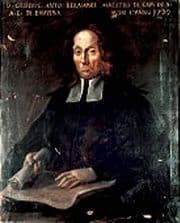
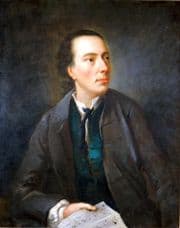
Arcangelo Corelli was born on February 17, 1653 in Fusignano, a small town in Romagna that then belonged to the Papal State, and died in Rome on January 8, 1713. Of Italian nationality, he became known as a prominent composer and violinist in the Baroque period. His father, from whom he received the name Arcangelo, died five weeks before his birth; the child was raised by his mother, Santa Ruffini, alongside four older brothers.
He graduated in the cities of Bologna and Rome. According to reports by the poet Giovanni Mario Crescimbeni, he began his musical studies under the tutelage of a priest in Faenza, continued in Lugo and, in 1666, moved to Bologna, where the violin school of Ercole Gaibara and his students Giovanni Benvenuti and Leonardo Brugnoli exerted great influence. Other later sources mention possible masters such as Bartolomeo Laurenti, Giovanni Battista Bassani and, although not confirmed, the papal contralto Matteo Simonelli. Records of the Accademia Filarmonica of Bologna indicate his acceptance as a member around 1670, although this date is the subject of debate. As early as 1675, he was already performing in Rome as a violinist in Lenten oratories and in celebrations sponsored by cardinals, standing out as “Il Bolognese” in his first publications.
His style combines balance, original harmonies and rich textures, presenting theatricality and melodic clarity within an expressive polyphony typical of the Baroque. He was a pioneer in the application of the tonal system and functional harmony, while maintaining moderation in dynamics. As a virtuoso violinist, he limited the use of the instrument's upper positions, rarely exceeding the D of the highest string. Corelli's editorial output comprises six published collections – five of trio or solo sonatas and one of concerti grossi – which established models for the development of the sonata and concerto and consolidated the pre-eminence of the violin. Bach used Corelli's Opus3 as the basis for the organ fugue BWV579, and Handel modeled his Concerti Grossi Opus6 on Corelli's own concerti.
Inserted in the Roman musical scene, Corelli joined the Pontifical Academy of Arcadians in 1706, receiving the Arcadian name Arcomelo Erimanteo, and became a central figure in the Monday concerts in the palace of Cardinal Pietro Ottoboni. He led the festivities in honor of Queen Christina of Sweden in 1687, received the protection of patrons such as Cardinal Benedetto Pamphili and, in 1708, lived again in the residence of Cardinal Ottoboni, in addition to visiting Naples at the invitation of King Philip V. His influence crossed borders, impacting composers such as Vivaldi, Handel, Bach and Couperin, and his model of violin performance was transmitted to disciples such as Francesco Geminiani and Pietro Locatelli.
A striking aspect of his personal life was the considerable wealth he accumulated – 120,000 marks – and the collection of valuable violins and works of art he owned at the time of his death. This heritage was left to his benefactor, who passed it on to Corelli's relatives. His body was buried in the Pantheon in Rome, a place that reinforces the reputation of the “new Orpheus” attributed to him by his contemporaries.
Written by artificial intelligence and not yet reviewed by a person.
Where to start
Curiosities
- Established the foundations of modern violin technique.
- His concerti grossi defined the genre for future generations.
- Published only 6 sets of works, but all became classics.
- Was the most famous violinist in Europe in his time.
Works
77 works- Concerto grosso in G minor 'Fatto per la Notte di Natale', Op.6 No.8, Op.6 No.8 ; MC 6.8Christmas Concerto · Violino · 1690 ?
- 12 Violin Sonatas, Op.5, Op.5 ; RISM-A/I: C 3800Includes La Folia · Violino · Intermediate
- 12 Concerti grossi, Op.6Violino · 1712 and before
- Sonate a Violino e Violone o Cimbalo - Opera quinta. Parte Prima, Op.5 ; RISM-A/I: C 3800Violino
- Concerto grosso in D major, Op.6 No.4Violino · até 1712
- Concerto grosso in D major, Op.6 No.1Violino · até 1712
- 12 Trio Sonatas, Op.3Violino
- 12 Trio Sonatas, Op.1, Op.1 ; RISM A/I: C 3658Violino
- 12 Trio Sonatas, Op.4Violino
- 12 Trio Sonatas, Op.2, Op.2 ; RISM A/I: C 3693Violino · 1685
- Sonata a Quattro, WoO 4Violino
- Sonata in C major, WoO 4Violino
- Concerto grosso in C minor, Op.6 No.3Violino · até 1712
- Concerto grosso in F major, Op.6 No.2Violino · até 1712
- Adagio, Op.5 No.5Violino
- Sonata da Chiesa, Op.1 No.2Violino
- Concerto grosso in C major, Op.6 No.10Violino · até 1712
- Concerto grosso in B-flat major, Op.6 No.11Violino · até 1712
- Trio Sonata in D major, Op.3 No.2Violino
- Album für KlavierPiano
- Trio Sonata in B minor, Op.2 No.8Violino
- Trio Sonata in C major, Op.4 No.1Violino
- Trio Sonata in D minorViolino
- Fuga a quattro voci, Anh.15Piano
- Trio Sonata in B-flat major, Op.4 No.9Violino
- Trio Sonata in D major, Op.2 No.1Violino
- Trio Sonata in A major, Op.1 No.3Violino
- Trio Sonata in D minor, Op.4 No.8Violino
- Trio Sonata in C major, Op.1 No.7Violino
- Trio Sonata in B minor, Op.1 No.6Violino


Something wrong on this page? or send a missing work.