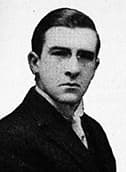
Manuel de Falla
- Born
- 23 November 1876
- Died
- 13 November 1946
- aged 69
- Country
- Spain
- Era
- Romantic
- Wrote for
- Orquestra · piano · voz · violoncelo · violão
Manuel de Falla y Matheu · Manuel María de los Dolores Falla Matheu
Biography
Manuel de Falla y Matheu was born on 23 November 1876, in Cádiz, Spain, and died on 14 November 1946, in Alta Gracia, province of Córdoba, Argentina. Of Spanish nationality, he was one of the most important composers of the first half of the 20th century, alongside Isaac Albéniz, Francisco Tárrega and Enrique Granados.
He received his musical training at the Real Conservatorio de Música y Declamación de Madrid, studying piano with José Tragó, a colleague of Albéniz, and composition with Felip Pedrell. His first piano studies were with Alejandro Odero, and he learned harmony and counterpoint with Enrique Broca. Contact with Pedrell awakened in him an interest in Andalusian music, especially cante jondo, which would mark his language. During his stay in Paris (1907–1914) he became close to Maurice Ravel, Claude Debussy, Paul Dukas and Igor Stravinsky, influences that were reflected in his later works.
Falla’s style combines the melodic richness of Spanish popular music with European compositional techniques. In his early years the flamenco influence predominates, while, from the 1920s onward, a neoclassical tendency, close to that of Stravinsky, becomes evident, especially in works written for harpsichord. This synthesis gave him a distinctive character within his country’s music.
Among his best‑known works are the one‑act opera La vida breve (1913), the ballet El amor brujo (1915) – which contains the famous “Danza ritual del fuego” – and the ballet El sombrero de tres picos (1917), staged by Serge Diaghilev with scenery by Pablo Picasso. Also notable are the harpsichord concerto (1926), the puppet‑opera El retablo de maese Pedro (1923), the “Siete canciones populares españolas” (1914) and the orchestral cantata Atlántida, left unfinished and completed posthumously by Ernesto Halffter. In Granada he organized the Concurso de Cante Jondo (1922), reinforcing his commitment to folk tradition.
Exiled in Argentina after Franco’s victory in the Civil War, he continued to compose and teach, counting the composer Rosa García Ascot among his students. He never married nor had children; in his last years he was cared for by his sister María del Carmen. He died of cardiac arrest a few days before turning 70, having expressed the wish to be buried in the Sierras de Córdoba; his remains were transferred to the Cathedral of Cádiz in 1947. His memory is preserved in the Museo‑Casa de Manuel de Falla in Granada and in the auditorium that bears his name in the same city.
Written by artificial intelligence and not yet reviewed by a person.
Where to start
Curiosities
- His works perfectly capture the spirit of Andalusian flamenco.
- "Nights in the Gardens of Spain" evokes Spanish landscapes.
- His ballet "The Three-Cornered Hat" is a Spanish classic.
- Was a friend of Debussy and Ravel in Paris.
Works
23 works- El amor brujoLove, the Magician · Voz · 1914-15, rev.1916-20
- El sombrero de tres picos, Suite No.2The Three-Cornered Hat · Orquestra · 1921
- El sombrero de tres picos, Suite No.1The Three-Cornered Hat · Orquestra · 1919
- Noches en los jardines de EspañaNights in the Gardens of Spain · Piano · 1909-16
- El sombrero de tres picos, balletThe Three-Cornered Hat · Soprano · 1917-19
- 7 Canciones populares españolasVoz · 1914-15
- La vida breve, G.35Voz · 1904-13
- Pièces espagnolesPiano · 1906-09
- HomenajeViolão · 1920 (August) · Advanced
- Harpsichord ConcertoCravo · 1923-26
- Serenata andaluzaPiano · 1900
- 3 MélodiesVoz · 1909-10
- NocturnoPiano · 1896
- Fanfare pour une fêteTrompete · 1921
- PsychéViolino · 1924
- El retablo de maese PedroVoz · 1919–23
- Fantasía béticaPiano · 1919
- Pour le tombeau de Paul DukasPiano · 1935
- HomenajesOrquestra
- El gran teatro del mundoCoro · 1927
- Soneto a CordobaHarpa · 1927
- 3 Spanish Melodies, 3 pieces Nocturno Serenata Andaluza HomenajeOrquestra
- Balada de MallorcaCoro · 1933





Something wrong on this page? or send a missing work.