Eugène Gigout
- Born
- 23 March 1844
- Died
- 9 December 1925
- aged 81
- Country
- France
- Era
- Romantic
Biography
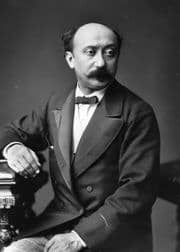
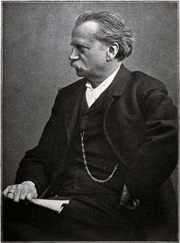
Eugène Gigout was born on March 23, 1844, in Paris, and died on December 9, 1925, in the same city. Of French nationality, he stood out as an organist and composer, working mainly in the sphere of sacred music and salon repertoire.
He trained at the Conservatoire de Paris, where he studied organ under the guidance of François Benoist, a professor at the institution until 1865. Later, he came into contact with the ideas of César Franck and Charles‑Marie Widor, which shaped his musical sensibility. After completing his studies, Gigout assumed, in 1868, the post of titular organist of the Church of Saint‑Augustin in Paris, a position he held until 1907, which gave him wide visibility on the liturgical and concert scene of the capital.
Gigout’s style combines the French Romantic tradition with formal clarity and an attention to organ timbre. His compositions for organ reveal a melodic writing, rich harmonies, and rhythmic resources that favor liturgical expression without losing the virtuosity typical of recitals. For piano, he wrote salon pieces that reflect the popular taste of the time, maintaining the characteristic elegance of the Parisian school.
Among his best‑known works are the “Toccata in B‑minor, Op. 57,” part of the “10 Pièces d’orgue, Op. 30,” and the “Missa solennelle.” Gigout’s repertoire was widely disseminated through editions that circulated in France and abroad, influencing generations of organists, among them Marcel Dupré, who received instruction from the master. His legacy also includes the founding of an improvisation school and the training of numerous musicians who became references in the French musical panorama of the early twentieth century.
A striking aspect of his personal life was his family’s relationship with music: his son, Léon Gigout, became a prominent violinist, perpetuating the family name in concert circles. This continuity demonstrates how Eugène Gigout not only contributed as a creator but also as a progenitor of an artistic lineage that remained active in the French musical scene.
Written by artificial intelligence and not yet reviewed by a person.
Where to start
Curiosities
Nobody has shared a curiosity about Gigout yet. The first one earns XP.
Works
25 works- 2 InterludesPiano
- Interlude in F majorÓrgão · 1905
- Poèmes mystiquesÓrgão
- 10 Pièces pour orgueÓrgão
- 100 Pièces brèvesÓrgão
- 100 Pièces brèves nouvellesHarmônio · 1914-19
- 12 Pièces pour orgueÓrgão
- 2 Pièces pour orgueÓrgão
- 3 Pièces d'orgueÓrgão
- 3 Pièces pour orgueÓrgão
- 6 Pièces d'orgueÓrgão
- 6 Pièces diverses en deux suitesÓrgão
- Album GrégorienÓrgão
- Ave MariaVoz
- IntermezzoÓrgão · 1909
- Marche funèbrePiano
- MéditationViolino
- Pièce jubilaireÓrgão · 1918
- Rapsodie sur des chansons populaires du CanadaÓrgão
- Rhapsodie sur des Airs CatalansÓrgão · 1897
- RomanzaÓrgão
- Suite de trois morceauxÓrgão · ca.1889
- Tantum ergoÓrgão
- Toccata in B minorÓrgão
- Tota pulchra esVoz



Something wrong on this page? or send a missing work.