George Frideric Handel
- Born
- 23 February 1685
- Died
- 14 April 1759
- aged 74
- Country
- Germany
- Era
- Baroque
Georg Friederich Händel · Georg Friedrich Haendel · George Frideric Hendel
Biography
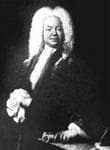
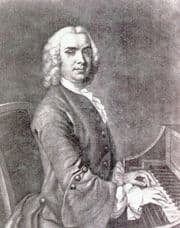
George Frideric Handel was born on 23 February 1685 (baptized on 5 March 1685) in Halle, then part of the Duchy of Magdeburg, and died on 14 April 1759. Of German origin, he settled in London in 1712, where he spent most of his career and became a naturalised British citizen in 1727.
Handel’s musical training began under the tutelage of the organist of the parish church of Halle, Friedrich Wilhelm Zachow, his only formal teacher. Zachow, in addition to imparting mastery of the organ, violin and harpsichord, had him copy works by composers such as Johann Krieger, Johann Caspar Kerll, Johann Jakob Froberger and Georg Muffat, giving him extensive exposure to Germanic polyphonic traditions and to the Italian and French styles that permeated the Baroque. Despite his father’s initial resistance, who tried to prevent his son from handling instruments, the young Handel already showed an inclination toward the oboe and the practice of composition from childhood.
Handel’s style synthesises the high art of the Baroque, uniting German choral polyphony with the expressiveness of Italian opera. He excelled in the creation of Italian operas, English‑language oratorios—especially the famous Messiah (1742)—and orchestral works such as Water Music and Music for the Royal Fireworks. His anthem “Zadok the Priest”, one of the four coronation anthems, has been performed at every British coronation since 1727, evidencing the lasting influence of his music in the ceremonial tradition.
During the 1730s Handel founded three opera companies to serve the English aristocracy; after a physical collapse in 1737 he turned to a broader public, focusing on choral works and oratorios. Recognised as one of the greatest composers of his era, his work was admired by figures such as Haydn, Mozart and Beethoven, consolidating him as a central figure of the European Baroque. In life he amassed enough wealth to be buried with a state funeral at Westminster Abbey, demonstrating the high recognition he enjoyed both in England and on the international musical scene.
Written by artificial intelligence and not yet reviewed by a person.
Where to start
Curiosities
- Composed "Messiah" in just 24 days.
- His "Water Music" was performed on boats on the River Thames for King George I.
- Survived a fire that destroyed his theater and his scores.
- His "Music for the Royal Fireworks" was performed with real fireworks.
Works
661 works- 9 German Arias, HWV 202-210Oboé · 1724-26
- 12 Concerti Grossi, Op.6, Op.6 ; HWV 319-330Solo · 1739-40
- 6 Organ Concertos, Op.4, Op.4 ; HWV 289-294Órgão
- Acis and Galatea, HWV 49Orquestra · 1718, revisada em 1732, 1739
- 8 Great Suites, HWV 426-433Cravo
- 6 Organ Concertos, Op.7, Op.7 ; HWV 306-311Órgão
- 6 Fugues, HWV 605-610Piano · 1716 ?
- 12 Voluntaries and Fugues for the Organ or HarpsichordÓrgão
- 6 Concerti Grossi, Op.3, Op.3 ; HWV 312-317Orquestra · 1710–18
- Agrippina, HWV 6Voz · 1709
- Adagio and Allegro, HWV 338Violino · 1722
- 6 Little FuguesCravo
- Aci, Galatea e Polifemo, HWV 72Soprano · 1708 (16 June - date of completion)
- 3 Sonaten nach Instrumental-KonzertenVioloncelo
- 12 Fantasias for KeyboardPiano
- A Second Set of Six ConcertosTeclado
- 10 SongsVoz
- Air in B-flat major, HWV 471Cravo · Beginner
- Adagio and Allegro in A major, HWV 406Violino
- A Collection of 7 FughettasCravo
- 20 Pieces for a Musical ClockÓrgão · 1738 ca.
- Admeto, HWV 22Orquestra · 1726
- 12 Easy PiecesPiano
- Air in A major, HWV 468Cravo · 1705 ca.
- 37 Minuets, HWV A15Teclado
- A Voluntary or a Flight of Angels in C major, HWV 600Órgão
- 2 Menuets à 4Piano
- Air in C major, HWV 457Teclado
- 11 FuguesÓrgão
- 3 Te Deum, HWV 280, 281 & 282Orquestra


Something wrong on this page? or send a missing work.