Gustav Holst
- Born
- 21 September 1874
- Died
- 25 May 1934
- aged 59
- Country
- England
- Era
- Romantic
Gustavus Theodore von Holst · Gustav Theodore Holst
Biography
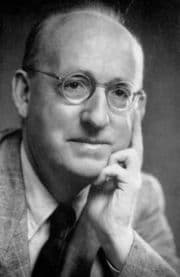
Gustav Holst was born on September 21, 1874, in Cheltenham, Gloucestershire, and died on May 25, 1934. He was of English nationality and, despite having wanted to become a pianist, neuritis in his right arm and other health weaknesses prevented his career as a concert pianist.
He graduated from the Royal College of Music in London, where he studied composition with Charles Villiers Stanford and received lessons in piano, organ, trombone and instrumentation. As a student, he supported himself by playing the trombone in theaters and resorts, which allowed him to attend Wagner concerts. His musical development was marked, in the early years, by the strong influence of Richard Wagner and Richard Strauss, by the inspiration of the revitalization of English folk-song and, later, by the example of modern composers such as Maurice Ravel.
Holst's style became distinctive, combining Wagner's Germanic heritage with the sound of British folklore and a sense of clarity that deepened into a personal language sometimes considered austere. This synthesis culminated in the orchestral suite The Planets, which brought him international recognition after the First World War; although other works in his broad catalog did not achieve the same popularity, they reveal the same concern for formal originality and national expression.
In addition to composing, Holst distinguished himself as an educator: he ran Morley College from 1907 to 1924, founded Whitsun music festivals from 1916 and taught at StPaul’s Girls’ School from 1905 until his death. He was a reserved person, avoiding the fame that Planets gave him and maintaining simple lifestyle habits, such as vegetarianism and abstinence from alcohol, motivated by his fragile health. His legacy influenced later generations of English composers, including Edmund Rubbra, Michael Tippett and Benjamin Britten.
Written by artificial intelligence and not yet reviewed by a person.
Where to start
Curiosities
- His suite "The Planets" is one of the most popular orchestral works.
- Was teacher at St. Paul's Girls' School for almost 30 years.
- Became interested in Hindu philosophy and Indian music.
- Mars, from "The Planets", influenced many film soundtracks.
Works
75 works- First Suite for Military Band, Op.28 No.1, H.105 ; Op.28 No.1Banda · 1909
- Brook Green Suite, H.190Clarinete · 1933
- In the Bleak Midwinter, H.73 No.1Coro · 1904-05
- A Moorside Suite, H.173Banda · 1928
- I vow to thee, my country, H.148Orquestra · 1918
- A Somerset Rhapsody, Op.21, Op.21 ; H.87Orquestra · 1906-07
- Hammersmith, Op.52Banda · 1930
- Japanese Suite, Op.33, Op.33 ; H.126Orquestra · 1915
- Choral Hymns from the Rig Veda, Op.26, Op.26 ; H.97-100Coro · 1908–12
- A Fugal Concerto, Op.40 No.2, H.152 ; Op.40 No.2Oboé · 1923
- 2 Songs without Words, Op.22, Op.22 ; H.88Orquestra · 1906
- 4 Songs for Voice and Violin, Op.35Violino · 1916-17
- Christmas Day, H.109Orquestra · 1910
- 6 Choral Folksongs, Op.36, H.136 ; Op.36bCoro · 1916
- Lyric Movement, H.191Viola · 1933
- A Fugal Overture, Op.40 No.1, H.151 ; Op.40, No.1Orquestra · 1922
- Christmas SongOrquestra
- Egdon Heath, Op.47, Op.47 ; H.172Corne Inglês · 1927
- Choral Symphony, Op.41, H.155 ; Op.41Soprano · 1923-24
- Concerto for 2 Violins, Op.49, Op.49 ; H.175Violino · 1929
- 12 Welsh Folk Songs, H.183Coro · 1930-31
- Folk Songs from Somerset, Not cataloguedOrquestra · 1906
- Hymns from the Rig Veda, Op.24, Op.24 ; H.90Voz · 1907–08
- 2 Eastern PicturesCoro · 1911
- 2 Pieces for Piano, H.179Piano · 1930, 1932
- 2 Psalms, H.117Coro · 1912
- 12 Humbert Wolfe Songs, Op.48Voz · 1929
- Lullay My Liking, Op.34 No.2, Op.34 No.2; H.129Coro · 1916
- 3 Festival Choruses, Op.36a, Op.36a ; H.134Orquestra · 1916 ca.
- Beni Mora, Op.29 No.1, Op.29 No.1 ; H.107Orquestra · 1909-10



Something wrong on this page? or send a missing work.