Charles Ives
- Born
- 20 October 1874
- Died
- 19 May 1954
- aged 79
- Country
- United States
- Era
- Romantic
- Wrote for
- Piano · violino · orquestra · viola · violoncelo
Charles Edward Ives
Biography
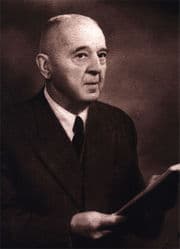
Charles Edward Ives was born on October 20, 1874, in Danbury, Connecticut, and died on May 19, 1954, in New York City. He was a citizen of the United States and worked as a composer, actuary and businessman.
Son of bandleader and music teacher George Ives, Charles received instructions in harmony and contrasingo as a child and learned to listen to different bands simultaneously in his city square. He became a church organist at age 14, writing works such as Variations on “America” for a 4th of July concert. In 1893 he moved to New Haven, where he attended the Hopkins School and, in September 1894, he entered Yale University, studying under the guidance of Horatio Parker. At university he stood out in both music and sports, participating in the American football team and composing pieces inspired by university life, such as Calcium Light Night and the Yale-Princeton Football Game. His Symphony nº1 was developed as a graduation thesis, and he graduated in 1898, continuing to serve as a church organist until 1902.
Ives's production is characterized by systematic experimentation: he employed tonal polychromy, polyrhythms, note clusters, random elements and quarter tones, anticipating techniques that would become central to 20th century music. His repertoire includes four numbered symphonies, the orchestral work The Unanswered Question (1908) for trumpet, four flutes and string quartet, and the Concord Sonata (1912-1915), notorious for its use of a wooden block to generate massive chords and for quotations from Beethoven. He also composed two string quartets, two string quartets, songs, and worked on an ambitious, but unfinished, Universe Symphony.
For most of his life, Ives's music remained little known and rarely performed, although it was popularized by peers such as HenryCowell, LouHarrison, and AaronCopland. It was only in the 1930s that public performances began to appear, such as the premiere of the Concord Sonata at New York's Town Hall in 1939. The composer received the Pulitzer Prize for Music in 1947, an award he donated in part to Harrison. His personal life was marked by health problems – “heart attacks” from 1907 onwards, diabetes and, finally, a stroke that caused his death – and by a strong family connection, evidenced by the early influence of his father and the legacy left to his widow, who allocated the copyright of his work to the American Academy of Arts and Letters.
Written by artificial intelligence and not yet reviewed by a person.
Where to start
Curiosities
- Was an insurance executive and composed experimental music in his spare time.
- Created the first truly American music, using hymns and popular marches.
- Won the Pulitzer Prize for Music in 1947.
- Experimented with polytonality and microtonality decades before other composers.
Works
46 works- The Unanswered QuestionCorne Inglês · 1908
- 114 SongsVoz
- Three Places in New EnglandPiano · 1903-14, rev.1929
- Piano Sonata No.2Viola · 1909-15
- 2 Organ PiecesÓrgão · 1891, 1897
- Symphony No.2Orquestra · 1897-1901
- General William Booth Enters into HeavenVoz · 1913
- Three-Page SonataPiano
- Violin Sonata No.4Violino · 1900-16
- Central Park in the Dark, S.34Orquestra · 1906 (July-December), revisada em 1936
- Piano Sonata No.1Piano · 1902-10
- Essays Before a SonataPiano
- Scherzo for String QuartetViolino · 1903/14
- Violin Sonata No.2Violino · 1914-17, rev. 1919
- A Set of 3 Short Pieces, S.84Cordas · 1904
- A Set of Pieces for Theatre or Chamber OrchestraOrquestra
- Hymn (Largo Cantabile), S.84Cordas · 1904
- The InnateViolino · 1908
- Violin Sonata No.1Violino · 1914
- Some South-Paw PitchingPiano
- Circus BandOrquestra · 1894
- Piano Trio, S.86Violino · 1904-11, rev.1915
- The Anti-Abolitionist RiotsPiano
- A Symphony: New England HolidaysOrquestra · 1897-1913
- String Quartet No.2Violino · 1907-13
- String Quartet No.1Violino · 1896
- Largo for Violin, Clarinet and PianoViolino · 1901
- They Are There!Orquestra · 1942
- Tone Roads No.3Piano · 1915
- Symphony No.1Orquestra · 1898-1902

Something wrong on this page? or send a missing work.