Louis Marchand
- Born
- 2 February 1669
- Died
- 17 February 1732
- aged 63
- Country
- France
- Era
- Baroque
Jean-Louis Marchand
Biography
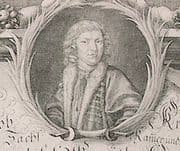
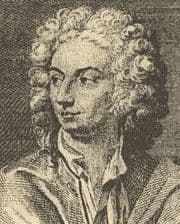
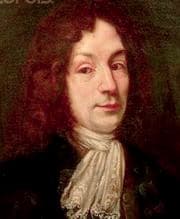
Jean‑Louis Marchand was born on 2 February 1669 in France, and died on 17 February 1732, also on French soil. He was one of the most illustrious organists and composers of the last generation of the French Baroque, acting chiefly as a virtuoso of the organ and harpsichord, and holding official positions in the royal chapels and in important Parisian churches.
He received his musical training under the tutelage of his uncle, the organist Pierre Marchand, and took direct influence from the French organ school, especially the works of Nicolas Lebègue and François Couperin. His improvisational practice, recognized by contemporaries, reflects the French tradition of ornamentation and registration characteristic of the classical organ, while also incorporating Italian stylistic elements that were beginning to spread in Paris at the beginning of the eighteenth century.
Marchand’s style is distinguished by melodic clarity, the elaboration of suite dances (sarabande, gigue, courante) and the refined use of ornaments such as trills, mordents and rapid note groups. In his organ writings—most notably the “Livre d'orgue” (1702)—he employed the typical registrations of the French tradition, alternating between flute stops, diapason and full‑voice stops, and demonstrated mastery of fugal form and imitation. On the harpsichord he produced works of both pedagogical and virtuosic character, such as the “Premier livre de pièces de clavecin”, which combines preludes, courantes, sarabandes and gigas.
Among his principal works are the aforementioned “Livre d'orgue”, several sacred and secular cantatas, as well as pieces for harp and chamber ensemble. His output contributed to the consolidation of the French organ repertoire and to the diffusion of a style that reconciled contrapuntal rigor with the melodic elegance characteristic of the courts of Louis XIV and his successor. Marchand’s fame as an improviser made him a central figure in the musical contests of his time; the most famous episode occurred in 1732, when a improvisatory duel with Johann Sebastian Bach was being prepared at the Dresden court, but Marchand left the city before the test, feeding a legend that reinforced his reputation as an exuberant and competitive personality.
On a personal level, Marchand was known for his extroverted temperament and a certain boldness that earned him both admirers and rivals. His rivalry with Bach, although never materializing in a direct confrontation, became marked in musical tradition as a symbol of the clash between the French and German schools, illustrating the importance the composer placed on virtuosity and public demonstration of talent.
Written by artificial intelligence and not yet reviewed by a person.
Where to start
Curiosities
Nobody has shared a curiosity about Marchand yet. The first one earns XP.
Works
4 works

Something wrong on this page? or send a missing work.