Domenico Scarlatti
- Born
- 26 October 1685
- Died
- 23 July 1757
- aged 71
- Country
- Italy
- Era
- Baroque
Giuseppe Domenico Scarlatti · Domingo Escarlatti · Dominico Scarlatti
Biography
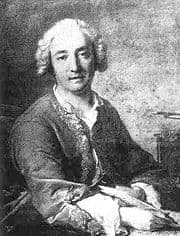
Giuseppe Domenico Scarlatti was born on October 26, 1685 in Naples, then part of the Spanish Empire, and died on July 23, 1757 in Madrid. Italian by origin, he was one of the most prolific baroque composers, whose work influenced the development of the classical style. Son of renowned composer Alessandro Scarlatti, he was the sixth of ten children and grew up in an intense musical environment.
He first graduated under the guidance of his father and possibly studied with Gaetano Greco, Francesco Gasparini and Bernardo Pasquini. In 1701 he was appointed composer and organist at the Royal Chapel in Naples, where he worked briefly with his father as maestro di cappella. His first operas, Ottavia Restituita al Trono and Il GiustIno, premiered in Naples in 1703, followed by a revision of the opera Irene. In 1709 he moved to Rome, where he served as maestro di cappella to the exiled Polish queen Maria Casimir, composing operas, serenades and a Stabat Mater for ten voices, before directing the Julian Chapel of Saint Peter until 1719.
From 1719 onwards he settled in Lisbon, becoming musical director for King João V of Portugal and music master for Princess Maria Magdalena Bárbara. In 1728 he married Maria Caterina Gentili in Rome, with whom he had six children; after his death he married Anastasia Maxarti Ximenes, having four more children. In 1729 he accompanied Princess Maria Bárbara to Spain, where he remained as music master at the court of Fernando and Maria Bárbara, who in 1746 ascended to the throne. He was awarded a knighthood by John V in 1738 and dedicated the collection of 30 Essercizi per Gravicembalo to that occasion. Most of his 555 sonatas for harpsichord or piano, composed for the Spanish queen, reflect influences from Iberian music, with Phrygian modes, castanet rhythms, percussion and figures reminiscent of the guitar.
Scarlatti's sonatas, almost all of them in a single movement and in binary form, reveal harmonic audacity, unexpected modulations and a structural “crux” that marks the passage between the two parts. Although few of his works were published during his lifetime, the 1738 publication received praise from Charles Burney, and subsequent diffusion in England – driven by Thomas Roseingrave – assured him international recognition. His music, appreciated by figures such as Bach, Mozart, Beethoven and Bartók, stands out for its ability to move between serious and light styles, combining gallant elegance with elements of Spanish popular music, consolidating him as a central figure between late baroque and classicism.
Written by artificial intelligence and not yet reviewed by a person.
Where to start
Curiosities
- Composed over 550 harpsichord sonatas, each exploring different techniques.
- Lived in Spain and incorporated elements of flamenco music in his works.
- Was music teacher to Princess Maria Barbara.
- His sonatas demanded piano techniques that were revolutionary for the time.
Works
626 works- Essercizi per gravicembalo, K.1-30, K.1-30 ; RISM A/I: S 1189Essercizi · Teclado
- Keyboard Sonata in A major, K.208, K.208 ; L.238 ; P.315Teclado
- Keyboard Sonata in D minor, K.141, K.141 ; L.422 ; P.271 ; CZ.118Teclado
- Keyboard Sonata in A major, K.113, K.113 ; L.345 ; P.160 ; CZ.52Teclado
- Keyboard Sonata in A major, K.209, K.209 ; L.428 ; P.209Teclado · Advanced
- Keyboard Sonata in A major, K.24, K.24 ; L.495 ; P.80 ; CZ.30Teclado
- 2 Organ Sonatas, K.287-288, K.287-288, 328Órgão
- 3 Organ Sonatas, K.287-288, 328Órgão
- Keyboard Sonata in A major, K.26, K.26 ; L.368 ; P.82 ; CZ.32Teclado
- 12 Sonatas Modernas para Clavicordio, Libro 1, RISM A/I: S 1202Cravo
- Keyboard Sonata in A major, K.101, K.101 ; L.494 ; P.156 ; CZ.74Teclado
- Keyboard Sonata in A major, K.212, K.212 ; L.135 ; P.155 ; CZ.182Teclado
- 2 Keyboard Sonatas in F minor, K.204a-bTeclado
- Keyboard Sonata in A major, K.114, K.114 ; L.344 ; P.141Teclado
- Fandango del Sigr. ScarlateCravo
- 26 Sonatas Inéditas para ClavePiano
- Double Reed QuartetsOboé · 2012
- Keyboard Sonata in A major, Cary 703Teclado · até 1756 ?
- Keyboard Sonata in A major, K.182, K.182 ; L.139 ; P.207 ; CZ.5Teclado
- Keyboard Sonata in A major, K.211, K.211 ; L.133 ; P.277 ; CZ.49Teclado
- 3 Sonate pentru trio de ancii, I. K 173Clarinete · 1943
- Keyboard Sonata in A major, K.181, K.181 ; L.194 ; P.253Teclado
- 42 Suites de Pièces pour le Clavecin, K.1-42Cravo
- Keyboard Sonata in A major, K.219, K.219 ; L.393 ; P.278Teclado
- Keyboard Sonata in A major, K.268, K.268 ; L.41 ; P.369Teclado
- Keyboard Sonata in A major, K.220, K.220 ; L.342 ; P.309Teclado
- Keyboard Sonata in A major, K.222, K.222 ; L.309 ; P.236Teclado
- Keyboard Sonata in A major, K.221, K.221 ; L.259 ; P.215Teclado
- Keyboard Sonata in A major, K.269, K.269 ; L.307 ; P.432Teclado
- 10 Keyboard SonatasTeclado






Something wrong on this page? or send a missing work.