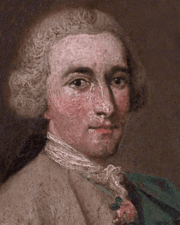
Johann Pachelbel
- Born
- 1 September 1653
- Died
- 9 March 1706
- aged 52
- Country
- Germany
- Era
- Baroque
Johann Bachelbel
Biography
Johann Pachelbel, also spelled Bachelbel, was born in Nuremberg, Germany, on 1 September 1653, being baptized on the same day according to the old calendar. He died in March 1706, being buried on 9 March in the Protestant cemetery of St. Rochus; the exact date of death, although uncertain, probably occurred a few days earlier. He was a composer, organist and teacher of the Baroque era, recognized as one of the main representatives of the South‑German organ school.
His musical training began under the tutelage of Heinrich Schwemmer, singer of the Church of St. Sebaldus, and continued in the Nuremberg environment where figures such as Johann Erasmus Kindermann influenced his teachers. In 1669 he entered the University of Altdorf, simultaneously assuming the position of organist of the Church of St. Lorenz, but abandoned the course because of financial difficulties. In 1670 he continued his studies at the Gymnasium Poeticum in Regensburg, under master Kaspar Prentz, a disciple of Johann Caspar Kerll, a contact that awakened his interest in Italian music and the Catholic tradition.
Pachelbel’s public career began in Vienna, where, from 1673, he was assistant organist at St. Stephen’s Cathedral, absorbing the Italian and Austrian repertoire of the time. He then spent time in Eisenach (1677‑78) as court organist, where he tightened ties with the Bach family, and settled in Erfurt in 1678, a post he held for twelve years. There he regularly composed chorale preludes and large‑scale works, establishing himself as one of the leading organ composers of central Germany. In 1690 he moved to the court of Stuttgart, fled the French attacks in 1692 to become municipal organist in Gotha, and finally, in 1695, assumed the post of organist of the Church of St. Sebaldus in his native city, where he remained until his death.
Pachelbel’s style is marked by a lucid and uncomplicated counter‑chant, which privileges melodic and harmonic clarity, less virtuosic and less harmonically daring than that of Dieterich Buxtehude, although he shares experimentation in instrumental formations. His principal works include the celebrated Canon in D major, the Chaconne in F minor, the Toccata in E minor for organ and the set of keyboard variations Hexachordum Apollinis (1699), dedicated to Buxtehude. He also published the chorale cycle Acht Chorale zum Praeambulieren (1693) and the chamber‑music collection Musicalische Ergötzung. In addition to his compositional output, Pachelbel was an influential teacher, training numerous disciples who perpetuated the South‑German organ model. In his personal life he married twice: his first wife, Barbara Gabler, and his son died in the plague of 1683, an experience that inspired his first published work, Musicalische Sterbens‑Gedanken; with his second wife, Judith Drommer, he had seven children, among them the composers Wilhelm Hieronymus and Charles Theodore, the latter active in the American colonies.
Written by artificial intelligence and not yet reviewed by a person.
Where to start
Curiosities
- Lost his wife and infant son to the plague of 1683; his first publication, Musicalische Sterbens-Gedancken (Musical Thoughts on Death), came out that same year.
- Was godfather to a daughter of Johann Ambrosius Bach and tutor to J. S. Bach's eldest brother.
- Nuremberg hired him as organist in 1695 without the usual audition.
- One of his sons, Charles Theodore, emigrated to the American colonies in 1734.
Works
335 works- Canon and Gigue in D major, P.37, P.37 ; T.337Canon in D · Violino · 1680 ca.
- Chorale Preludes, VariousÓrgão
- Chaconne in F minor, P.43, P.43 ; T.206Órgão · Beginner
- Chaconne in D minor, P.41, P.41 ; T.204Órgão
- Compositionen zumeist Fugen über das Magnificat, P.257-279, 284-356 ; T.101-195Órgão
- Ach Gott, vom Himmel sieh darein, P.1, P.1 ; T.9Órgão
- Chaconne in F major, P.42, P.42 ; T.205Órgão
- Chaconne in C major, P.38, P.38 ; T.201Órgão · Beginner
- Chaconne in D major, P.40, P.40 ; T.202Órgão
- 7 Chorale PartitasÓrgão
- Ausgewählte OrgelwerkeÓrgão
- Christus, der ist mein Leben, P.376, P.376 ; T.81Órgão
- An Wasserflüssen Babylon, P.18, P.18 ; T.19Órgão
- Ach Herr, mich armen Sünder, P.3, P.3 ; T.11Órgão
- Alle Menschen müssen sterben, P.377a, P.377a ; T.82Órgão
- Aria and 8 Variations in F minor, P.198, P.198 ; T.216Órgão
- Ach, was soll ich Sünder machen, P.7aPiano
- Aria and 6 Variations in D minor, P.193, P.193 ; T.211Órgão
- Aria and 5 Variations in E minor, P.194, P.194 ; T.212Órgão
- Fantasia in A minor, P.126, P.126 ; T.256Órgão · Beginner
- Christe, der du bist Tag und Licht, P.63, P.63 ; T.21 ; (BWV 1096 ; BC K 167 ; BWV 1096/598 ; BWV App C.S. 710 ; Emans 43)Órgão · 1703-07?
- Aria and 6 Variations in G minor, P.196, P.196 ; T.214Órgão
- Allein Gott in der Höh' sei Ehr', P.10, P.10 ; T.14Órgão · Beginner
- Aria and 6 Variations in F major, P.195, P.195 ; T.213Órgão
- Aria and 6 Variations in A minor, P.197, P.197 ; T.215Órgão
- An Wasserflüssen Babylon (Weimar tablature), P.20Órgão
- An Wasserflüssen Babylon, P.20Órgão
- Arietta and 9 Variations in F major, P.29, P.29 ; T.220Teclado
- Chaconne in D major, P.39, P.39 ; T.203Órgão
- Alle Menschen müssen sterben, P.377b, P.377b (Pachelbel)Órgão


Something wrong on this page? or send a missing work.