Niccolò Paganini
- Born
- 27 October 1782
- Died
- 27 May 1840
- aged 57
- Country
- Italy
- Era
- Classical
- Wrote for
- Violão · violino · violoncelo · viola · orquestra
Nicolò · Nikolo Paganini
Biography
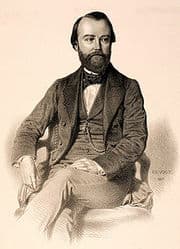
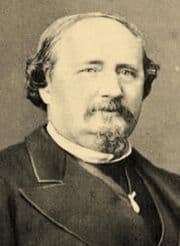
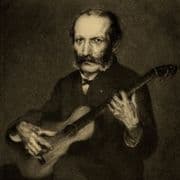
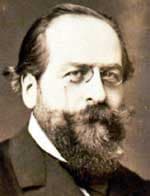
Niccolò Paganini was born on October 27, 1782, in the Republic of Genoa, and died on May 27, 1840, in the city of Nice, then part of the Kingdom of Sardinia. Of Italian nationality, he stood out as a violinist, violist, guitarist and pianist, although his greatest fame is linked to the violin.
Paganini's first musical instruction came from his father, Alessandro, a violinist in the local orchestra, who taught him the fundamentals of the instrument. While still a teenager, he received additional lessons from local musicians, including violinist and composer Bartolomeo Campagnoli, whose technical approach influenced the young artist's development. The works of Pietro Locatelli, Arcangelo Corelli and the symphonies of Giovanni Battista Viotti also marked his training, providing him with a repertoire that combined baroque virtuosity with new classical trends.
Paganini's style is characterized by an extraordinary technique, which expanded the limits of the violin by employing resources such as pizzicato with the left hand, high frequency harmonics, position jumps and “ricochet” bows. These innovations were consolidated above all in the “24 Caprichos for solo violin”, compositions that remain a reference for instrumental technique. Among his most important works are the Violin Concerto nº1 in D major, the Concerto nº2 in B minor and numerous fantasies and variations based on operatic themes of the time.
Active on the threshold between Classicism and Romanticism, Paganini toured the main cultural centers of Europe, such as Vienna, Paris and London, where his virtuosity provoked admiration and also suspicions of supernatural pacts. His influence was decisive for the development of the 19th century violin school, inspiring composers such as Hector Berlioz, Franz Liszt and NiccolòJuliusFauré. In the personal sphere, his marriage to the ballerina Antonia Bianchi stands out, in 1827, which marked a period of relative stability amid chronic health problems that affected the last stage of his life.
Written by artificial intelligence and not yet reviewed by a person.
Where to start
Curiosities
- His hands could span three octaves across the four strings of the violin.
- The Church denied him a Catholic burial in Genoa, and his body was finally buried in Parma in 1876.
- At 18 he became first violinist of the Republic of Lucca.
Works
128 works- 24 Caprices for Solo Violin, Op.1, Op.1, MS 2524 Caprices · Violino · 1802-17 · Advanced
- Cantabile, MS 109, MS 109 ; Op.17Violino · Intermediate
- 6 Sonatas, Op.3Violino
- Il carnevale di Venezia, Op.10, Op.10, MS 59Violino
- Centone di sonate, M.S.112Violino · 1828
- Centone di sonate, MS 112Violino · 1828
- Grande sonata, MS 3, Op.39; MS 3Violino · 1803 ca.
- 6 Sonatas, Op.2Violino
- Duo merveille, MS 6Violino
- Andantino in F majorViolino
- Guitar Quartet No.11, MS 38Violino
- 3 Duetti concertanti, Op.1 [sic.] ; Katalog Heyer Nr. 859 a/bViolino
- Cantabile e valser, Op.19, Op.19 / MS 45Violino · 1823
- Guitar Quartet No.7, MS 34Violino
- 3 Airs variésViolino
- Guitar Quartet No.14, MS 41Violino
- Guitar Quartet No.12, MS 39Violino
- Guitar Sonata in A major, MS 84 No.1Violão
- Guitar Quartet No.13, MS 40Violino
- 3 Guitar Quartets, Op.5, MS 31-33 ; Op.5 ; Guitar Quartets Nos.4-6Violino
- Guitar Quartet No.4-6, Op.5 MS 31-33, MS 31-33 ; Op.5 ; Guitar Quartets Nos.4-6Violino
- Allegretto in A major, MS 90Violão
- Capriccio, MS 54Violino · 1828
- Allegretto in A minor, MS 91Violão
- Andantino in F minor, MS 102Violão
- Guitar Sonata in A major, MS 84 No.12Violão · Intermediate
- Guitar Sonata in A major, MS 84 No.2Violão
- 3 Guitar Quartets, Op.4Violino
- 43 Ghiribizzi, MS 43Violão
- Guitar Quartet Nos.1-3, Op.4 MS 28-30Violino


Something wrong on this page? or send a missing work.