Sergei Rachmaninoff
- Born
- 1 April 1873
- Died
- 28 March 1943
- aged 69
- Country
- Russia
- Era
- Romantic
- Wrote for
- Piano · orquestra · voz · violoncelo · coro
Сергей Васильевич Рахманинов · Sergej Vasil’evič Rahmaninov · Sergei Vasil'evich Rakhmaninov
Biography
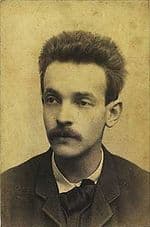
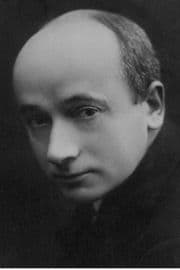
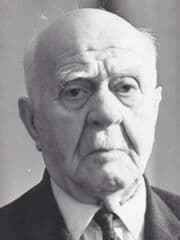
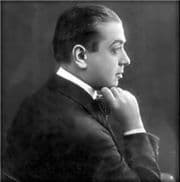
Sergei Vasilyevich Rachmaninoff was born on 1 April 1873 in Semyonovo, Novgorod Province, Russia, and died on 28 March 1943 in Beverly Hills, California, United States. Of Russian nationality, he was a composer, virtuoso pianist and conductor, recognized as one of the last great representatives of Romanticism in Russian classical music.
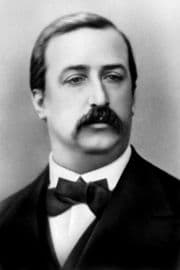
Raised in an aristocratic family with a musical tradition, he began studying piano at four years old under the guidance of Anna Ornatskaya, a teacher trained at the St. Petersburg Conservatory. In 1885 he transferred to the Moscow Conservatory, where he received Rubinstein scholarships, studied piano with Alexander Siloti, counterpoint with Sergei Taneyev and free composition with Anton Arensky. His first compositions appeared while he was still a student, notably Piano Concerto No. 1 (completed in July 1891) and the opera Aleko, written in seventeen days and presented at the Bolshoi in May 1892, receiving praise from Tchaikovsky. His first public concert took place in September 1892, when he performed the Prelude in C‑sharp minor, Op. 3, which quickly became one of the most popular pieces in his repertoire.
The following decade brought both successes and crises. The failure of the premiere of his Symphony No. 1 in 1897 plunged the composer into a four‑year depression during which he composed little. Under therapeutic treatment, Rachmaninoff regained his creativity and completed Piano Concerto No. 2 in 1901, which received immediate acclaim. His musical language is characterized by singable melodies, intense expressivity, dense contrapuntal textures and rich orchestral colours, with a constant emphasis on the piano, an instrument he explored to the fullest both as a performer and as a composer.
From 1904 to 1906 he conducted the Bolshoi Theatre and, in 1906, moved to Dresden. His first tour of the United States as a pianist occurred in 1909. After the Russian Revolution, Rachmaninoff and his family emigrated permanently in 1918, settling in New York, where he devoted himself primarily to concerts, significantly reducing his compositional output to only six works after leaving Russia. From 1932 he spent his summers in Switzerland and, in 1942, moved to California, where he died the following year.
Rachmaninoff’s personal trajectory is marked by family losses and financial difficulties, which profoundly influenced his life and work. The depression caused by the negative reception of Symphony No. 1 and the subsequent recovery demonstrate the artist’s resilience, whose music continues to be celebrated for its emotional depth and technical mastery, establishing him as a central figure of the last Romantic flourishing in the Russian musical tradition.
Written by artificial intelligence and not yet reviewed by a person.
Where to start
Curiosities
- Had enormous hands that could reach a thirteenth on the piano.
- Suffered severe depression after the failure of his First Symphony.
- Emigrated to the USA after the Russian Revolution and never returned.
- Was considered one of the greatest pianists of all time.
Works
91 works- Morceaux de fantaisie, Op.3Fantasy Pieces · Piano · 1892 · Advanced
- Piano Concerto No.2, Op.18Rachmaninoff's Second · Piano · 1900–01 · Advanced
- Piano Concerto No.3, Op.30Rachmaninoff's Third · Piano · 1909 · Advanced
- All-Night Vigil, Op.37Vespers · Coro · 1915
- Isle of the Dead, Op.29Isle of the Dead · Orquestra · 1909 see below
- 14 Romances, Op.34Includes Vocalise · Voz · 1912
- 13 Preludes, Op.32Piano · 1910 · Advanced
- Moments musicaux, Op.16Piano · 1896
- Andante from Cello Sonata in G minor, Op.19Violoncelo · 1901
- Cello Sonata, Op.19Violoncelo · 1901 · Intermediate
- Etudes-tableaux, Op.33Piano · 1911 · Advanced
- 2 Pieces for 6 Hands, TN ii/22Piano · 1890–91
- Aleko, TN ii/70Orquestra · 1892
- 6 Morceaux, Op.11Piano · 1894
- 6 Romances, Op.38Voz · 1916
- 2 Pieces, Op.2Violoncelo · 1891-92 · Advanced
- 2 Morceaux de salon, Op.6Violino · 1893
- 4 Pieces, TN ii/12Piano · 1887–88?
- 12 Songs without Opus, TN ii/50 to TN ii/57Voz · 1890–1915
- Liturgy of St John Chrysostom, Op.31Piano · 1910
- 6 Choruses, Op.15Piano · 1895–96
- Canon in E minor, TN ii/14Piano · 1890–91
- Capriccio on Gypsy Themes, Op.12Orquestra · 1892–94
- 3 Russian Songs, Op.41Orquestra · 1926
- Oriental Sketch, TN ii/19/2Piano · 1917
- 2 Pieces, TN ii/17Piano · 1899
- 2 Sacred Songs, TH ii/58Voz · 1916
- 5 Études-tableaux, Opp.33, 39Piano
- 3 PiecesPiano · 2008
- Lied, TN ii/32Violoncelo · 1890



Something wrong on this page? or send a missing work.