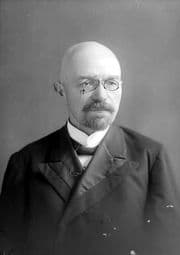
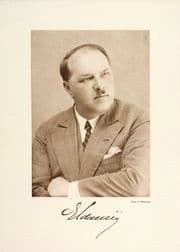
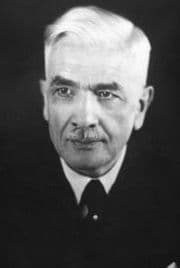
Hermann Suter
- Born
- 28 April 1870
- Died
- 22 June 1926
- aged 56
- Country
- Germany
- Era
- Romantic
- Wrote for
- Violino · orquestra · viola · violoncelo · órgão
Biography
Hermann Suter was born on 28 April 1870 in Muttenz, in the canton of Basel-Landschaft, Switzerland, and died on 22 June 1926 in Basel. Although his nationality was Swiss, he belonged to the German‑speaking community of the country, which explains the reference to “German” in some catalogs. He graduated from the Basel Conservatory, where he studied composition with Hans Huber and organ, consolidating a foundation that combined Germanic tradition and local influences. After completing his studies, he remained at the conservatory as a teacher and, from 1918, directed the Basel School of Music, playing a central role in the training of generations of Swiss musicians.
Suter's style falls in the final period of late Romanticism, displaying a rich harmonic language, expansive melodic lines, and a sensitivity to thematic development that recalls Brahms and Wagner. At the same time, he incorporated elements of Swiss folk music, especially in choral and chamber works, giving his compositions a regional identity without losing the universal scope of the Romantic tradition. His writing for piano, violin and organ reveals technical mastery of the instruments, while his string quartet demonstrates his command of classical form.
Among his best‑known works, the oratorio *Le Laudi* (1924) stands out, combining chorus, soloists and orchestra in a synthesis of spiritual devotion and Romantic language. He also composed numerous cantatas, sacred and secular choral pieces, as well as chamber music, notably a string quartet that reflects his concern for structural clarity. His output for organ includes preludes and fugues that are still performed in liturgical recitals. As a composer, he contributed significantly to the Swiss choral repertoire, strengthening the role of choral societies in the country.
The historical context in which Suter worked was marked by the flourishing of Swiss cultural identity in the early twentieth century, a period when composers sought to integrate the Germanic tradition into the national heritage. His work as a choral director and educator reinforced the importance of collective music, making him a central figure in Basel's musical life. His activity coincided with the transition between Romanticism and the early modernist currents, although he maintained an essentially tonal language.
A striking aspect of his personal life was his dedication to sacred music, served as organist of the St. Johann church in Basel. This role, combined with his teaching position, demonstrated a deep commitment to everyday musical practice, influencing both the liturgical repertoire and the training of musicians who would perpetuate his artistic vision.
Written by artificial intelligence and not yet reviewed by a person.
Where to start
Curiosities
Nobody has shared a curiosity about Suter yet. The first one earns XP.
Works
10 works- Le laudi di San Francesco d'Assisi, Op.25Órgão · 1923
- String Quartet No.1, Op.1Violino · 1900 ca.
- String Quartet No.3, Op.20Violino · 1918?
- Symphony, Op.17Orquestra · 1914 August 20 (completion date)
- 3 Kleine Orgelvor- und NachspieleÓrgão
- Die erste Walpurgisnacht, Op.5Orquestra · 1910
- DoppelfugePiano · 1890
- Organ Sonata in D majorÓrgão · 1889
- String Sextet, Op.18Violino · 1916 August
- Violin Concerto, Op.23Violino · 1921



Something wrong on this page? or send a missing work.