Edgar Tinel
- Born
- 27 March 1854
- Died
- 28 October 1912
- aged 58
- Country
- Belgium
- Era
- Romantic
Edgard Tinel · Edgar Pierre Joseph Tinel · Pieter-Jozef-Edgard Tinel
Biography
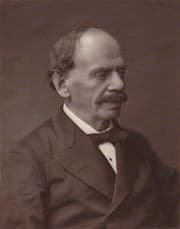
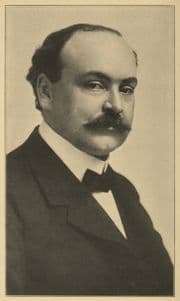
Edgar Pierre Joseph Tinel was born on March 27, 1854, in the city of Ghent, Belgium, and died on October 28, 1912, in Brussels. Of Belgian nationality, he stood out as a composer, organist, and pedagogue, carrying out his main activities on the country's musical scene.
He trained at the Royal Conservatory of Brussels, where he studied organ with Maestro Jacques‑Nicolas Lemmens, one of the main representatives of the French organ tradition of the nineteenth century. In composition he received guidance from the conservatory's teachers, deepening his mastery of counterpoint technique, a discipline he would later teach. In 1885 he was appointed professor of counterpoint at the same institution and, in 1908, he assumed the direction of the conservatory, a post he held until his death.
Tinel's output is characterized mainly by sacred music. His writing for organ combines formal clarity and registration colors inherited from the Lemmens school, while his motets and masses reveal an interest in plainchant and the melodic purity of Gregorian chant, elements that give his works a contemplative atmosphere typical of late Romanticism. The attention to the balance between liturgical tradition and Romantic language marks his style, which remains accessible and functional for liturgical use.
Among the best‑known works are the “Missa Solemnis” in B‑flat, the “Missa de Noël,” and several a‑cappella choral motets, such as “Psalm 150.” He also composed pieces for piano and solo organ, among them the “Lament” and the “Andante con moto,” frequently performed in recitals of Belgian repertoire. His activity as a teacher influenced a generation of Belgian musicians, contributing to the consolidation of rigorous counterpoint teaching in the country.
On a personal level, his commitment to the renewal of Belgian liturgical music stands out. Tinel was an active member of associations that promoted the recovery of Gregorian chant and the improvement of musical practice in churches, a role that reinforced his reputation as one of the main defenders of artistic quality in Catholic worship of the time. His legacy endures in the institutions he directed and in the works that continue to be part of the Belgian sacred repertoire.
Written by artificial intelligence and not yet reviewed by a person.
Where to start
Curiosities
Nobody has shared a curiosity about Tinel yet. The first one earns XP.
Works
65 works- 2 Morceaux, Op.7Piano · 1875
- 3 Morceaux de fantaisie, Op.2Piano · 1873-74
- Franciscus, Op.36Coro · 1886-88
- Piano Sonata, Op.9Piano · 1875
- Psalm CL, Op.47Voz · 1906-07
- 2 Mélodies, Op.6Voz · 1875-76
- 2 MotettenContralto
- 3 Liederen met klavierbegeleiding, Op.4Voz · 1875
- 3 Motets à la Sainte Vierge, Op.31Soprano · 1884
- 3 Symphonic Tableaux after Polyeucte, Op.21Orquestra
- 3 Vlaamse liederen, Op.16Voz · 1876
- 4 Adventliederen, Op.35Voz · 1885
- 4 Mélodies, Op.5Voz · 1874-75
- 4 Nocturnes, Op.1Voz · 1874-76
- 4 oud-Vlaamsche Drinkliederen, Op.13Voz · 1875
- 5 Gesänge, Op.11Voz · 1875
- 6 Geestelijke Gezangen, Op.33Voz · 1885
- 6 Liederen, Op.38Voz
- 6 Marialiederen, Op.34Coro · 1885
- 6 Mélodies, Op.40Voz
- 6 Mélodies, Op.42Voz
- 7 Lieder, Op.8Voz · 1875
- Alleluia, Op.23Órgão · 1888
- AntoniusliedSoprano
- Aurora, Op.37Coro · 1886
- Bij het opkomen van de zonSoprano · 1879-84
- Bunte Blätter, Op.32Piano
- Cantique de Première Communion, Op.24Voz · 1891
- Cantique nuptial, Op.45Tenor · 1902
- Catharina, Op.44Vocal · 1899—1908



Something wrong on this page? or send a missing work.