Béla Bartók
- Born
- 25 March 1881
- Died
- 26 September 1945
- aged 64
- Country
- Hungary
- Era
- Modernism
Béla Viktor János Bartók
Biography
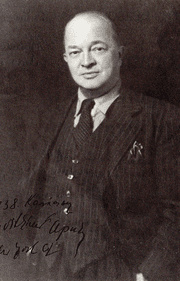
Béla Viktor János Bartók was born on March 25, 1881, in the then part of Austria-Hungary that today corresponds to Sânnicolau Mare, in Romania. Of Hungarian nationality, he died on September 26, 1945, in New York City, where he had settled after fleeing occupied Europe during the Second World War.
He trained as a pianist at the Budapest Conservatory, where he studied piano with István Thomán, son of Franz Liszt, and theory with Hans von Koessler. From an early age he had contact with the violin and viola, instruments that he also practiced. The friendship and collaboration with Zoltán Kodály were decisive; together they began systematic field expeditions to record popular songs from the Carpathian regions, an activity that profoundly marked their compositional language.
Bartók's style combines the rigorous structure of classical music with features drawn from Central and Eastern European folk music. It uses modal scales, irregular rhythms and polyrhythms, as well as controlled dissonances, creating a language that simultaneously preserves the authenticity of popular songs and advances the harmonic language of modernism. His analytical approach to folklore was reflected in works for piano, string quartets, concertos and orchestra, in which timbre and texture are explored in innovative ways.
Among his most representative works are the six string quartets (1910-1938), the Concerto for Orchestra (1943), the suite “Mikrokosmos” (1926-1939), the “Concerto for Piano” (1926) and “Music for Strings, Percussion and Celesta” (1936). In addition to being a composer, he was one of the first ethnomusicologists to record and transcribe popular songs, contributing to the preservation of threatened cultural traditions. In his personal life, his marriage to Márta Zoltán stands out, with whom he shared his passion for popular research and who accompanied him during the difficult circumstances of his exile in the United States, where he continued to compose and teach until his death.
Written by artificial intelligence and not yet reviewed by a person.
Where to start
Curiosities
- Recorded thousands of folk songs from Eastern Europe.
- Used mathematical proportions and the Fibonacci sequence in his compositions.
- Studied insects as a scientific hobby alongside music.
- Emigrated to the USA during World War II, dying in relative poverty.
Works
82 works- Concerto for Orchestra, Sz.116, Sz.116 ; BB 123Orquestra · 1943
- 44 Duos for 2 Violins, Sz.98Violino · 1931 · Beginner
- Change Of Time, Sz.107Piano · 1926-39
- Mikrokosmos, Sz.107Piano · 1926-39
- Music for Strings, Percussion and Celesta, Sz.106, Sz.106 ; BB 114Harpa · 1936-09-07
- Divertimento for Strings, Sz.113 ; BB 118Cordas · 1939 (August)
- Divertimento, Sz.113, Sz.113 ; BB 118Cordas · 1939 (August)
- A csodálatos mandarin, Op.19 ; Sz.73Orquestra · 1918-24
- For Children, Sz.42Piano · 1908-09, rev.1945 · Beginner
- Viola Concerto, Sz.120Viola · 1945
- Contrasts, Sz.111Violino · 1938
- 10 Easy Pieces, Sz.39Piano · 1908 · Intermediate
- Piano Concerto No.2, Sz.95, Sz.95 ; BB 101Piano · 1930-31
- Allegro barbaro, Sz.49, Sz.49 ; BB 63Piano · 1911 · Advanced
- Piano Concerto No.3, Sz.119, Sz.119 ; BB 127Piano · 1945
- 14 Bagatelles, Op.6, Sz.38 ; BB 50 ; Op.6Piano · 1908 · Advanced
- First Term at the Piano, Sz.53, Sz.53 ; BB.66Piano · 1913/1929 · Beginner
- A kékszakállú herceg vára, Sz.48, Sz.48 ; BB 62 ; Op.11Soprano · 1911, revisada em 1917
- 2 Romanian Dances, Op.8a, Op.8a ; Sz.43 ; BB 56Piano · 1909-10 · Advanced
- 15 Magyar parasztdal, Sz.71Piano · 1914-18 · Advanced
- Piano Concerto No.1, Sz.83, Sz.83 ; BB 91Piano · 1926
- 9 Little Pieces for Piano, Sz.82Piano · 1926
- 3 Hungarian Folksongs from Csík, Sz.35aPiano · 1907
- Out of Doors, Sz.81, Sz.81 ; BB 89Piano · 1926 · Advanced
- Improvisations on Hungarian Peasant Songs, Op.20, Sz.74 ; Op.20Piano · 1920
- Petite suite, Sz.105, Sz.105 ; BB 113Piano · 1936
- 4 Pieces, Sz.22, Sz.22 ; DD 71Piano · 1903
- 2 Pictures, Op.10, Op.10 ; Sz.46Orquestra · 1910 (August)
- A fából faragott királyfi, Sz.60, Sz.60 ; Op.13Orquestra · 1917
- 2 Portraits, Op.5, Op.5 ; Sz.37 ; BB 48bClarinete · 1907-1911




Something wrong on this page? or send a missing work.