Harp
Egypt and Mesopotamia, more than 4,000 years ago
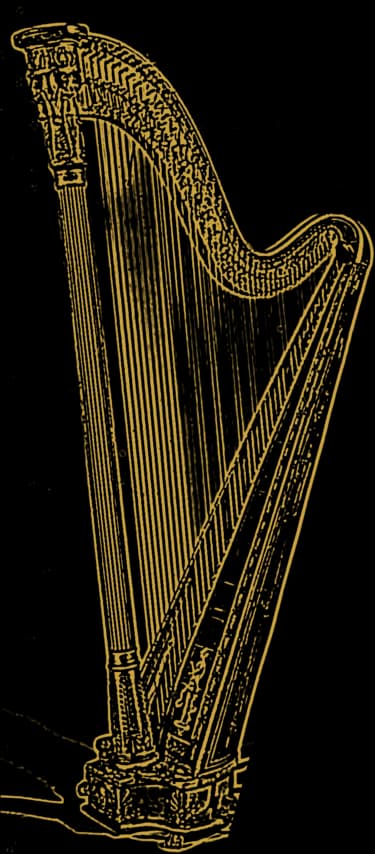
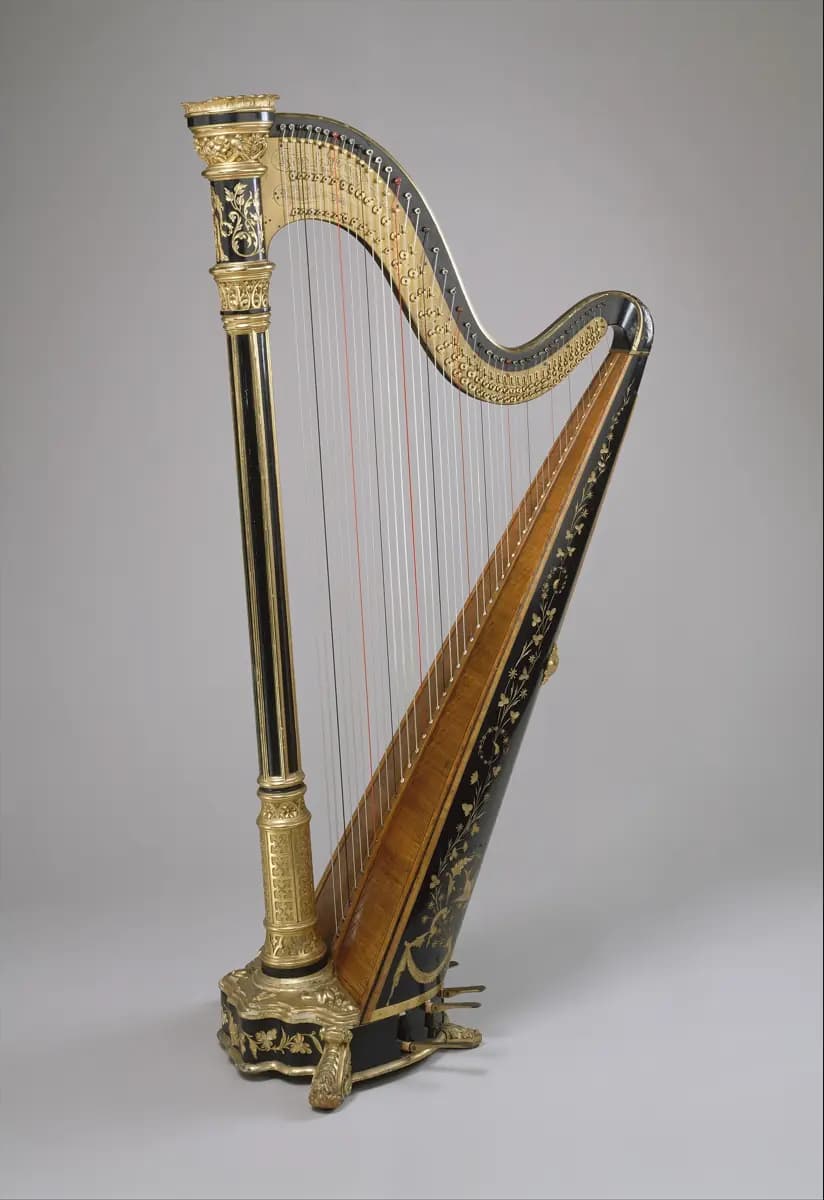
The harp is one of the oldest instruments there is. The concert harp, with 47 strings and seven pedals, can play in any key and gives the orchestra a shimmer no other instrument has.
Works for harpHow it works
The strings are plucked with the fingers, without the little finger, and each string plays one note. To change key, the harpist uses seven pedals, one for each note of the scale (all the Cs, all the Ds and so on). Each pedal has three positions, making the note flat, natural or sharp. The C strings are red and the F strings black or blue, so the harpist can find their way.
The story
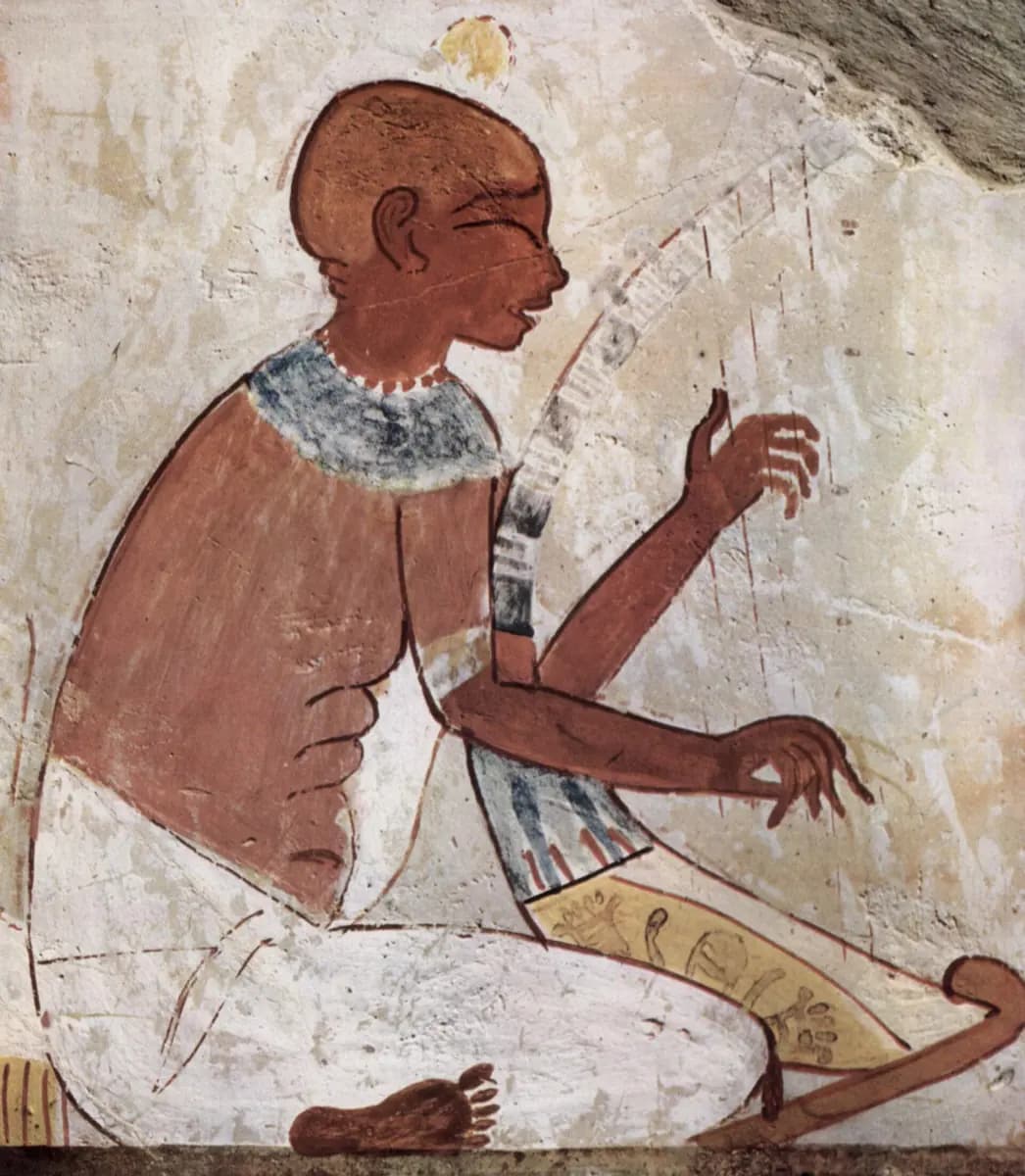
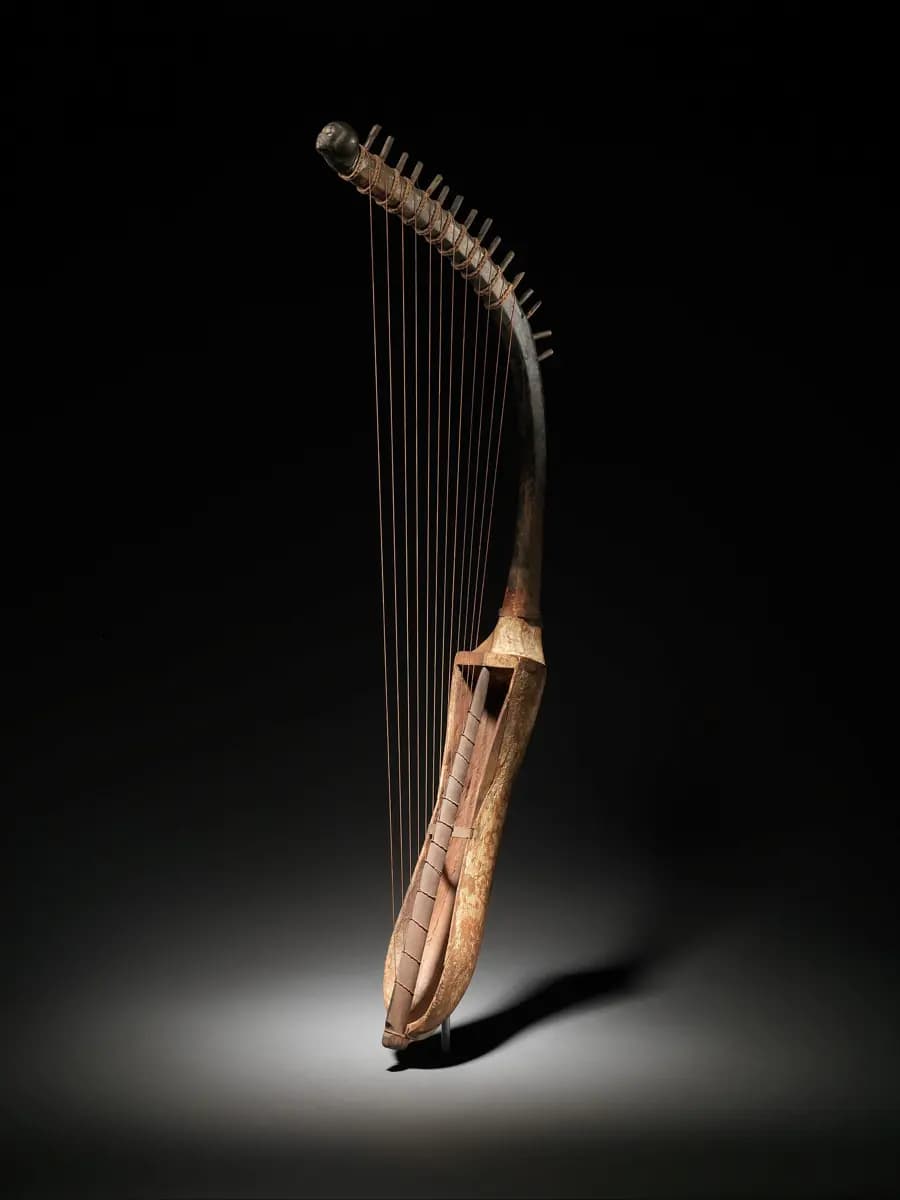
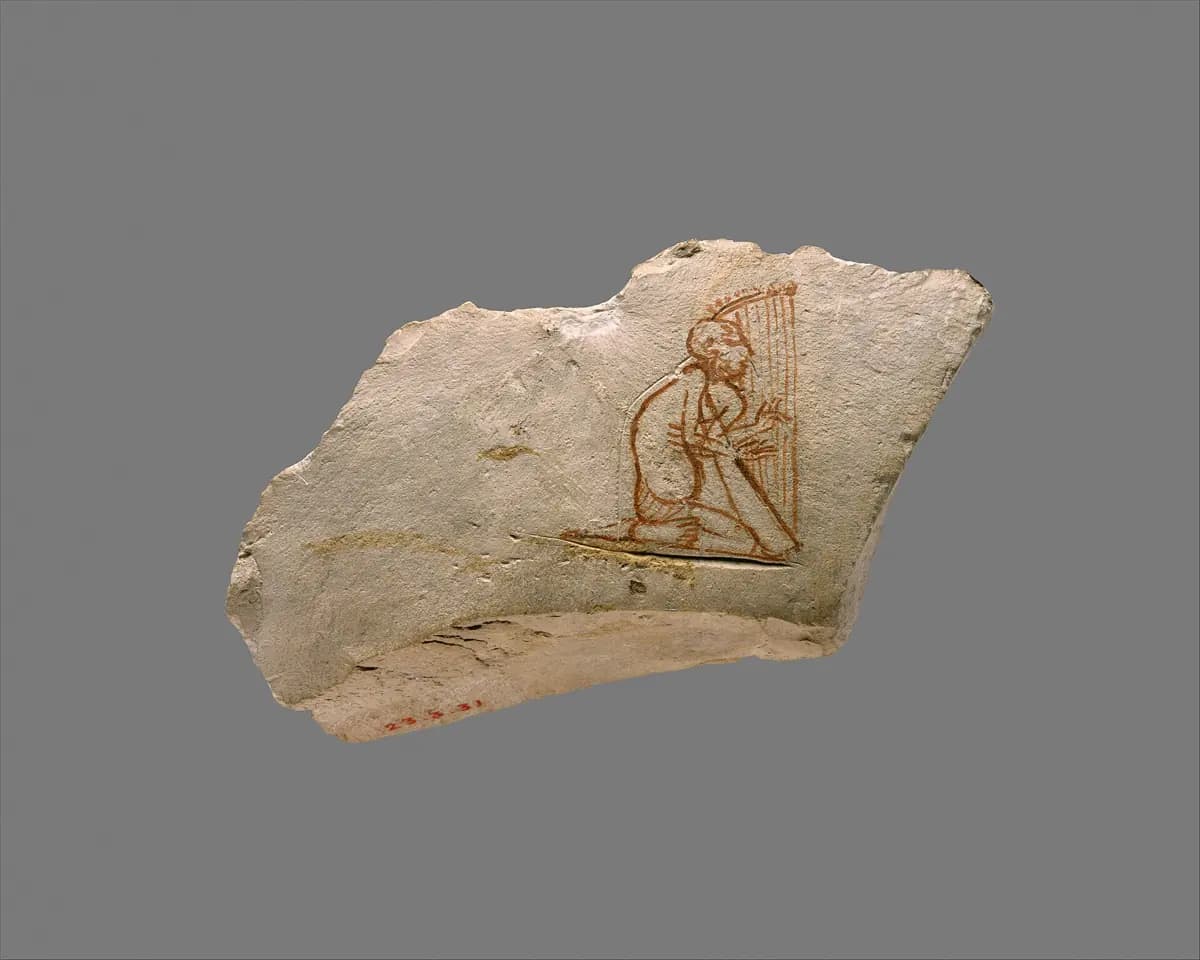
Egyptian paintings more than four thousand years old already show harps, and tombs in Mesopotamia held richly decorated string instruments. In the Middle Ages the harp accompanied bards and minstrels, and in Ireland and Wales it became a national symbol.
The problem was playing in many keys. Harps with hooks, then with simple pedals, solved it in part. In 1810 the French maker Sébastien Érard patented the double-action pedal harp still used today, in which each pedal has three positions.
With it, the harp became a fixture of the Romantic orchestra, with Berlioz, Wagner and Tchaikovsky, and gained solo and chamber repertoire from Debussy, Ravel and Fauré.
In South America the harp arrived with Jesuit missionaries in the seventeenth and eighteenth centuries and became a folk instrument. The Paraguayan harp and the llanera harp of Venezuela and Colombia are played without pedals, with the nails or fingertips, and have a repertoire of their own.
In 1904 the Pleyel firm launched a pedal-less chromatic harp and commissioned Debussy’s Danses sacrée et profane to show it off. Érard answered by commissioning Ravel’s Introduction and Allegro for the pedal harp. The pedal harp won, and both pieces stayed in the repertoire of the modern harp.
What was written for it
Handel wrote a harp concerto, Mozart the Concerto for Flute and Harp, K. 299. Debussy (Danses sacrée et profane), Ravel (Introduction and Allegro) and Fauré gave the harp essential chamber works. In the orchestra it graces Tchaikovsky’s ballets and Wagner’s operas.
In pictures
Where to start listening
- 1Concerto for Flute and Harp, K. 299Wolfgang Amadeus MozartWritten in Paris for a duke who played the flute and his daughter, a harpist. Open the work
- 2Introduction and AllegroMaurice RavelHarp, string quartet, flute and clarinet in a luminous piece. Open the work
- 3Danses sacrée et profaneClaude DebussyTwo dances, one solemn and one light, for harp and strings. Open the work
- 4The Nutcracker: Waltz of the FlowersPyotr TchaikovskyIt opens with a long cadenza for harp alone. Open the work
Where to start playing
Pieces chosen by the house, at the level rated by the musicians of IMSLP.
Beginner
Intermediate
Did you know?
- The harp is on Ireland’s coat of arms and is the symbol of Guinness, which registered the design facing the other way.
- Ravel’s Introduction and Allegro was commissioned by the Érard firm to show off its pedal harp, and Debussy’s Danses by its rival Pleyel, to promote a chromatic harp that never caught on.