Ludwig van Beethoven
- Born
- 16 December 1770
- Died
- 26 March 1827
- aged 56
- Country
- Germany
- Era
- Classical
- Wrote for
- Piano · violino · violoncelo · voz · orquestra
Louis van Beethoven
Biography
Ludwig van Beethoven was born on December 16, 1770, in Bonn, and died on March 26, 1827, at the age of 56. He was of German nationality and, besides being a composer, distinguished himself as a pianist, violist, and organist.
His musical training began under the strict instruction of his father, Johann van Beethoven, and continued with local teachers such as the court organist Gilles van den Eeden, Tobias Friedrich Pfeiffer, Franz Rovantini, and the concert violinist Franz Anton Ries. In 1780/81 he began studying with Christian Gottlob Neefe, who taught him composition and employed him as a basso continuo organist for the court chapel. In 1792 he moved to Vienna, where he studied counter‑chant with Joseph Haydn, received violin lessons from Ignaz Schuppanzigh, and later received instruction in counterpoint from Johann Albrechtsberger, as well as occasional guidance from Antonio Salieri. The influences of Haydn, Mozart, and the practices of Viennese salon music shaped his development.
Beethoven is recognized as a central figure in the transition from Classicism to Romanticism. He expanded instrumental forms such as the symphony, the piano sonata, and the string quartet, creating works that redefined their scale and expression. His early period, still linked to the classical style of Haydn and Mozart, includes the First Symphony (1800) and the early string quartets (1801). In the middle period (1802–1812) stand out the Third (“Eroica”) and Fifth Symphonies (1805–1808), the opera Fidelio (1805), the Violin Concerto (1806), the Razumovsky quartets (1808), and the Waldstein and Appassionata sonatas. In the late period (1812–1827) he composed the Missa Solemnis, the Ninth Symphony (1824), the Diabelli Variations, the “Hammerklavier” Sonata, and the final quartets, among them the Große Fuge (1825–1826).
Beethoven’s life was profoundly marked by the support of the von Breuning family, who offered him an emotional refuge amid family instability and the progressive hearing loss that began around 1798. This affectionate bond, together with the patronage of Viennese nobles such as Prince Karl Lichnowsky, enabled him to develop a career that, by expanding the limits of musical form, left a lasting legacy and cemented his position as one of the most revered composers in history.
Written by artificial intelligence and not yet reviewed by a person.
Where to start
Curiosities
- Composed his greatest works while struggling with progressive deafness.
- Counted exactly 60 coffee beans for each cup he drank.
- Broke piano keys with the force of his playing.
- Poured cold water on his head to stay focused while composing.
Works
434 works- Symphony No.9, Op.125Choral Symphony · Soprano · 1822-1824
- Symphony No.5, Op.67Fate Symphony · Orquestra · 1804-08
- Piano Sonata No.14, Op.27 No.2Moonlight Sonata · Piano · 1802 · Advanced
- Piano Sonata No.8, Op.13Pathétique Sonata · Piano · 1798 · Advanced
- Für Elise, WoO 59Piano · 1810 · Intermediate
- Violin Concerto in D major, Op.61Beethoven's Violin Concerto · Violino · 1806
- Piano Sonata No.17, Op.31 No.2The Tempest · Piano · 1801–02 · Advanced
- Violin Sonata No.5, Op.24Spring Sonata · Violino · 1800-01 · Advanced
- Piano Sonata No.21, Op.53Waldstein Sonata · Piano · 1803-04 · Advanced
- Violin Sonata No.9, Op.47Kreutzer Sonata · Violino · 1802-04
- Piano Sonata No.15, Op.28Pastoral Sonata · Piano · 1801 · Advanced
- Piano Trio in D major, Op.70 No.1Ghost Trio · Violino · 1808
- Rondo a capriccio, Op.129Rage over a Lost Penny · Piano · 1795
- 3 String Quartets, Op.59Razumovsky Quartets · Violino · 1806
- 3 Duets for Clarinet and Bassoon, WoO 27Clarinete · 1790-92
- 2 Sonatinas for Piano, Anh.5, WoO Anh.5Piano · Beginner
- 3 String Trios, Op.9Violino · 1797–98
- 32 Piano SonatasPiano
- 38 Piano SonatasPiano
- Cello Sonata No.3, Op.69Violoncelo · 1808 · Advanced
- 2 Rondos, Op.51Piano · 1797 · Advanced
- Piano Sonata No.20, Op.49 No.2Piano · 1795-96 · Intermediate
- 32 Variations in C minor, WoO 80Piano · 1806
- Cello Sonata No.2, Op.5 No.2Violoncelo · 1796 · Advanced
- 11 Bagatelles, Op.119Piano · 1822 · Intermediate
- Cello Sonata No.1, Op.5 No.1Violoncelo · 1796 · Advanced
- 3 Equali, WoO 30Trombone · 1812 (November)
- 3 Piano Sonatas, WoO 47Piano · 1782-1783 · Intermediate
- 25 Irish Songs, WoO 152Violino · 1810–13
- 10 National Airs with Variations, Op.107Violino · 1818–19 · Beginner
Further reading
See the blog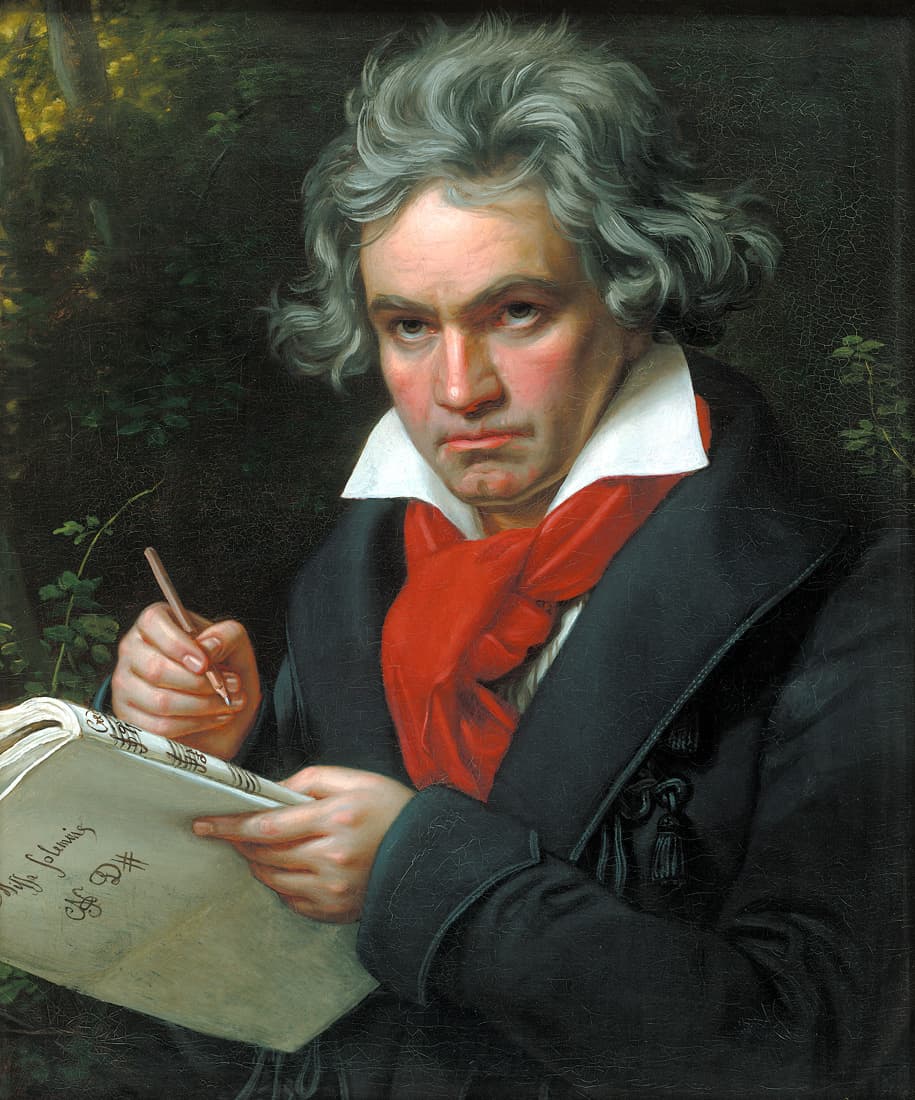



Something wrong on this page? or send a missing work.