Karol Józef Lipiński
- Born
- 30 October 1790
- Died
- 16 December 1861
- aged 71
- Country
- Poland
- Era
- Classical
- Wrote for
- Violino · orquestra · piano · violoncelo · voz
Karol Jósef Lipiński · Karol Lipiński · Carl Lipiński
Biography
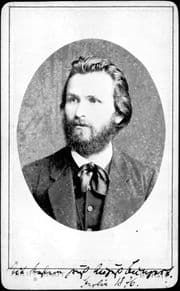
Karol Józef Lipiński was born on 30 October 1790, in the city of Radom, then part of Poland occupied by the Partitions. He died on 16 December 1861, in Warsaw, and was one of the most renowned Polish violinists and composers of the Classical‑Romantic period, internationally recognized as “the Polish Paganini.”
He initially trained under the guidance of his father, also a violinist, and continued his studies in Warsaw, where he received instruction from teachers associated with the capital’s musical circle. Later he refined his violin technique in Paris, studying with the renowned violinist Pierre Baillot, and received composition lessons within the same conservative European circles. These experiences allowed him to absorb the French virtuoso style and the emerging trends of early‑19th‑century instrumental music.
Lipiński’s style combines the brilliant technical demands inherited from Paganini with a melodic sensitivity linked to Polish traditions. His works for violin feature passages of rapid arpeggios, double‑stop scales, and frequent use of double chords, while also incorporating polonaise and mazurka rhythms. This synthesis gave him a distinctive character, capable of appealing both to aristocratic salon tastes and to nationalist audiences.
Among his most notable compositions are two violin concertos – Concerto No. 1 in A minor, Op. 2 (1822), and the Concerto in E major, Op. 10 (1825) – as well as a series of caprices and brilliant rondos for violin and orchestra, such as the “Rondo Brillant” (Op. 4). He also wrote chamber music, notably a string quartet that reflects the Viennese practice of the time, and piano pieces that reveal his mastery of classical form. His output, although relatively modest, influenced later violinists and expanded the instrument’s virtuoso repertoire.
Lipiński lived intensely through the turbulent context of Poland under foreign rule, using his international fame to promote national culture. He performed as a concertist in major capitals – Vienna, Paris, London and St. Petersburg – and, from 1829 to 1834, was a concertist of the Russian Imperial Court. Upon returning to his country, he took teaching positions at the Warsaw Conservatory, where he trained new generations of musicians. A striking aspect of his personal life was his strong involvement with the Polish patriotic movement; contemporary accounts highlight his habit of ending concerts with folk music, a gesture that earned him admiration from both audiences and colleagues.
Written by artificial intelligence and not yet reviewed by a person.
Where to start
Curiosities
Nobody has shared a curiosity about Lipiński yet. The first one earns XP.
Works
33 works- 2 Caprices, Op.3Violino
- 2 Impromptus, Op.34, Op.34 (posth.)Violino
- 2 Polonaises, Op.6Violino
- 3 Caprices de concert, Op.27Violino
- 3 Caprices, Op.29Violino
- 3 Polonaises, Op.9Violino
- 3 Polonoises, Op.5Piano
- 6 Morceaux de Salon sur des Motifs de RossiniViolino
- Fantaisie et variations sur 'La Sonnambula', Op.23Violino
- Fantaisie sur des airs napolitains nationaux, Op.31Violino
- Impromptu in E-flat majorViolino · 1842
- Kłótnia przez zakładVoz · 1812 ca.
- Pieśni polskie i ruskie ludu galicyjskiegoPiano
- Réminiscences des 'Puritains', Op.28Violino
- Rondeau de concert, Op.18Violino
- Rondo alla Polacca, Op.7Violino
- Souvenir de la Mer Baltique, Op.19Violino
- String Trio No.1, Op.8Violino
- String Trio No.2, Op.12Violino
- Syrena z DniestruOrquestra
- Variations de bravoure, Op.22Violino
- Variations por le violonViolino
- Variations sur la cavatine 'Ecco ridente il Cielo', Op.20Violino
- Variations sur un thème de la Cenerentola de Rossini, Op.11Violino
- Variations, Op.4Violino
- Variations, Op.5Violino
- È spento il tempo ormai, Op.25Violino
- Fantaisie et variations sur 'Les Huguenots', Op.26Violino
- Mazur in E-flat minor, Op. posth.Piano
- Polonaise pathétiquePiano




Something wrong on this page? or send a missing work.