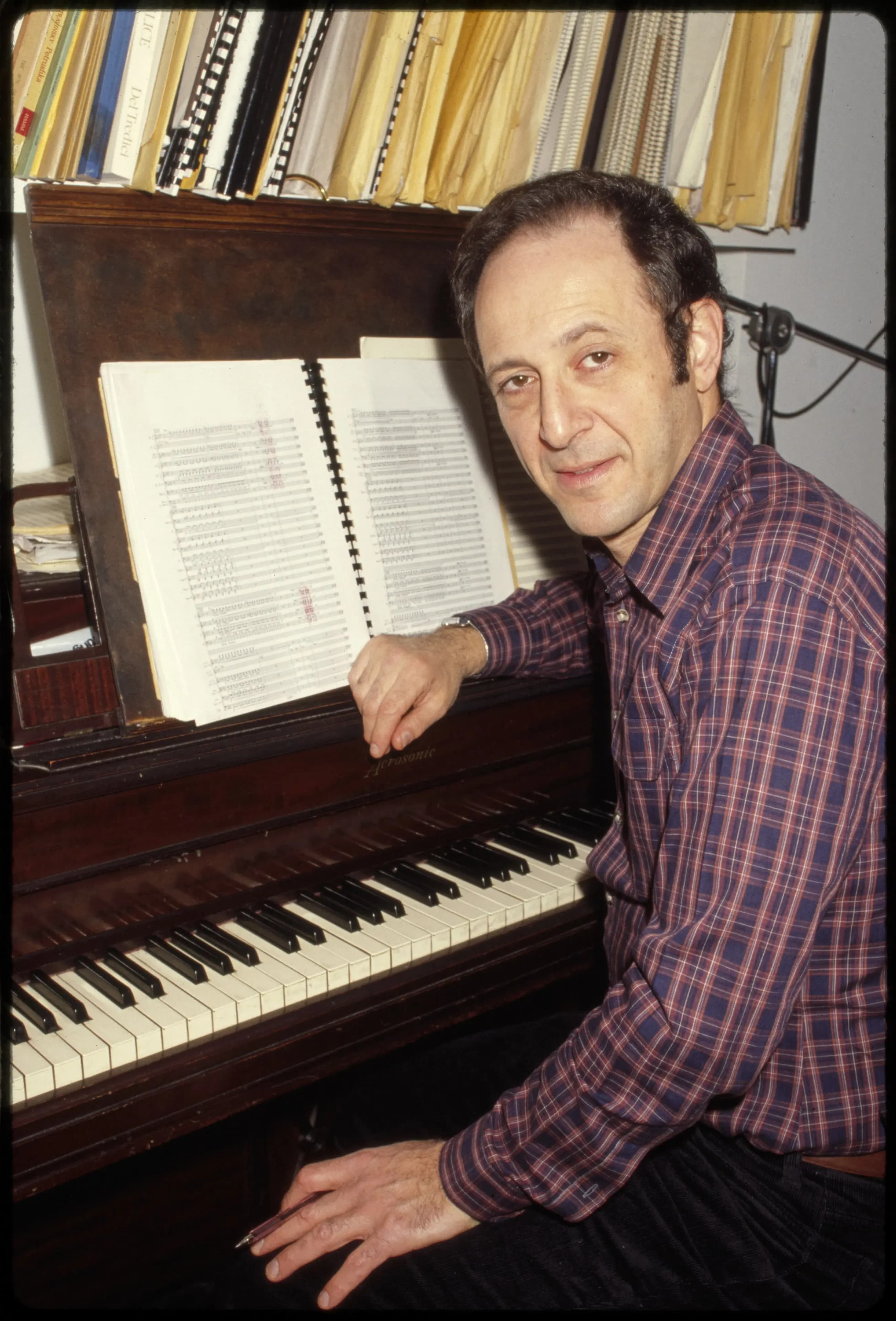
 1950–today
Contemporary
After 1950, each composer began choosing a language of their own. Silence, noise, computers, hypnotic repetition and the return of melody live side by side, and concert music talks with film, video games and popular music.
Right after the war, in Darmstadt, Germany, young composers such as Pierre Boulez and Karlheinz Stockhausen pushed Schoenberg’s idea of the row to the limit, organising not only the notes but also durations, dynamics and timbres. At the same time, in Paris, Pierre Schaeffer recorded sounds from the world, trains, saucepans, voices, and edited them on tape: musique concrète, in 1948. In Cologne, a radio studio produced the first pieces made entirely from electronic sounds.
Across the Atlantic, John Cage went another way and let chance decide. He used coins and the I Ching to compose, wedged screws and rubber between the piano strings, the prepared piano, and in 1952 presented 4’33”, in which the pianist plays nothing for four minutes and thirty-three seconds. The piece is made of the sounds of the room and the people in it.
In the 1960s, György Ligeti wrote pieces such as Atmosphères, in which dozens of instruments play neighbouring notes at once, and the result is a cloud of sound that changes slowly. Stanley Kubrick used this music in 2001: A Space Odyssey. Krzysztof Penderecki composed Threnody to the Victims of Hiroshima with strings that scrape and scream.
In reaction to so much complexity, minimalism appeared in the United States. Terry Riley, Steve Reich and Philip Glass wrote music made of short patterns repeated for a long time, changing little by little. In Estonia, Arvo Pärt created a style of very few notes, tintinnabuli, that sounds both ancient and new. This music drew in listeners who had drifted away from contemporary music.
Today concert music lives alongside film, video games and pop. John Williams writes scores that orchestras around the world play in concert. Composers such as Kaija Saariaho and Caroline Shaw, who won the Pulitzer Prize in 2013 for Partita for 8 Voices, have widened what voices and orchestras can do. In Brazil, the Música Nova group led by Gilberto Mendes, and composers such as Almeida Prado and Marlos Nobre, built bridges between the avant-garde and Brazilian roots.
What changed
- 1Electronic soundTape, synthesizer and computer become instruments. Any sound can be musical material.
- 2Chance and silenceCage lets coins and the room decide. The score starts proposing paths instead of fixing everything.
- 3Repetition returnsMinimalism builds long works from short patterns and brings audiences back to new music.
- 4Borders dissolveConcert music, film, games, jazz and pop mix, and orchestras play film scores to full houses.
The forms of the era
- Electroacoustic music
- Recorded or synthesized sounds, alone or with live instruments.
- Open work
- A score with choices left to the performer or to chance.
- Minimalism
- Short patterns that repeat and change slowly, creating a sense of trance.
- Sound mass
- Textures in which many close notes sound together, as in Ligeti’s works.
- Contemporary opera
- Dramas on current subjects, such as Einstein on the Beach or Nixon in China.
- Film and game scores
- Orchestral music written for the screen, now filling concert halls.
Who lived in it
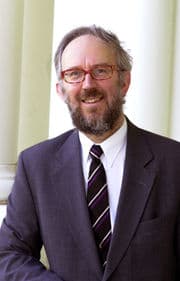
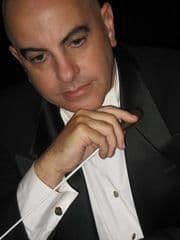
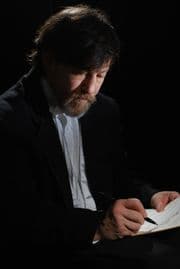
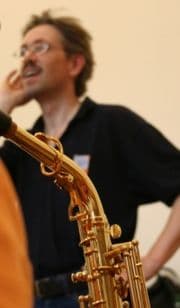
Some composers of the era, on the timeline.
Where to start listening
Works of this era- 01Spiegel im SpiegelArvo PärtViolin or cello and piano, very few notes. Calm from the first bar to the last.
- 02Music for 18 MusiciansSteve ReichPulses that repeat and transform for almost an hour. Let it carry you.See the composer
- 03Metamorphosis OnePhilip GlassSolo piano, repetition and a melancholy that wins you over on first hearing.See the composer
- 04AtmosphèresGyörgy LigetiA cloud of sound that changes colour. The same one heard in 2001: A Space Odyssey.See the composer
- 05Short Ride in a Fast MachineJohn AdamsFour minutes of orchestra at full speed, with a woodblock keeping the pulse.
Did you know?
- At the premiere of 4’33” in 1952, the pianist David Tudor closed and opened the keyboard lid to mark the three movements, timing them with a stopwatch.
- In a church in Halberstadt, Germany, an organ has been playing a Cage piece called ORGAN²/ASLSP since 2001. The performance is scheduled to end in 2640, and each chord change draws visitors.
- Kubrick used Ligeti’s music in 2001 without asking permission. The composer only found out when he saw the film, and took the studio to court.